
Ruth First and activist research: the legacy of a South African freedom fighter

Source: The Conversation – Africa – By Saleem Badat, Research Professor, UFS History Department, University of the Free State

Ruth First, born 100 years ago, was a South African freedom fighter, journalist and scholar who worked against the racist system of apartheid during white minority rule. She was assassinated by apartheid forces in her office at the Eduardo Mondlane University in Mozambique in 1982.

Her ideas, work and legacy live on. Sociologists Saleem Badat and Vasu Reddy have edited a new book called Research and Activism: Ruth First & Activist Research. We asked them about her and their project.


Who was Ruth First?

Heloise Ruth First was born on 4 May 1925 in Johannesburg to Jewish parents who had migrated from eastern Europe to South Africa in the early 1900s. Her parents were founder members of the South African Communist Party.

She joined the Young Communist League and the Federation of Progressive Students and graduated from the University of the Witwatersrand in 1946 with a Bachelor of Arts degree.

At 21, First joined the left-wing South African newspaper The Guardian. When it was banned, the New Age took its place until it too was banned in 1962. She served as the newspaper’s Johannesburg editor for 17 years.

In 1963, First was arrested at the University of the Witwatersrand library and held in solitary confinement for 117 days, during which time she was ruthlessly interrogated. The following year she and her three children left South Africa for England on an exit permit, where they joined her partner, the activist and politician Joe Slovo. She would not set foot again in South Africa. Continuing with her activist research in England, she taught at Durham University and then joined Eduardo Mondlane University until hear death.
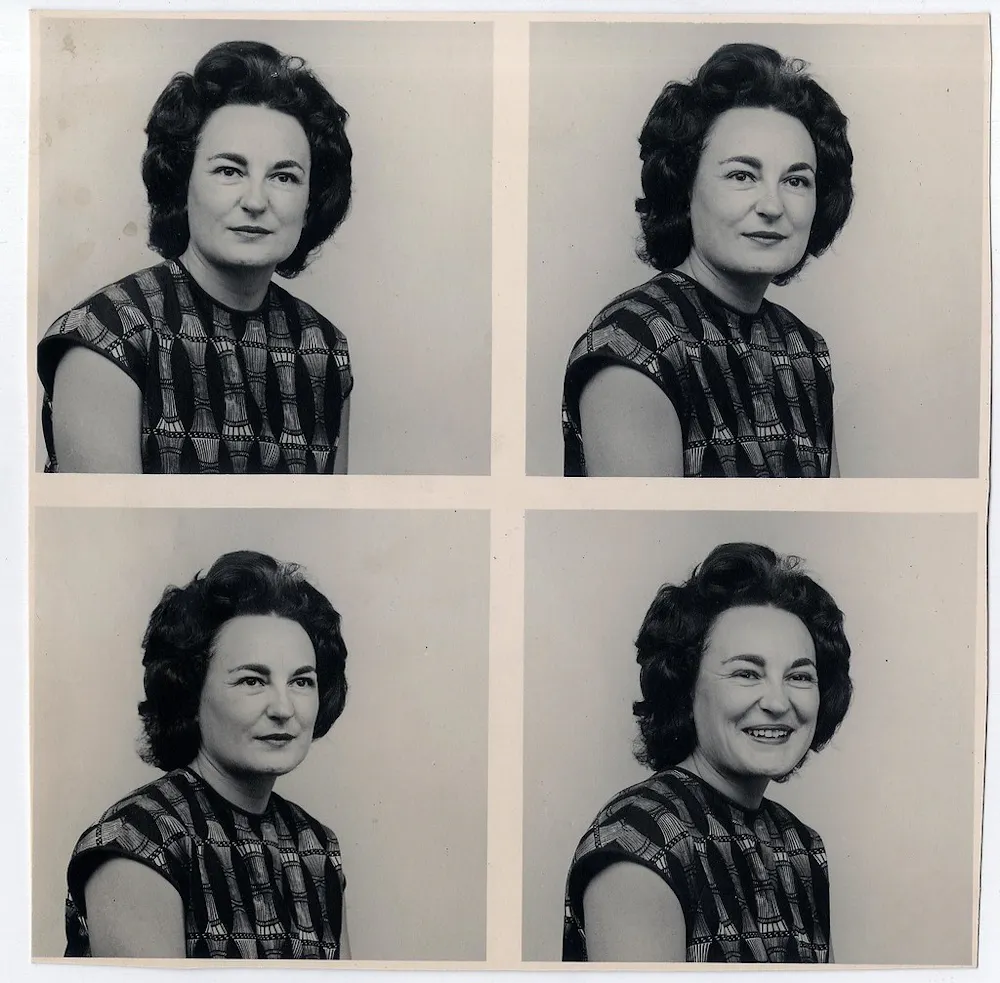
Ruth First. Courtesy the Slovo family

The mid-1940s to early 1960s were tumultuous years in South Africa. With the rise of formal apartheid in 1948, racial segregation was intensified.

First’s intrepid and penetrating journalistic research exposed her to the brutality of labour exploitation and control on the mines and the farms. It reinforced her understanding of South Africa in Marxist terms.

She wrote:

Silence in the face of injustice is complicity.

For her:

The will to fight is born out of the desire for freedom.

She was confident that:

The power of the people is greater than the power of any government.

First believed that ignorance is “the enemy of progress and justice” and that knowledge and education are “key to empowering individuals and challenging oppressive systems”. These words ring true in today’s global events driven by right-wing authoritarianism, US imperialism and acts of genocide.

On learning of her death, former South African President Nelson Mandela recalled:

I was in prison when Ruth First was assassinated, felt almost alone. Lost a sister in arms  … It is no consolation to know that she lives beyond her grave.

What is activist research and how is it applied in the book?

As authors, we revisit Ruth First’s life, work and ideas and its relevance for the current context. We focus especially on the nature of her scholarship and how she navigated the tensions between her activism and her research – whether journalistic or for her books on South West Africa (today’s Namibia), Libya or western investment in apartheid. Other of her acclaimed books included The Barrel of a Gun: Political Power in Africa and the Coup d’etat and, during her Mozambican sojourn, Black Gold: The Mozambican Miner, Proletarian and Peasant.

In the process we invite renewed critical reflection about her life and work. Inspired by First’s contributions, the book considers how universities and scholars engage with institutions and social movements beyond the university.
ESI Press

For example, in the book a research group from Durham University in the UK considers how to balance objectivity (showing no bias) with more politically participatory research methods and how objectivity can be enhanced despite the difficulties faced by activist research.

Other scholars reflect on the work of the assassinated South African anti-apartheid activist scholar and lecturer Rick Turner on climate change. And on the complexities of undertaking activist research in Marikana with a women’s organisation, Sikhala Sonke. Marikana was the site where South African police opened fire on and killed 34 striking mineworkers in 2012.

There is examination of a research partnership between University of Cape Town activist scholars and some Khoi-San communities, reflection on the challenges of legal practice and education, and critical analysis of the decolonisation challenges of the KwaZulu-Natal Society of the Arts.

How do you frame activist research in your book?

The book shows that there is a difference between engaged research, critical research and activist research.

Engaged research tries to connect knowledge produced by academics with institutions, movements and experts outside the university to collaboratively address issues and promote cooperation.

Critical research uses radical critical theory to critique oppression and injustice, to show the gap between what exists today and more just ways of living. However, it does not necessarily connect with political and social movements.

Ruth First addresses a rally in Trafalgar Square, London in 1960. Courtesy the Slovo family

First’s research was not only engaged, but also critical in orientation and activist in nature. As activist research it challenged oppression and inequality.

It both critiqued the status quo in South Africa and elsewhere and tried to change it. It was linked with movements and connected to political activism that was anti-colonial, anti-imperialist, and committed to socialism.


Read more: Lessons learnt from taking sides as a sociologist in unjust times


First’s activist research did not confine itself to the academic arena but engaged with larger, wider and more diverse publics. It used this experience to critique dominant and often limited thinking at universities and promoted other ways of producing knowledge. The expertise developed was used to improve scholarship in various ways.

What do you want readers to take away?

There is much talk about the “engaged university” and engaged research. However, only certain connections and engagements seem to be valued.

Prior to democracy in 1994, South African researchers connected with social movements for change. Now this is seldom the case. Universities and scholars largely engage with those with money – the state, business, elites and donors.


Read more: Regina Twala was a towering intellectual and activist in Eswatini – but she was erased from history


This raises questions about the roles of researchers in South Africa, whose interests are prioritised and the place of critical and activist research in the engaged university.

How should Ruth First be remembered?

We must honour her for her intellectual and practical activism. What matters is not just her knowledge archive, but also her example as both an outstanding interpreter of the world and an activist scholar committed to changing society in the interests of the downtrodden, marginalised and voiceless.

First was a critical and independent thinker who refused to accept anything as settled and beyond questioning. But that intellect was committed to loyalty to the national liberation movement of which she was an invaluable cadre.


The views expressed in this piece do not reflect or represent the position of the university to which Badat and Reddy are affiliated.

– Ruth First and activist research: the legacy of a South African freedom fighter
– https://theconversation.com/ruth-first-and-activist-research-the-legacy-of-a-south-african-freedom-fighter-257687

Kenya: Amb. Guo Haiyan Paid a Courtesy Call on Hon. Cabinet Secretary (CS) Deborah Mlongo Barasa

Source: APO

On July 2, H.E. Amb. Guo Haiyan paid a courtesy call on Hon. Dr. Deborah Mlongo Barasa, Cabinet Secretary, Ministry of Environment, Climate Change and Forestry. Mr. ZHOU Jun, DPR of China to UNEP, and Amb. Jane Makori, Deputy Director General, MFDA, Kenya attended the meeting.

Amb. Guo shared China’s latest progress and important achievements in the field of ecological and environmental protection. China stands ready to share its experience with Kenya, promoting cooperation in the field of climate change, green BRI and green industry investment, with an aim of jointly enhancing ecological and environmental governance capacity.

Hon. Dr. Deborah Mlongo Barasa positively acknowledged the process in China-Kenya environmental cooperation, and expressed the willingness to enhance collaboration in the field of circular economy, waste management, biodiversity, and South-South cooperation on climate change.

Distributed by APO Group on behalf of Embassy of the People’s Republic of China in the Republic of Kenya.

Media files

.

The Praia-Dakar maritime link should be operational by the end of 2026

Source: APO


.

The implementation of Praia-Dakar maritime link will mark an important step in regional integration within the Economic Community of West African States (ECOWAS). A workshop to evaluate and validate the various financial options for implementing the Praia-Dakar maritime link opened on Monday 30th of June 2025 in Dakar, Senegal.

The aim of this workshop is to define the management and operating procedures, analyse the financial viability and the most appropriate governance models for this maritime link, anticipate the socio-economic and environmental impacts, and propose mitigation measures. It also intends to identify mixed financing mechanisms (public-private partnership, regional funds) and propose a monitoring and evaluation plan incorporating performance and sustainability indicators.

Speaking on behalf of Sédiko Douka, Commissioner for Infrastructure, Energy and Digitisation of the ECOWAS Commission, Chris Appiah, Director of Transport of the ECOWAS Commission, reiterated the crucial importance of the Praia-Dakar maritime link in strengthening economic integration and increasing regional trade. “The Praia-Dakar maritime link, once implemented, will link Cabo Verde, an island state, to the other states of West Africa” said Chris Appiah. He expressed his gratitude to the technical and financial partners supporting ECOWAS in the implementation of the Praia-Dakar-Abidjan transport corridor project.

Mamoudou Alassane Camara, Senegal’s Director General of Road Infrastructure and Opening-up, and Chairman of the Committee of Experts from the Member States of the Praia-Dakar maritime link, also expressed his gratitude to these partners. He stressed the need and the obligation for West Africans to work towards the realisation of the Praia-Dakar-Abidjan transport corridor project. This multimodal project, he said, should contribute to the development of West Africa. “We must ensure that the vision of ECOWAS leaders for the implementation of this project becomes a reality. We must move forward together. Together, we can achieve a great deal. What unites us is more important than what divides us” he said.

For his part, the Director General of the Senegalese Maritime Affairs Agency, Becaye Diop, informed the audience of the strategic importance of this project for his country and Cabo Verde. For him, this project has received renewed interest and attention since the visit to Praia, in Cabo Verde, on the 24th of May 2024, by the Senegalese President, Bassirou Diomaye Diakhar Faye, he made a commitment with the Cape Verdean authorities to set up the Dakar-Praia maritime link to improve trade and strengthen economic and social cooperation between Senegal and Cabo Verde.

The Dakar-Praia maritime link, scheduled to be operational by the end of 2026, is a component of the Praia-Dakar-Abidjan multimodal transport corridor project. Considered strategic, it should be the subject of a specific management model proposal.

As for the Praia-Dakar-Abidjan multimodal transport corridor project, it represents an essential element of the wider strategy of ECOWAS aimed at facilitating the free movement of people and goods within the Community area, strengthening trade cooperation, promoting economic development and stimulating regional trade.

Considered one of the essential steps towards a more integrated and prosperous West Africa, this regional corridor, which aims to connect the capitals and port areas of eight ECOWAS member states, aims to integrate several modes of transport: road, rail and sea. These states are Cabo Verde, Côte d’Ivoire, The Gambia, Guinea, Guinea Bissau, Liberia, Senegal and Sierra Leone.

Through this project, ECOWAS intends to turn the Praia-Dakar-Abidjan corridor into a genuine West African economic hub, driving economic development and regional integration.

Distributed by APO Group on behalf of Economic Community of West African States (ECOWAS).

West Africa Health Organisation (WAHO) convenes strategic communications workshop to fortify regional Lassa fever response and sensitization

Source: APO


.

The West Africa Health Organisation (WAHO), in close collaboration with the Coalition Secretariat Partners (CSP), the ECOWAS Commission, and Member States, successfully concluded a pivotal two-day Strategic Communications Workshop in preparation for the 2nd Lassa Fever International Conference, held in Abuja, Nigeria. from June 30th to July 1st, 2025, the gathering aimed to create political will, advance prevention efforts, enhance preparedness and strengthen a unified regional response to Lassa Fever across West Africa.

The workshop’s objectives included identifying and analysing communication gaps, fostering mutual understanding of each entity’s communication roles and responsibilities, developing a unified communication strategy for the 2nd Lassa Fever International Conference, defining clear communication protocols, and establishing a joint roadmap for sustained regional communications, collaboration, and sensitization.

During the workshop, Dr. Virgil Lokossou, Acting Director of Health Services at WAHO, delivered the opening remarks on behalf of Dr. Assi Melchor, the Director General of WAHO. He emphasized the importance of putting in place effective communication tools, addressing specific Lassa Fever communication issues, and establishing a more visible regional platform for collaboration and decision-making. Dr. Lokossou stressed the need for increased awareness and prevention of the Lassa Fever threat, aligning strategies with scientific evaluation, and collectively developing a regional plan for the upcoming conference. He urged all participants to commit to this cause, working together to identify and address difficulties for the benefit of the entire region.

At the conclusion of the two-day event, Dr. Sombie Issiaka, Acting Director of Public Health and Research at WAHO, provided the closing remarks on behalf of the Director General of WAHO. He expressed sincere appreciation to the Nigerian Watch team for their smooth collaboration in combating Lassa Fever and other emerging diseases, as well as for organizing the workshop. He also extended thanks to all communication experts from participating member states, the Boom Public Health Group, and the Corona Management Systems Group.

Dr. Issiaka highlighted the significance of the coalition, emphasizing that all strategies discussed would move into the implementation stage, ensuring all stakeholders are effectively involved through clear communication in the fight against Lassa Fever. He thanked the Nigerian authorities as the host country, colleagues from WAHO and the ECOWAS Commission’s communication directorate for their support and collaboration, formally declaring the workshop closed and expressing anticipation for continued joint efforts. The workshop marks a significant step forward in ensuring a coordinated, impactful, and visible response to Lassa Fever across West Africa.

Distributed by APO Group on behalf of Economic Community of West African States (ECOWAS).

Economic Community of West African States (ECOWAS) Commission holds a 3-day regional consultation of national human rights institutions in West Africa, Abuja, Nigeria

Source: APO


.

The Department of Political Affairs, Peace, and Security (PAPS) of the Economic Community of West African States (ECOWAS) Commission, in partnership with the Network of National Human Rights Institutions in West Africa (NNHRI-WA), is holding the 7th Regional Consultation under the theme “Justice for Africans and People of African Descent Through Reparations: The Role of NHRIs” taking place from 1st to 3rd July 2025 in Abuja, Nigeria.

The Regional Consultation is aimed at enhancing the overall role of NHRIs towards the promotion and protection of human rights with added focus on protection of migrants and internally displaced people, implementation of regional and international human rights mechanisms, improving conditions of detention, human rights and reparative justice framework, and the shrinking civic space in West Africa.

Welcoming participants to the Consultation, Dr. Anthony Ojukwu, SAN, Executive Secretary of the National Human Rights Commission of Nigeria (NHRC) expressed appreciation to the participants for honouring the invitation and commended the continued support and partnership of the ECOWAS Commission and the relevant UN systems (UNOWAS and UN-OHCHR) towards the successful organisation of the regional consultation. He further noted the escalating violations of human rights across West Africa occasioned by undemocratic changes of governments, shrinking civic spaces, conflicts, terrorist insurgency, forced displacements of populations and climate change. To this end, he urged for solidarity among NHRIs towards advancing a unified, stable, and human rights friendly West Africa.

Delivering the Opening Remarks, Ambassador Abdel-Fatau MUSAH (Ph.D.), Commissioner for Political Affairs, Peace and Security, represented by Mr Ebenezer Asiedu, Head of Democracy and Good Governance, expressed ECOWAS Commission’s appreciation to the government of the Federal Republic of Nigeria and particularly the National Human Rights Commission of Nigeria for successfully hosting this regional consultation. He also congratulated the participants on commemoration of the 50th Anniversary of ECOWAS. While stressing the importance of reparatory justice for Africans and people of African descent to addressing historical injustices, in line with the theme of the Consultation, he noted that the conversation should embrace current realities of our societies as it relates to the enjoyment of rights by the Rights-holders and reparations of human rights violation in the region. Accordingly, he recommended the need for a Human Right-based approach to reparatory justice for both past and present injustice and human rights violations. To this end, he noted the Commission’s ongoing efforts to develop a regional transitional justice framework with a particular focus on the principle of reparatory justice. He therefore urged the participants to enrich the framework with their inputs and guidance on how human rights principles and role of National Human Rights Institutions can be further entrenched in transitional justice generally and reparatory justice in particular.

Declaring the Regional Consultation open, Dr Salamatu H. Sulaiman, Chairperson of the Governing Board of the, National Human Rights Commission of Nigeria expressed her gratitude to participants on behalf of the government of the Federal Republic of Nigeria. She emphasized the need for multi-stakeholders’ collaboration towards a unified agenda for reparative justice to address the needs of Africans, restore dignity and foster reconciliation. She therefore urged participants to take advantage of the consultation to make insightful contributions and renew their unwavering commitment to the promotion and protection of human rights in West Africa.

Goodwill Messages from Mr Benjamin Hounton, Deputy Regional Representative of the United Nations High Commissioner for Human Rights for West Africa Region and Ms. Barrie Lynne Freeman, Deputy Special Representative of the UN Secretary-General for West Africa and the Sahel commended the network for the annual consultation as a unique space for in-depth dialogue, peer-to-peer exchange that strengthen collaboration, ensure accountability and an opportunity to reflect on how the role of NHRI’s can be further enhanced to advance human rights across the subregion.

Participants at the Regional Conference included Hon. Prince Lateef O. Fagbemi, SAN, Attorney-General of the Federation and Minister of Justice, Nigeria, Dr Joseph Whittal, President of the NNHRI-WA and Commissioner for the Commission on Human Rights and Administrative Justice CHRAJ, as well as members of the Governing Council of the Nigerian NHRC and Heads of NHRI’s of Member States.

Distributed by APO Group on behalf of Economic Community of West African States (ECOWAS).

North West engages with youngsters in agriculture

Source: Government of South Africa

The North West MEC for Agriculture and Rural Development, Madoda Sambatha, is embarking on a series of engagements with young people in agriculture across the province.

According to the North West Department of Agriculture and Rural Development, the sessions aim to empower youth to take an active role in shaping the future of the sector, reflecting their commitment to supporting sustainable, youth-led growth in agriculture.

The first leg of the district engagements kicked off on Monday, 30 June 2025, in Coligny, within the Ngaka Modiri Molema District. 

The department said that at the heart of this focused intervention is the Youth in Agriculture and Rural Development (YARD) structure, whose elected leadership has been tasked with advancing youth representation and development at all levels of the sector.

The rollout continues in the Dr Ruth Segomotsi Mompati District on Friday, 4 July, at Mooilagte Farm in the Naledi Local Municipality. 

This will be followed by engagements in the Dr Kenneth Kaunda District on 11 July at Ga-Matsapola Farm, and in the Bojanala Platinum District on 14 July at the Moses Kotane Local Municipality.

The initiative brings together key stakeholders, including the National Youth Development Agency (NYDA), North West University Business School, the Small Enterprise Finance and Development Agency (SEFDA), AgriSETA, the Agricultural Research Council (ARC), commercial banks, and development finance institutions. 

“The sessions serve as a gateway for young people to access critical information on funding, skills development, mentorship, and market access tools essential for building resilient and sustainable agri-enterprises.” 

Held in partnership with local municipalities through the District Development Model (DDM), the engagements aim to ensure that the needs and aspirations of young farmers are integrated into local economic development plans.

“In addition to dialogue and presentations, each session includes live demonstrations and planting activities, exposing participants to practical techniques and climate-smart agricultural methods.” 

Addressing youth during the Coligny engagement held on Monday, Sambatha emphasised the department’s commitment to creating an enabling environment for youth in agriculture.

“This is not a ceremonial exercise; it is a deliberate strategy to reposition young people as central drivers of agricultural growth and rural development. We are here to remove bottlenecks, unlock opportunities, and invest in future producers,“ Sambatha said.

The department encourages all young people involved in farming, agri-processing, and rural enterprises to take full advantage of these sessions and the wide range of support offered through government and its partners. – SAnews.gov.za

Government expands policies to create opportunities for women

Source: Government of South Africa

Minister in the Presidency responsible for Women, Youth and Persons with Disabilities, Sindisiwe Chikunga, says government will continue to develop policies that open doors and support sustainable livelihoods for women. 

“Women, especially in rural areas and the informal sector, are still excluded from land, credit, capital, markets, procurement and the digital economy,” Chikunga said on Thursday.

Addressing media ahead of her department’s Budget Vote at the Imbizo Centre in Cape Town, Chikunga said for many women in rural areas, there is no easy access to the internet, and information is difficult to get. Transportation and getting the right documentation also proves a challenge. 

“We need simpler, more inclusive systems that meet women where they are, not where the system assumes them to be,” Chikunga said.

A substantial amount of money from the department’s budget is used to uplift women, youth and people with disabilities.

Chikunga said a proposal has been made for the establishment of a Disability Inclusion Working Group, which will be an additional Working Group to be established and discussed further at the level of the G20 by countries that will subsequently take up the chairship of the G20.

“We have committed to taking the G20 to the people, so that it is truly ‘The People’s G20’, a G20 that listens, that includes, and that leaves behind a legacy of progress.

“Our participation and activities in the EWWG [Empowerment of Women Working Group] reflect the lived realities of South African women, youth and persons with disabilities. It continues to also include diverse historically marginalised communities in rural areas, informal settlements, farms and townships.”

Chikunga said they have visited Taung in the North West and Mkhondo in Mpumalanga to consult communities as part of a broader national process to ensure that the voices of women, youth and people with disabilities inform South Africa’s contributions to the G20. The similar visits will also be undertaken to other provinces.

“As South Africa, we are approaching our G20 Presidency in the spirit of Ubuntu: ‘I am because we are’. This is to remind us that we are connected and we are stronger when we build together and leave no one behind.

“We are in Solidarity – working together, across countries and communities, to find shared solutions. We speak of equality because it is fundamental that we fix the unfair systems that keep so many people, especially women, young people and persons with disabilities, trapped in challenges of climate change, unemployment, poverty, inequality, hunger and rising debt.”

Laying the foundation for the nation to thrive

Chikunga said no economy can function and no society can thrive when women are unsafe at home, at work, in schools and in public spaces.

“Safety is not a side issue. It is the foundation of empowerment. We are strengthening governance and the legislative and programmatic response in addressing the scourge of gender-based violence and femicide. Addressing feminism requires all of us. Law enforcement must take its course,” the Minister said.

Over the Medium-Term Expenditure Framework (MTEF) period, the department will continue focusing on enhancing the coordination of the national response to gender-based violence; advancing responsive planning, budgeting, monitoring and evaluation within government; protecting the rights of people with disabilities, and encouraging the participation of women, young people and people with disabilities in the economy.

An estimated 76.6% (R2.3 billion) of the department’s budget over the medium-term is earmarked for transfers and subsidies to the National Youth Development Agency and the Commission for Gender Equality. 

As part of South Africa’s Presidency of the G20, which runs until 30 November 2025, R5.3 million is set aside for the G20 women empowerment working group meetings in 2025/26. 

Cabinet has approved additional allocations to the department’s baseline amounting to R66.4 million over the medium-term (R21.2 million in 2025/26, R22.1 million in 2026/27 and R23.1 million in 2027/28). These funds are intended to support the department’s operations, including public wage increases.  – SAnews.gov.za

Judge President Mlambo recommended for Deputy Chief Justice

Source: Government of South Africa

Thursday, July 3, 2025

The Judicial Service Commission has announced that it will recommend the Judge President of the Gauteng Division of the High Court, Justice Dunstan Mlambo, for the position of Deputy Chief Justice.

Interviews for the position were held over the past two days.

“Following the public interview process, the JSC has deliberated and resolved to advise the President that Judge President D Mlambo is suitable for appointment as the Deputy Chief Justice of the Republic of South Africa,” the JSC said in a short social media post.

The position has been vacant since then Deputy Chief Justice, Mandisa Maya, became Chief Justice following the retirement of Chief Justice Raymond Zondo last year.

In April this year, President Cyril Ramaphosa nominated four candidates for the position.

Those candidates were:

  • Judge President of the Gauteng Division of the High Court, Justice Dunstan Mlambo;
  • President of the Supreme Court of Appeal, Justice Mahube Molemela;
  • Judge President of the Free State High Court, Justice Cagney John Musi; and
  • Judge President of the Northern Cape High Court, Justice Lazarus Pule Tlaletsi.

The President also initiated consultation with the JSC and political parties in the National Assembly in this regard. – SAnews.gov.za

Qatar Participates in 131st Session of Permanent Council of La Francophonie

Source: Government of Qatar

Paris, July 3, 2025

The State of Qatar participated in the 131st Session of the Permanent Council of La Francophonie, held in Paris.

HE Qatar’s Ambassador to the French Republic and its Representative to the Organization, Sheikh Ali bin Jassim Al-Thani represented the State of Qatar at the session .

In her opening remarks, HE Secretary-General of the International Organization of La Francophonie, Louise Mushikiwabo praised the State of Qatar’s role in mediating between the Republic of Rwanda and the Democratic Republic of the Congo to reach a peaceful solution to the conflict in eastern DRC. She expressed her gratitude to Qatar for its contribution to establishing security and peace at the regional and international levels.

Participants in the session discussed the outcomes of the 19th La Francophonie Summit, held in France in October 2024, and the preparations for the 46th Session of the La Francophonie Ministerial Conference, slated for November in Kigali, Rwanda. 

Qatar, European External Action Service Hold Round of Political Consultations

Source: Government of Qatar

Doha, July 03, 2025

The 4th round of political consultationsآ between the Ministry of Foreign Affairs and the European External Action Service (EEAS) was held Thursday in Doha.

The Qatari side was headed by HE Minister of State for Foreign Affairs Sultan bin Saad Al Muraikhi, and the European side was headed by HE EEAS Deputy Secretary-General for Political Affairs Olof Skoog.

The political consultations discussed cooperation relations and ways to support and enhance them.