Verdant IMAP Advises Miro Forestry & Timber Products (“Miro”) on its Equity Raise

Source: APO

Verdant IMAP (www.Verdant-Cap.com) acted as sole financial adviser to Miro Forestry & Timber Products (“Miro”) on its equity capital raise.

The equity capital raise was led by Lagata an investment company focused on active investments in sub-Sahara Africa with significant experience in the forestry sector in the West Africa region.  Lagata, which is now Miro’s largest shareholder, brings strategic value and alignment with Miro’s long-term vision.  Five existing shareholders in Miro also participated in the equity funding transaction, Agwa Partners, British International Investment, Finnfund, FMO and Mirova, demonstrating continued confidence in Miro’s strategy, impact and commercial potential, and validating the overall transaction structure.  Proceeds from the equity capital raise will be used to fund operations, working capital requirements, and ongoing planting activities aligned with Miro’s business plan.

The equity capital raise was achieved during a challenging period for the wider industry, with macroeconomic pressures and a prolonged downturn in plywood prices. Yet demand continues to grow for resilient, responsibly sourced materials. Miro’s vertically integrated model, combining certified sustainable forestry, local job creation, and advanced plywood manufacturing, offers a compelling solution to global buyers looking to secure long-term, ethical supply. 

This transaction highlights Verdant IMAP’s ability to structure and execute complex capital solutions for its clients, while reinforcing its strong relationships with leading development finance institutions. The transaction is Verdant IMAP’s sixth completed transaction in the broader agro-industrial sector in the last 24 months.  The transaction also represents Verdant IMAP’s fifth major transaction in West Africa in the last four years. 

Berend Jan Kingma, CEO of Miro, commented:
 
“We are proud to welcome Lagata as our new principal shareholder. Their experience in forestry and deep understanding of African markets make them a natural partner for the next phase of Miro’s growth. We are equally grateful for the continued support of our existing shareholders, who share our belief in the power of sustainable forestry to deliver both commercial and social value. With this investment, we’re well positioned to strengthen our global reach and deepen our impact across the region.”

Distributed by APO Group on behalf of Verdant Capital.

Media Enquiries:
Orient Mahonisi
T: +27 10 140 3700
E: orient.mahonisi@verdant-cap.com

About Verdant IMAP:
Verdant IMAP is a leading investment bank operating on a pan-African focus, specialising in M&A and in private capital markets.  Verdant IMAP is the IMAP partner firm for its region.  IMAP with partner firms in nearly 50 countries, with over 600 M&A professionals, completing over 250 M&A transactions per year, reinforces Verdant IMAP’s capability to deliver innovative financial solutions to clients across Africa and around the World. www.Verdant-Cap.com 

About Miro Forestry & Timber Products:
Founded in 2009, Miro is a vertically integrated plywood manufacturing business headquartered in the United Kingdom, with operations in Ghana and Sierra Leone. The company manages over 20,000 hectares of sustainably planted timberland, producing high-quality FSC-certified hardwood plywood and ancillary timber products. Miro supplies customers globally, including in North America, Europe, the Middle East, and in local African markets.  Miro employs over 4,000 people.

About Lagata:
Lagata invest in businesses in growth markets, with a specific expertise in emerging markets and particularly in Sub–Saharan Africa. Lagata puts responsible investment at the core of its investment strategy, focusing on growing businesses that can generate sustainable profits and create a positive social and environmental impact. Lagata adds long-term value to their businesses while aiming to improve the infrastructure where they operate. Lagata achieves this through hands on involvement, and by connecting these companies to the ecosystem of support services that Lagata have built up throughout the region.

Media files

.

Finance Minister Inaugurates New Board of Consolidated Bank Ghana

Source: APO


.

Finance Minister, Dr. Cassiel Ato Forson, has inaugurated a new Board of Directors for Consolidated Bank Ghana Limited (CBG).

Speaking at the swearing-in ceremony, Dr. Ato Forson reminded the board that CBG stands as a symbol of the state’s intervention, when approximately GH₵30 billion was spent to purportedly salvage and restore confidence in the financial sector.

“I have assured the board of the government’s commitment to recapitalize CBG in the coming year. However, it is equally important that this board safeguards taxpayers’ money, as you have been entrusted with a crucial national asset,” he charged.

The Finance Minister also issued a firm warning against the era of excessive salaries and board allowances within State-Owned Enterprises (SOEs), stressing that such practices would not be tolerated under the current administration.

Newly appointed Board Chairman, Mr. Ernest Mawuli Agbesi, expressed his gratitude for the opportunity to serve the nation once again. He commended the government’s resolve to recapitalize the bank and pledged that the board would work diligently to deliver value to both the government and the Ghanaian people.

The newly inaugurated CBG Board comprises:

•             Mr. Ernest Mawuli Agbesi — Chairperson

•             Dr. Naomi Wolali Kwetey — Managing Director

•             Ms. Irene Ackuaku — Member

•             Mr. David Adom — Member

•             Mr. Michael Kwasi Anyamesem — Member

•             Mr. Stephen Kporzih — Member

•             Dr. Sa-ad Iddrisu — Member

•             Mrs. Immaculate Kawe Kanlisi — Member

•             Mr. John Alexander Ackon — Member

Distributed by APO Group on behalf of Ministry of Finance – Republic of Ghana.

South Africa: Committee on Sports Apologises to Caster Semenya for Shabby Treatment at Hands of the International Association of Athletics Federations (IAAF)

Source: APO


.

The Portfolio Committee on Sports, Arts and Culture Chairperson, Mr Joe McGluwa, has apologised to three-time world 800-metre champion Ms Caster Semenya for the treatment she has received at the hands of the International Association of Athletics Federations (IAAF), which has sought to unfairly criminalise her sporting ability.

The committee noted the ruling of the European Court for Human Rights, which has correctly ruled that the IAAF had discriminated against Ms Semenya. “This is vindication for the support. As the Chairperson of the committee, I was fortunate to be involved in all these controversies since 2010. Caster has stood the test of time despite being ridiculed because someone, somewhere, could not believe that a girl from Limpopo could make us proud,” Mr McGluwa said.

“We should now close this chapter once and for all as a decision had finally been made. One can only imagine how South Africa’s jewel has been affected and frustrated by all of this. And for all of this, we South Africans say we apologise and we salute you,” said Mr McGluwa.

Mr McGluwa said everybody should focus on the future now and, if possible, Athletics South Africa should find a way to contribute in new ways to her sport and her country.

In 2021, Ms Semenya appealed to the European Court following a set of IAAF special regulations, which ordered her to lower her testosterone levels. “We can’t run away from it; Caster is talented. It will take our country a long while to produce another powerhouse athlete as her,” concluded Mr McGluwa.

Distributed by APO Group on behalf of Republic of South Africa: The Parliament.

Li Qiang Meets with Speaker of the Egyptian House of Representatives Hanafy Ali Gebaly

Source: APO


.

On July 9, 2025 local time, Premier Li Qiang of the State Council met with Speaker of the Egyptian House of Representatives Hanafy Ali Gebaly in Cairo.

Li Qiang said that although China and Egypt are geographically distant, the friendship between the two countries has a long-standing history. Since the establishment of diplomatic relations, no matter how the international landscape changes, the traditional friendship between China and Egypt remains unchanged, and the momentum of bilateral relations and cooperation continues to grow, demonstrating a strong internal dynamism. China is ready to work with Egypt to further promote traditional friendship, enhance political mutual trust, firmly support each other’s core interests and major concerns, and continuously elevate bilateral relations to new heights and achieve more new results in bilateral cooperation, so as to better benefit the people of both countries. Li Qiang expressed the hope that the two sides will maintain friendly exchanges between legislative bodies, strengthen policy communication and share experience on state governance, and continuously enhance mutual understanding.

Li Qiang pointed out that China is ready to deepen development synergies with Egypt, follow the guidance of high-quality Belt and Road cooperation, and make use of the China-Arab States Cooperation Forum and the Forum on China-Africa Cooperation to improve the quality and efficiency of bilateral economic and trade cooperation. The two sides should focus on the cooperation in the sustainable operation of bilateral landmark projects to continuously improve the level of two-way trade and investment facilitation, strengthen industrial synergies and market connectivity, expand cooperation in emerging fields such as digital economy and green development, and promote a higher level of mutual benefit and win-win results. China is ready to maintain close communication and coordination with Egypt within mechanisms including the United Nations, BRICS and the Shanghai Cooperation Organization, promote all parties to jointly safeguard the basic norms governing international relations and the multilateral trading system, and inject more positive energy into the cause of global peace and development.

Hanafy Ali Gebaly said that Egypt and China, as two great ancient civilizations, share a long history of exchanges and profound friendship between their peoples. Egypt admires the remarkable achievements China has made in its economic and social development, and firmly believes that under the leadership of President Xi Jinping, China will successfully realize Chinese modernization, bringing new opportunities for cooperation between China and other developing countries. The Egyptian side abides by the one-China principle, respects China’s sovereignty and territorial integrity, and opposes interference in China’s internal affairs. Egypt stands ready to expand practical cooperation with China under the framework of the Belt and Road Initiative in areas such as trade, investment and new energy, enhance multilateral coordination, uphold the multilateral trading system with the World Trade Organization at its core, and jointly address global challenges. The Egyptian House of Representatives is willing to strengthen exchanges and cooperation between the legislative bodies of both countries.

Distributed by APO Group on behalf of Embassy of the People’s Republic of China in the Republic of Zambia.

“We heard the deep frustration of community leaders in Bani Walid; they deserve a better future”, says Deputy Special Representative of the Secretary General for Political Affairs (DSRSGP) Koury

Source: APO


.

The municipal council, community leaders, elected officials, civil society representatives, including women and youth leaders, and academics of Bani Walid met with Deputy Special Representative of the Secretary General for Political Affairs, Stephanie Koury, during public consultations held on Saturday.

During a townhall with representatives of the Bani Walid Social Council, speakers deplored the absence of national reconciliation and unresolved human rights violations, particularly those linked to the implementation of Law No. 7 of 2012.

One participant  in expressing frustration with the status quo, passionately declared: “Libya does not need agents to decide on its behalf. Instead, it needs an end to the political bodies perpetuating the status quo and the organization of presidential and legislative elections under the supervision of the Supreme Judicial Council.”

“The people of Bani Walid are very clear in their demands and needs,” said DSRSGP Koury, addressing the  Townhall attendees. “I heard deep frustrations and the need to advance national reconciliation, equitable development, and effective political representation. Only a genuine, inclusive and comprehensive process can effectively address these longstanding challenges.”

Throughout other meetings with municipal councils of Bani Walid, Tininay, and Mardum, as well as with representatives from civil society organizations, youth, and women, calls for a fundamental change of Libya’s political and security landscape were consistently echoed. Participants specifically advocated for activating dialogue mechanisms, establishing a constituent body, broadening political participation, and forming a compact, technocratic government.

A recurring theme in most meetings was criticism directed at UNSMIL’s perceived slow progress in advancing the political process. However, numerous participants urged the mission to play a greater role, particularly in national reconciliation, and to adopt a more robust stance in sanctioning those obstructing the political process or contributing to the deteriorating security situation. Koury clarified that UNSMIL will not hesitate to name the spoilers of the political process.

In discussing the way forward, DSRSG Koury noted, “We have to work together to resolve the issues raised not only by the people of Bani Walid, but also by communities across the country, through an inclusive political process. We need to move beyond the cycle of chronic transitions for the greater good of Libya and its people.” .

Participants also underscored the importance of empowering municipal councils with greater authority and resources from the central government. They pointed out that insufficient funding not only hampers the delivery of essential services, including healthcare and education, but also erodes public confidence in the electoral process.

The vital contributions of women and youth to their communities were also highlighted, along with calls for their meaningful empowerment and full inclusion in decision-making processes.

The mission’s visit to Bani Walid concluded with a stop at the city’s University, where the delegation met with academics and members of the House of Representatives and the High Council of State. Discussions centered on the options and recommendations put forward by the Advisory Committee and potential lasting solutions to the political stalemate. Across all meetings, a consistent demand was that as the UNSMIL-facilitated political process advances, the UN should prioritize greater inclusion of Bani Walid, broader participation and meaningful representation of voices from across Libya, including the Warfalla tribe.  The academics indicated they are going to study the Advisory Committee options in detail and provide written comments.

In May 2025, UNSMIL published the Executive Summary of the Advisory Committee’s Report which outlines four proposed options to advance the political process : 

  1. Conducting presidential and legislative elections simultaneously; 
  2. Conducting parliamentary elections first, followed by the adoption of a permanent constitution; 
  3. Adopting a permanent constitution before elections; or 
  4. Establishing a political dialogue committee, based on the Libyan Political Agreement to finalize electoral laws, executive authority and permanent constitution. 

All participants were encouraged to complete the online poll [link] and share it widely to ensure the voices of Bani Walid and its communities are reflected in the design of Libya’s political roadmap.

Distributed by APO Group on behalf of United Nations Support Mission in Libya (UNSMIL).

Mahama receives credentials from 5 new envoys, reaffirms commitment to global cooperation

Source: APO


.

President John Dramani Mahama on Thursday formally received the Letters of Credence from five new envoys accredited to Ghana. The presentation of credentials marks the official beginning of their diplomatic missions in the country.

Speaking after receiving the letters of credentials from the new envoys, President Mahama reiterated Ghana’s commitment to deepening bilateral relations with friendly countries worldwide. He emphasised the importance of fostering mutually beneficial partnerships, particularly in the areas of trade, economic development, technical and security cooperation, as well as tourism and cultural exchanges.

The new envoys who presented their credentials are:
– Her Excellency Mrs. Maria Da Conceicao De Souse Pilar, Ambassador of the Republic of Portugal.
– His Excellency Conrad Vincent Mederic, High Commissioner of The Republic of Seychelles.
– His Excellency Citizen Jesús Albert Garcia, Ambassador of the Bolivarian Republic of Venezuela.
– His Excellency Gonfouli Souariba, Ambassador of the Republic of Chad.
– His Excellency Maximin Mangoualamangoye, High Commissioner of the Republic of Gabon.

President Mahama extended his felicitations to the envoys on their appointments and expressed confidence that their presence in Ghana would contribute significantly to solidifying existing friendships and exploring new avenues for cooperation between Ghana and their respective countries.

Distributed by APO Group on behalf of The Presidency, Republic of Ghana.

South Africa: Justice Committee Chairperson Welcomes Apartheid Cop’s Sentence for Killing Caiphus Nyoka

Source: APO


.

The Chairperson of the Portfolio Committee on Justice and Constitutional Development, Mr Xola Nqola, has welcomed the 15-year prison sentence handed down to former apartheid police officer Mr Johan Marais for the 1987 killing of student activist Mr Caiphus Nyoka.

Mr Marais was sentenced today in the Pretoria High Court. He is one of three individuals charged in connection with Mr Nyoka’s murder and pleaded guilty, stating that he had been ordered to assassinate Mr Nyoka.

Mr Nqola said: “This sentence is indeed welcome. A young man was robbed of his life, a bright future. The committee would like to see the finalisation of all apartheid crimes. This will bring some closure for the families and friends of our liberation struggle heroes, even if it does not bring back their loved ones.”

He added: “We commend the prosecuting team for ensuring that justice is done. This should be a message to all those unfinalised matters that the committee would like we want it to proceed in this manner.”

Mr Nqola emphasised that the committee will continue to monitor similar cases, as survivors and families should not have to wait decades for justice.

Distributed by APO Group on behalf of Republic of South Africa: The Parliament.

Insurance Biz Africa launches pan-African Insurance Webinar Master Series

Source: APO – Report:

Digital news publisher, Insurance Biz Africa, is proud to announce the launch of a series of pan-African webinar sessions whose objectives are to take an unprecedented deep dive into the forces reshaping the insurance industry across Africa and the world.

The 8-part series, themed: “Innovate. Adapt. Insure the Future“, hosted by Insurance Biz Africa, will feature two-hour webinars designed to unpack the most pressing risks, opportunities, and regulatory changes facing insurers across Africa and beyond.

“This is a pivotal moment for the insurance industry. The annual webinar series will provide crucial insights into topics from AI and climate risk to ESG, equipping professionals and regulators to navigate volatility with confidence. The series is designed to ignite long-lasting conversations around pertinent areas of insurance and reinsurance upon which the industry can build solutions,” says Insurance Biz Africa Founding Editor and Managing Director of New Africa Business News Services (NABNS), Kwanele Sibanda.

“At NABNS, we believe the time is ripe for bold conversations and collaborative thinking. Our series will not only educate but spark innovation, ensuring insurance and reinsurance remain pillars of economic resilience,” adds Kwanele.

“Kicking off with Insuring Against Civil Unrests on the 23rd of July, the timing couldn’t have been more perfect, especially seeing what is currently happening across Africa in countries like Kenya, the Democratic Republic of Congo, Togo, Mali and Lybia because of political tensions. This 2-hour session will see Sasria, the only riots and civil unrests insurer in South Africa present a case study in reflection of South Africa’s July 2021 civil unrests. Sasria will also participate in the panel of experts,” concludes Kwanele.

Insurance Webinar Master Series 2025 Themes & Dates:

  • Webinar 1

22 July 2025 – Insuring Against Unrest: Lessons from SA’s July 2021 Riots and the Evolving Role of Insurers and Reinsurers

  • Webinar 2

05 August 2025Cybersecurity and Systemic Risk: Building Insurance Resilience in the Digital Era

Discuss insurance solutions for large-scale cyber events affecting entire economies.

  • Webinar 3

14 August 2025The Future of Underwriting: Leveraging AI, Data, and Automation Across the Insurance Value Chain

Explore how AI and advanced analytics can revolutionize underwriting precision and speed.

  • Webinar 4:

26 August 2025Bridging the Protection Gap: Innovations in Inclusive Insurance and Risk Transfer
Innovative products, partnerships, and risk mechanisms that extend protection to underserved markets.

  • Webinar 5

04 September 2025ESG and Sustainable Insurance: From Compliance to Competitive Advantage
Move beyond ESG box-ticking towards long-term, sustainable profitability.

  • Webinar 6

18 September 2025Index Insurance and Alternative Risk Transfer: Unlocking Scalable, Transparent Risk Solutions

Examine new models to insure communities and sectors exposed to systemic risks.

  • Webinar 7:

30 September 2025Navigating AI and Digital Disruption in Life Insurance: Risks, Rewards & Regulation

Balance the transformative potential of AI with evolving consumer protection frameworks.

  • Webinar 8:

09 October 2025Climate Change and Capital Strain: Managing Volatility in a New Risk Era

Understand how insurers can adapt capital models amid climate-driven losses.

Bonus Session:

October 2025Insurtech and Distribution: Reimagining Customer Engagement in Insurance

Explore new technologies reshaping sales, service, and product design.

Each session will bring together industry leaders presenting case studies and learnings, global experts, and policymakers engaging in robust discussions, live Q&As, and actionable insights.

Registration & Sponsorship Opportunities:

Insurance companies, brokers, reinsurers, regulators, and service providers are encouraged to register early or partner as sponsors to showcase leadership in this high-impact series.

For more details, registration, or sponsorship opportunities, visit: https://apo-opa.co/44yEOZH or contact info@insurancebiz.co.za

– on behalf of New Africa Business News Services.

Additional Information:
To Register: https://apo-opa.co/4nIgBrg
Insurance Biz Africa: https://apo-opa.co/4kzR4hb

Contact:
Issued By: New Africa Business News Services (NABNS)
Contact: Kwanele Sibanda
Email: Kwanele@nabns.com
Tel: +27 27 71 316 8517

About Insurance Biz Africa:
Insurance Biz Africa is South Africa’s premier digital news platform dedicated to the insurance, reinsurance, and wealth management sectors. Launched in 2013, the publication offers in-depth industry coverage, expert insights, executive interviews, and regulatory updates to a targeted audience of professionals, decision-makers, and thought leaders. It is owned and published by New Africa Business News Services (NABNS), a division of SAEN Media (Pty) Ltd. The publication adheres to the Press Council of South Africa’s Code of Ethics and remains committed to journalistic integrity and excellence in financial reporting.

Media files

.

Economic Community of West African States (ECOWAS) road engineers and transport experts conduct working field visit to Dakar-Diamniadio-Thies highway & Dakar Ter

Source: APO

The ECOWAS Commission, as part of the final technical review workshop for the Praia-Dakar-Abidjan Corridor Technical Studies, conducted Regional Road Engineers and Transport Experts drawn from ECOWAS Member States to a day’s field visit to the financing, operations and maintenance of major road and rail infrastructure projects in Senegal on the 28th of June,2025.

The visits to “Train Express Régional” TER Dakar Railway Service, and the Dakar-Diamniadio-Thies Highway forms part of efforts by the ECOWAS Commission to tap on home-grown expertise and solutions as it works with Member States to implement major regional corridor highway and railway projects. It also to ensure a critical mass of like-minded professionals to support the uniform development of Transport Infrastructure in the region, through experience sharing from regional models in infrastructure financing and operations as successfully implemented by the Senegalese Government.

The 36km TER Dakar urban railway service has 13 stations with 15 dual-mode 4-car trains has gradually become a key complementary mode for peri-urban commuters from urban settlements around Dakar for their daily trips. Experts boarded the train for firsthand experience of the service and discussed key areas in operations, signalization, scheduling, maintenance and deliberate policies to encourage local skill and capacity development in rail operations railway services. Other areas visited were the railway operations room, maintenance center, terminals and related facilities. Experiences gathered also covered design of systems, revenue collection and management and general operations of modern urban railway service.

Participants also visited the Dakar-Diamniadio concession highway, and the Diamniadio-Thies Highways which presents similar design and operational specifications for the key regional supra-national corridor highways such as the Dakar-Abidjan and Abidjan-Lagos Corridor Highways. The visit covered sections of the Highway, toll stations and traffic monitoring centers and the offices of the Concessionaires. Discussions centered on design principles, elements and financing models. Valuable lessons were learnt on local expertise development, traffic surveillance, operations of the Highway, road safety, tolling and revenue management. Particular notice was made of the predominance of local experts, local content and the use of home-grown project finance arrangements, using Public-Private financing options.

These major infrastructure projects highlighted the potential of regional, the home-grown initiatives adopted to address the financing gap in infrastructure development and the local expertise development to sustain operations. The railway service and highways connecting the city of Dakar and inland destinations provide very options for urban mobility, job opportunities for the youth and contribute immensely to economic development.

The visits formed part of the validation workshop of the Praia-Dakar-Abidjan Projects Corridor and presented several hands-on experiences to be considered for major regional transport infrastructure projects, as well as similar national peri-urban mass transportation initiatives.

Distributed by APO Group on behalf of Economic Community of West African States (ECOWAS).

Media files

.

Devil worship, muti and murder: what’s behind the growth of occult gangs in South Africa?

Source: The Conversation – Africa – By Ashwill Ramon Phillips, Lecturer and Postgraduate Supervisor, Department of Criminology, University of the Free State

Gang-related crime in South Africa is widespread, but is under-reported outside hotspots such as the Cape Flats in Cape Town or Westbury in Johannesburg. In these areas gangs are deeply rooted and contribute to ongoing violence, drug trafficking and territorial conflict.

But gangs have continued to evolve and gang violence has consistently increased throughout South Africa, particularly in the Gauteng and Free State provinces. In the Free State in the east-central part of the country, devil-worshipping and witchcraft-related gang practices have been reported.

Gang-related violence is fuelled by poverty, social exclusion, unemployment and the need for protection from rival gangs.


Read more: Here’s how some of Cape Town’s gangsters got out – and stayed out


In my doctoral study in criminology, I explored the phenomenon of occult-inspired gangs in the Free State. I interviewed 23 active gang members, 16 offenders who weren’t affiliated to gangs, and 18 service providers like social workers and correctional officials working with these groups.

In a more recent study I developed a typology of occult gangs: a framework that captures their structure, symbolism, hierarchy and spiritual practices.

This matters because in order to prevent gang-related crime it is essential to understand how they operate.

The rise of Free State occult gangs

In 1997, a South African Police Service investigation uncovered a so-called devil worshipping group or “evil church” that had migrated from parts of northern Africa and established itself in Maseru, Lesotho (South Africa’s neighbour). This group reportedly blended occult practices with traditional African witchcraft. This led local communities to label it as a devil-worshipping gang.

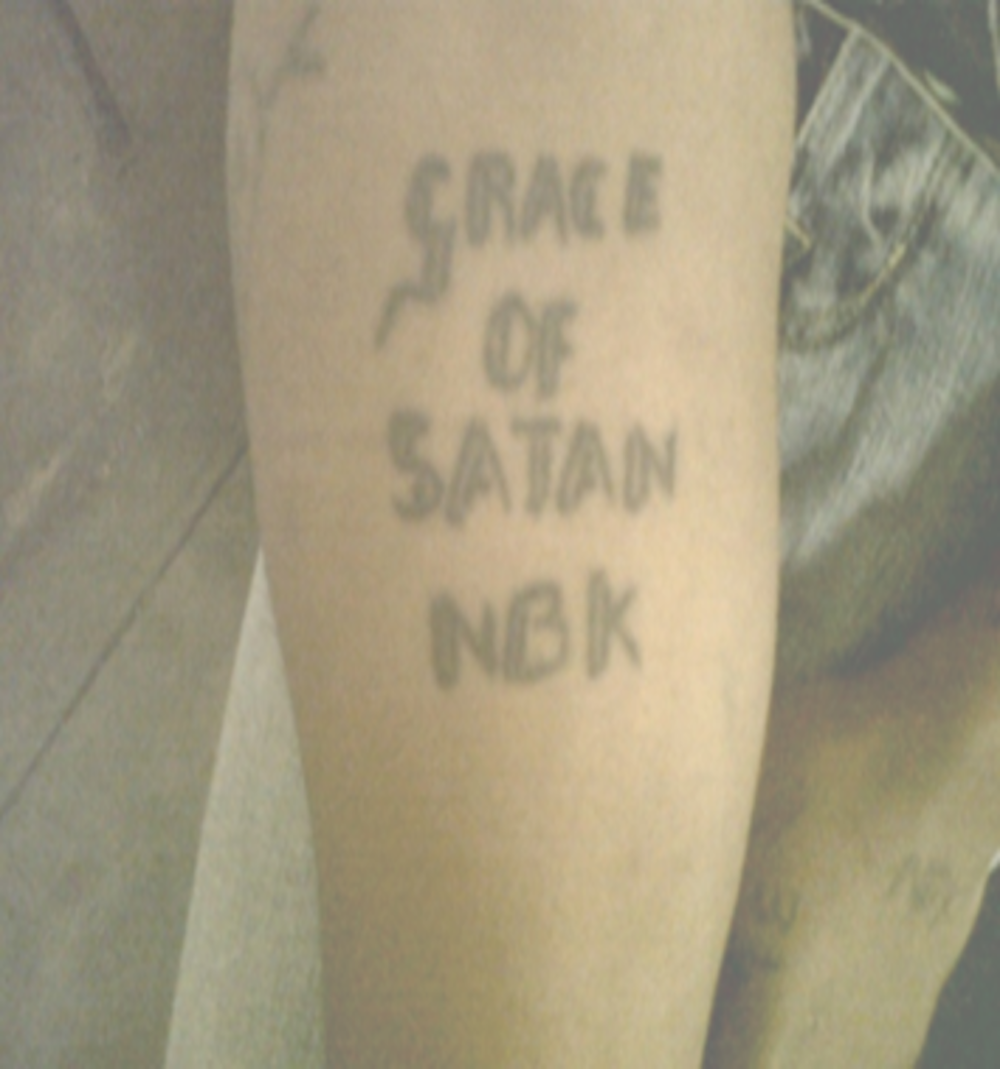
A BTK gang tattoo. Ashwill Ramon Phillips

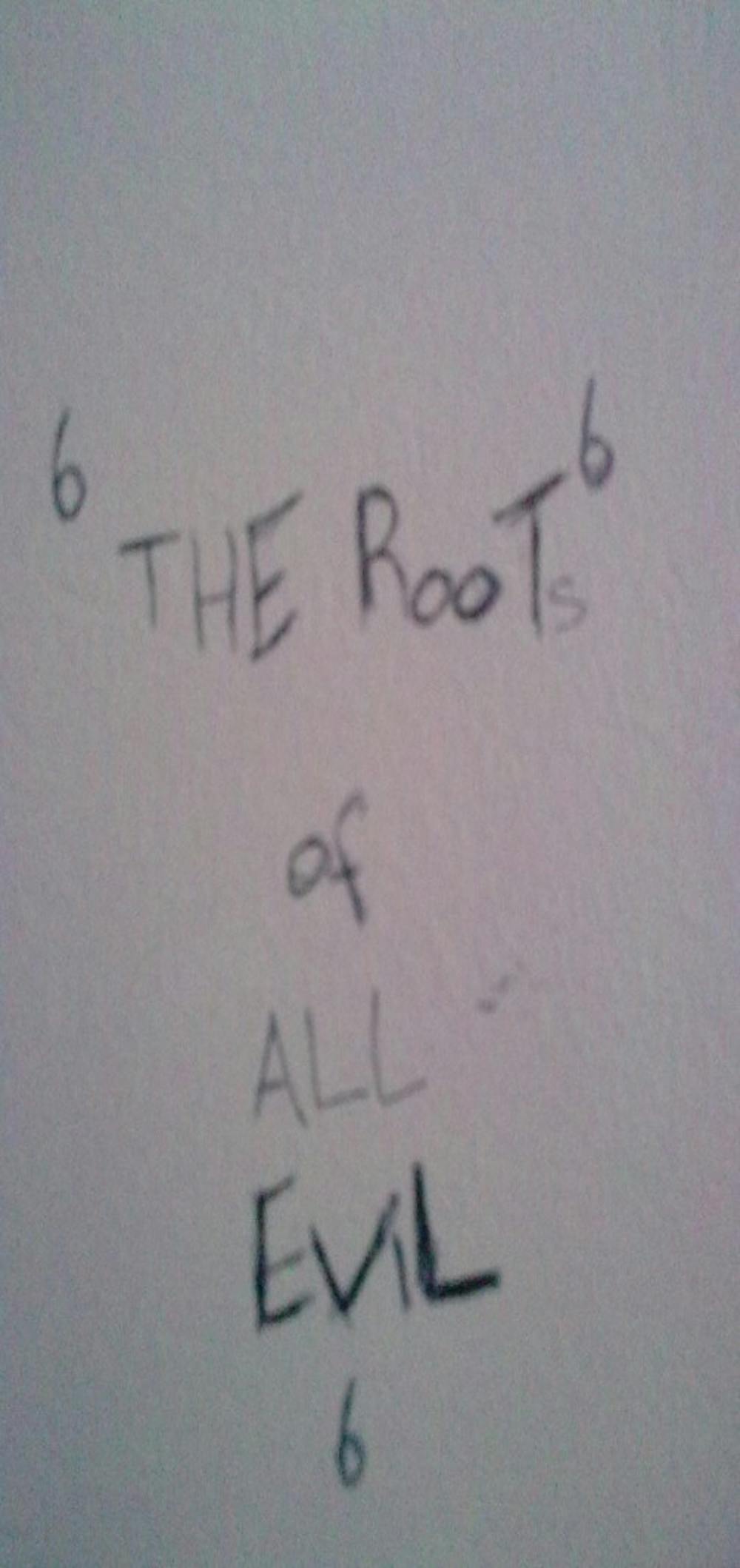
Since 2011, groups like this have expanded across the Free State. There are now about 40 such gangs active in the province, as reported by the police and confirmed in my research. Some of the better known gangs are the Triple 6 (666), Born-To-Kill (BTK), Natural Born Killers (NBK), International Junior Portuguese (IJP), and Maroma (Romans/Romas).

More typical street gangs are mostly known for expanding their territory through profit from the drug trade and extortion. But these Free State gangs incorporate spirituality and esoterism (special hidden knowledge) to assert dominance, foster cohesion and generate fear within communities.

They engage in serious crimes including murder, organ trafficking and rape. They are particularly known for acts such as ritual stabbings, cannibalism, and alleged communication with demonic forces.

NBK gang tattoo. Ashwill Ramon Phillips

The communities in which these groups operate, and gang members themselves, refer to them as “devil worshipping gangs”. This is because of the explicit link between certain gang-related practices and satanism, or the worship of the devil as depicted in the Christian bible.

Some groups merge beliefs and rituals related to Satan and anti-Christianity with witchcraft. Or they use symbols commonly associated with satanism such as “666” and inverted crosses. But labelling all such groups as “devil worshipping gangs” is misleading. The term “occult gangs” better captures the range of practices involved.

While both devil worshipping and witchcraft-related practices can play a role in criminal gang activity, they differ in origin and form. Devil worshipping draws from western occult traditions, using symbols and rituals to strengthen gang identity. Witchcraft-based practices typically involve the malicious use of muti (traditional African medicine) and muti murders (murders for body parts to use in muti). As one participant told me:

Yes, there are gangs that believe in muti. There are also gangs that believe in the devil. IJP and Roma believe in muti, while BTK and Triple 6 believe in getting power from the devil. They say they speak to Lucifer to give them powers.

So, infamous gangs in the Free State are not only dreaded for their brutality but also for their reported links to ritual murder, blood oaths, the use of muti and the consumption of human organs and blood. According to my research these activities have progressed from being viewed as urban legends and community myths to becoming lived realities.

Inside the gangs

My gang typology study sample consisted of 39 male offenders, aged 14 to 38. Participants were either serving sentences or awaiting trial for serious offences such as murder, rape and armed robbery.

The gang members spoke openly about seeking power through supernatural means. Some believed that consuming blood and participating in occult rituals could make them invisible to police and invincible against their enemies. As one told me:

The minute you drink blood you are invoking spirits to become part of you, demons to become part of you, and give you the powers that you need to do what you have to do…

A drawing by a Triple 6 gang member. Ashwill Ramon Phillips

Ritual stabbings, inverted crosses, and the “mark of the beast” (“666”) were part of their gang symbolism – seen in gang graffiti and tattoos and furthered by involvement in spiritual gatherings and the use of muti.

These elements form part of a shared gang ideology that offers meaning, identity and purpose to marginalised young people. I found that the gang members in my studies often lacked family support, social support or significant formal education.

To prevent young people from joining gangs, it is crucial to understand what pulls them in. Several participants described joining gangs not only for wealth, protection or status, but for a sense of spiritual power. Especially in communities where traditional religion, ancestral beliefs and Christian teachings coexist and sometimes collide.

My typology of occult gangs has the potential to inform targeted prevention programmes, rehabilitation efforts and policing strategies that take the spiritual realities of gang members seriously.

A new approach to fighting crime is needed

The rise of occult gangs has now progressed beyond the Free State. Similar trends are observed in the Eastern Cape, Northern Cape, Gauteng and Western Cape provinces.

The intersection of faith, fear and violence in these gangs challenges mainstream approaches to crime prevention. Traditional anti-gang strategies assume that gangs are driven mainly by socioeconomic factors or rational incentives. They fail to account for spiritual motivations and metaphysical beliefs.

The presence of ritual elements complicates investigations and amplifies fear. It makes gangs seem more powerful than they are.

At the same time, public institutions such as the police and social workers often lack the frameworks and cultural sensitivity to address the spiritual dimensions of the offences perpetrated by these groups.

A drawing by a BTK gang member. Ashwill Ramon Phillips

The struggle with the occult gangs in South Africa mirrors similar challenges in other countries, like Nigeria, the DRC and Haiti, where spiritual symbolism and ritualised violence are central to gang identity.

Effective interventions must include culturally grounded strategies to help members disengage from gangs, involving traditional leaders, healers, faith-based actors and mental health professionals.


Read more: Rituals, rites and rumours: how women claim power in Zimbabwe’s informal gold mines


By addressing the spiritual, social, and psychological dimensions of gang involvement, more sustainable pathways out of these groups can be created.

Gang violence in South Africa is evolving, and so must the response. It shouldn’t just punish young offenders, but offer them a genuine alternative.

– Devil worship, muti and murder: what’s behind the growth of occult gangs in South Africa?
– https://theconversation.com/devil-worship-muti-and-murder-whats-behind-the-growth-of-occult-gangs-in-south-africa-260141