CEO da Fundação Merck mantém encontro com a Primeira-Dama da Libéria e 13 Primeiras-Damas africanas e asiáticas na Cúpula da Iniciativa das Primeiras-Damas da Fundação Merck 2025 para discutir os seus programas conjuntos para fortalecer a capacidade de assistência à saúde

Source: Africa Press Organisation – Portuguese –

Fundação Merck (www.Merck-Foundation.com), o braço filantrópico da Merck KGaA Alemanha, realizou, a 7ª Edição da Cimeira da Iniciativa das Primeiras-Damas da Fundação Merck – MFFLI 2025 recentemente. A Cimeira foi aberta pelo Prof. Dr. Frank Stangenberg-Haverkamp, Presidente do Conselho de Curadores da Fundação Merck, e Senadora, Dra. Rasha Kelej, CEO da Fundação Merck & Presidente da Iniciativa das Primeiras-Damas da Fundação Merck e por S. Exª. Srª. KARTUMU YARTA BOAKAI, Primeira-Dama da República da Libéria e Embaixadora da Fundação Merck “Mais do Que uma Mãe” bem como pelas Primeiras-Damas de Angola, Cabo Verde, República Centro Africana, Gabão, Gâmbia, Gana, Libéria, Maldivas, Moçambique, Nigéria, São Tomé e Príncipe, Senegal e Zimbabwe.

A Senadora, Dra. Rasha Kelej, declarou: “Foi um prazer manter encontro com a minha querida irmã, S. Exa. Sra. KARTUMU YARTA BOAKAI, Primeira-Dama da República da Libéria e Embaixadora da Fundação Merck “Mais do Que uma Mãe”, durante a Cúpula da Iniciativa das Primeiras-Damas da Fundação Merck 2025. Juntos, concedemos 50 bolsas de estudo para jovens médicos liberianos nas áreas de Fertilidade, Embriologia, Cuidados Sexuais e Reprodutivos, Oncologia, Diabetes, Medicina de Urgência, Pediatria e Dermatologia. Muitos desses médicos tornaram-se nos primeiros especialistas no sector de saúde pública”.

Sua Excelência, Sra. KARTUMU YARTA BOAKAI, Primeira-Dama da República da Libéria e Embaixadora da Fundação Merck Mais do Que uma Mãe, declarou: “Fui nomeada Embaixadora da Fundação Merck Mais do Que uma Mãe em 2024 e tenho orgulho de termos conquistado tanto juntas. Concedemos 50 bolsas de estudo aos nossos médicos locais em diversas especialidades essenciais. Sinto-me especialmente honrada pelo facto de nosso actual Ministro da Saúde estar entre os ilustres ex-alunos da Fundação Merck.”

Além disso, através do programa “Educar Linda”, apoiamos a educação de 20 meninas merecedoras. Juntos, continuamos a fazer história no nosso país.”

Assista ao discurso da Primeira Dama da Libéria e Embaixadora da Fundação Merck Mais do Que uma Mãe durante a Cúpula da Iniciativa das Primeiras Damas da Fundação Merck 2025 aqui: https://apo-opa.co/3VVGTta

Assista ao vídeo da CEO da Fundação Merck, Senadora, Dra. Rasha Kelej durante o encontro mantido com S. Exª. Sra. KARTUMU YARTA BOAKAI, Primeira Dama da Libéria e Embaixadora da Fundação Merck “Mais do Que uma Mãe”: https://apo-opa.co/4nr3IRs

No segundo dia da Cimeira, foi realizada a reunião do Comité da Iniciativa das Primeiras-Damas da Fundação Merck – MFFLI entre as Primeiras-Damas Africanas, o Presidente e a CEO da Fundação Merck, onde as Primeiras-Damas Africanas e Asiáticas compartilharam os relatórios de impacto dos programas da Fundação Merck nos seus respectivos países, bem como discutiram a futura estratégia.

Assista ao video da reunião do Comité MFFLI: https://apo-opa.co/4nr3KZA

A Fundação Merck já concedemos um total de 2.280 bolsas de estudo a médicos de 52 países em 44 especialidades médicas carentes.

A Merck Foundation, juntamente com o Gabinete da Primeira Dama da Libéria, também realizou o programa de treinamento em mídia da saúde com o objectivo de desenvolver a capacidade dos representantes da mídia local para aumentar a conscientização sobre questões sociais e de saúde críticas, como o fim da violência do género e a mutilação genital feminina, apoiando a educação de meninas e o empoderamento das mulheres e abordando desafios de saúde como a diabetes e a hipertensão.

A Fundação Merck, em parceria, com a Primeira Dama da Libéria, também anunciou a abertura de candidaturas para os seus 8 importantes prémios de jornalismo, canção, moda, cinema, para estudantes e novos talentos com potencial nessas áreas.

Além disso, em parceria com a Primeira Dama da Libéria, a Fundação Merck está a lançar os seus livros de histórias infantis no país para abordar importantes questões sociais e de saúde, como combate ao estigma da infertilidade, apoiar a educação de meninas, acabar com a VBG e conscientizar sobre a diabetes e a hipertensão.

A 7ª Edição da Cimeira da Iniciativa das Primeiras-Damas foi stransmitida em directo nos canais das redes sociais da Fundação Merck e da Senadora, Dra. Rasha Kelej, CEO da Fundação Merck:

@ Merck Foundation: Facebook (http://apo-opa.co/46Etr3c), X (http://apo-opa.co/468fpXw), Instagram (http://apo-opa.co/48luaaL), e YouTube (http://apo-opa.co/4go4qwl).

@ Rasha Kelej: Facebook (http://apo-opa.co/4gv0tGm), X (http://apo-opa.co/4pkMkPX), Instagram (http://apo-opa.co/46jEpcX), e YouTube (http://apo-opa.co/4meJ2Ln).

Link para a transmissão em directo no Facebook da Sessão de Abertura do Painel de Alto Nível das Primeiras-Damas da Fundação  : 

Fundação Merck está a transformar o cenário de atendimento ao paciente e fazer história junto com os seus parceiros em África, Ásia e além, através de:

Mais de 2.280 bolsas de estudo fornecidas pela Fundação Merck para médicos de 52 países em mais de 44 especialidades médicas críticas e carentes.  

A Fundação Merck também está a criar uma mudança cultural e quebrar o silêncio sobre uma ampla gama de questões sociais e de saúde em África e em comunidades carentes através de:

Mais de 3.700 profissionais da mídia de mais de 35 países treinados para aumentar a conscientização sobre diferentes questões sociais e de saúde

8 prémios diferentes lançados anualmente para a melhor cobertura da mídia, designers de moda, filmes e músicas

Cerca de 30 músicas abordando questões sociais e de saúde, por cantores locais de toda a África

8 livros de histórias infantis em três línguas: inglês, francês e português

7 filmes de animação de conscientização em cinco línguas: inglês, francês, português, espanhol e Swahili para conscientizar sobre a prevenção e a detecção precoce da diabetes e da hipertensão e apoiar a educação de meninas.

Programa televisivo pan-africano “Nossa África da Fundação Merck” aborda questões sociais e de saúde em África através da comunidade “Moda e ARTE com Propósito”

Mais de 950 bolsas de estudo oferecidas a estudantes africanas de alto desempenho, mas carentes, para empoderá-las a concluir os seus estudos

15 canais de mídia social com mais de 8 milhões de seguidores

Distribuído pelo Grupo APO para Merck Foundation.

Contato:
Mehak Handa
Gerente do Programa de Conscientização Comunitária
Telefone: +91 9310087613 / +91 9319606669
Email: mehak.handa@external.merckgroup.com

Junte-se à conversa nas plataformas das nossas mídias sociais e deixe a sua voz ser ouvida:
Facebook: http://apo-opa.co/46Etr3c
X: http://apo-opa.co/468fpXw
YouTube: http://apo-opa.co/4go4qwl
Instagram: http://apo-opa.co/48luaaL
Threads: http://apo-opa.co/3HYFVta
Flickr: http://apo-opa.co/467PZt1
Website: www.Merck-Foundation.com
Baixar a Aplicação da Fundação Merck: https://apo-opa.co/4n8dok5

Sobre Fundação Merck:
A Fundação Merck, criada em 2017, é o braço filantrópico da Merck KGaA Alemanha e visa melhorar a saúde e o bem-estar das pessoas e impulsionar suas vidas por meio da ciência e da tecnologia. Nossos esforços concentram-se principalmente em melhorar o acesso a soluções de saúde de qualidade e equitativas em comunidades carentes, fortalecer a capacidade em saúde e pesquisa científica, empoderar meninas na educação e empoderar pessoas em STEM (Ciência, Tecnologia, Engenharia e Matemática), com foco especial em mulheres e jovens. Todos os comunicados de imprensa da Fundação Merck são distribuídos por e-mail ao mesmo tempo em que são disponibilizados no site da Fundação Merck.  Visite www.Merck-Foundation.com para ler mais. Siga as redes sociais da Fundação Merck: Facebook (http://apo-opa.co/46Etr3c), X (http://apo-opa.co/468fpXw), Instagram (http://apo-opa.co/48luaaL), YouTube (http://apo-opa.co/4go4qwl), Threads (http://apo-opa.co/3HYFVta) e Flickr (http://apo-opa.co/467PZt1).

A Fundação Merck dedica-se a melhorar os resultados sociais e de saúde de comunidades carentes. Embora colabore com diversos parceiros, incluindo governos, para alcançar os seus objectivos humanitários, a fundação permanece estritamente neutra em questões políticas. Não se envolve nem apoia quaisquer actividades, eleições ou regimes políticos, concentrando-se exclusivamente na sua missão de elevar a humanidade e promover o bem-estar, mantendo uma postura estritamente apolítica em todos os seus esforços.

Media files

Baixar .tipo

CEO de la Fondation Merck rencontre la Première Dame du Libéria et 13 Premières Dames d’Afrique et d’Asie lors du Sommet de l’Initiative des Premières Dames de la Fondation Merck 2025 pour discuter de leurs programmes conjoints visant à renforcer les capacités en matière de soins de santé

Source: Africa Press Organisation – French

La Fondation Merck (www.Merck-Foundation.com), branche philanthropique de Merck KGaA Allemagne, a récemment organisé la 7ème Édition du Sommet MFFLI 2025 de l’Initiative des Premières Dames de la Fondation Merck. Elle a été inaugurée par le Prof. Dr. Frank Stangenberg-Haverkamp, Chairman du Conseil d’Administration de la Fondation Merck, et la Sénatrice, Dr. Rasha Kelej, CEO de la Fondation Merck et Présidente de l’Initiative des Premières Dames de la Fondation Merck, et S.E. Mme KARTUMU YARTA BOAKAI, Première Dame de la République du Libéria et Ambassadrice de la Fondation Merck « Plus Qu’une Mère » aux côtés des Premières Dames d’Angola, Cap-Vert, République Centrafricaine, Gabon, Gambie, Ghana, Kenya, Maldives, Mozambique, Nigéria, São Tomé-et-Principe, Sénégal, et Zimbabwe.

Sénatrice, Dr Rasha Kelej, a déclaré : « Ce fut un plaisir de rencontrer ma chère sœur S.E. Mme KARTUMU YARTA BOAKAI, Première Dame de la République du Libéria et Ambassadrice de la Fondation Merck « Plus Qu’une Mère » lors du Sommet de l’Initiative des Premières Dames de la Fondation Merck 2025. Ensemble, nous avons accordé 50 bourses à de jeunes médecins libériens dans les domaines de Fertilité, Embryologie, Soins Sexuels et Reproductifs, Oncologie, Diabète, Médecine Aiguë, Pédiatrie et Dermatologie. Nombre de ces médecins sont devenus les premiers spécialistes du secteur de la santé publique. »

S.E. Mme KARTUMU YARTA BOAKAI, Première Dame de la République du Libéria et Ambassadrice de la Fondation Merck « Plus Qu’une Mère », a déclaré : « J’ai été nommée Ambassadrice de la Fondation Merck « Plus Qu’une Mère » en 2024 et je suis fière que nous ayons accompli tant de choses ensemble. Nous avons accordé 50 bourses à nos médecins locaux dans plusieurs spécialités essentielles. Je suis particulièrement honorée que notre actuelle Ministre de la Santé figure parmi les éminents Anciens Boursiers de la Fondation Merck.

De plus, grâce au programme « Éduquer Linda », nous soutenons l’éducation de 20 filles méritantes. Ensemble, nous continuons à écrire l’histoire de notre pays. »

Regardez le discours de la Première Dame du Libéria et Ambassadrice de la Fondation Merck « Plus Qu’une Mère » lors du Sommet de l’Initiative des Premières Dames de la Fondation Merck 2025 ici : https://apo-opa.co/3VVGTta

Regardez la vidéo de la CEO de la Fondation Merck, Sénatrice, Dr. Rasha Kelej, recevant S.E. Mme KARTUMU YARTA BOAKAI, Première Dame de la République du Libéria et Ambassadrice de la Fondation Merck « Plus Qu’une Mère » : https://apo-opa.co/4nr3IRs

Le deuxième jour du Sommet, une réunion du comité de l’Initiative des Premières Dames de la Fondation Merck – MFFLI a eu lieu entre les Premières Dames d’Afrique et le Chairman et la CEO de la Fondation Merck. Au cours de cette réunion, les Premières Dames d’Afrique et d’Asie ont partagé le rapport d’impact des programmes de la Fondation Merck dans leurs pays respectifs et ont discuté de la stratégie future.

Regardez la vidéo de la réunion du comité MFFLI : https://apo-opa.co/4nr3KZA

La Fondation Merck a accordé au total 2 280 bourses à des médecins de 52 pays dans 44 spécialités médicales mal desservies.

La Fondation Merck, en collaboration avec le Bureau de la Première Dame du Libéria, a également mené un programme de Formation des Médias sur la Santé dans le but de renforcer les capacités des représentants des médias locaux à sensibiliser sur des questions sociales et sanitaires cruciales telles que mettre fin à la violence sexiste et aux mutilations génitales féminines, soutenir l’éducation des filles et l’autonomisation des femmes, et la résolution des problèmes de santé tels que le diabète et l’hypertension.

La Fondation Merck a également lancé un Appel à Candidatures pour ses 8 prix importants, en partenariat avec la Première Dame du Libéria, destinés aux médias, aux musiciens, aux créateurs de mode, aux cinéastes, aux étudiants et aux nouveaux talents potentiels dans ces domaines.

De plus, en partenariat avec la Première Dame du Libéria, la Fondation Merck lance ses livres d’histoires pour enfants dans le pays, afin d’aborder diverses questions sociales et sanitaires, telles que la lutte contre la stigmatisation liée à l’infertilité, le soutien à l’éducation des filles, la lutte contre la violence sexiste, la sensibilisation sur le diabète et l’hypertension.

La 7ème édition de l’Initiative des Premières Dames de la Fondation Merck a été diffusée en direct sur les réseaux sociaux de Merck Foundation et Senator, Dr. Rasha Kelej, CEO de la Fondation Merck :

@ Merck Foundation: Facebook (http://apo-opa.co/46Etr3c), X (http://apo-opa.co/468fpXw), Instagram (http://apo-opa.co/48luaaL), et YouTube (http://apo-opa.co/4go4qwl).

@ Rasha Kelej: Facebook (http://apo-opa.co/4gv0tGm), X (http://apo-opa.co/4pkMkPX), Instagram (http://apo-opa.co/46jEpcX), et YouTube (http://apo-opa.co/4meJ2Ln).

Lien vers la retransmission en direct sur Facebook de la Session Inaugurale du Panel de Haut Niveau de l’Initiative des Premières Dames de la Fondation Merck :

La Fondation Merck transforme le paysage des soins aux patients et écrit l’histoire avec ses partenaires en Afrique, en Asie et au-delà, à travers :

  • Plus de 2280 Bourses offertes par la Fondation Merck pour les médecins de 52 pays dans 44 spécialités médicales critiques et mal desservies.  

La Fondation Merck crée également un changement de culture et brise le silence sur un large éventail de problèmes sociaux et sanitaires en Afrique et dans les communautés mal desservies grâce à :

  • Plus de 3700 Journalistes de plus de 35 pays formés pour mieux sensibiliser sur les différents problèmes sociaux et sanitaires.
  • 8 Prix Différents lancés chaque année pour la meilleure couverture médiatique, les créateurs de mode, les films et les chansons.
  • Environ 30 chansons pour aborder les problèmes sanitaires et sociaux par des chanteurs locaux à travers l’Afrique.
  • 8 livres de contes pour enfants en trois langues – anglais, français et portugais.
  • 7 Films d’Animation de Sensibilisation en cinq langues : Anglais, Français, Portugais, Espagnol et Swahili pour sensibiliser sur la prévention et le dépistage précoce du diabète et de l’hypertension et soutenir l’éducation des filles.
  • Programme Télévisé Panafricain « Notre Afrique par la Fondation Merck » abordant les problèmes sociaux et sanitaires en Afrique à travers la communauté « Mode et L’Art avec un But ».
  • Plus de 950 bourses accordées à des écolières africaines brillantes mais défavorisées pour leur permettre de terminer leurs études.
  • 15 chaînes de réseaux sociaux avec plus de 8 millions de d’abonnés.

Distribué par APO Group pour Merck Foundation.

Contact :
Mehak Handa
Responsable du programme de sensibilisation communautaire
Téléphone : +91 9310087613/ +91 9319606669
E-mail : mehak.handa@external.merckgroup.com

Rejoignez la conversation sur nos plateformes de réseaux sociaux ci-dessous et faites entendre votre voix :
Facebook : http://apo-opa.co/46Etr3c
X : http://apo-opa.co/468fpXw
YouTube : http://apo-opa.co/4go4qwl
Instagram : http://apo-opa.co/48luaaL
Threads : http://apo-opa.co/3HYFVta
Flickr : http://apo-opa.co/467PZt1
Website : www.Merck-Foundation.com
Télécharger l’Application de la Fondation Merck : https://apo-opa.co/4n8dok5

À propos de la Fondation Merck :
La Fondation Merck, créée en 2017, est la branche philanthropique de Merck KGaA Allemagne, vise à améliorer la santé et le bien-être des populations et à faire progresser leur vie grâce à la science et à la technologie. Nos efforts sont principalement axés sur l’amélioration de l’accès à des solutions de soins de santé de qualité et équitables dans les communautés mal desservies, à renforcer les capacités de recherche sur les soins de santé et la recherche scientifique, l’autonomisation des filles à travers l’éducation et l’autonomisation des personnes en STEM (Science, Technologie, Ingénierie et Mathématiques) avec un accent particulier sur les femmes et les jeunes. Tous les communiqués de presse de la Fondation Merck sont distribués par e-mail en même temps qu’ils deviennent disponibles sur le site Web de la Fondation Merck. Veuillez visiter www.Merck-Foundation.com pour en savoir plus. Pour en savoir plus, contactez nos réseaux sociaux de la Fondation Merck : Facebook (http://apo-opa.co/46Etr3c), X (http://apo-opa.co/468fpXw), Instagram (http://apo-opa.co/48luaaL), YouTube (http://apo-opa.co/4go4qwl), Threads (http://apo-opa.co/3HYFVta) et Flickr (http://apo-opa.co/467PZt1).

La Fondation Merck se consacre à l’amélioration des résultats sociaux et sanitaires pour les communautés dans le besoin. Bien qu’elle collabore avec divers partenaires, y compris des gouvernements, pour atteindre ses objectifs humanitaires, la fondation reste strictement neutre sur le plan politique. Elle ne s’engage pas et ne soutient pas d’activités, d’élections ou de régimes politiques, se focalise uniquement sur sa mission d’élever l’humanité et d’améliorer le bien-être tout en maintenant une position strictement apolitique dans toutes ses activités.

Media files

Afreximbank et le gouvernement sud-africain signent un accord historique de facilité de préparation de projets conjoints pour accélérer le développement des infrastructures

Source: Africa Press Organisation – French

La Banque Africaine d’Import-Export (Afreximbank) (www.Afreximbank.com) a franchi une étape importante dans le développement des infrastructures en Afrique avec la signature d’un accord historique de facilité de préparation de projets conjoints (JPPF) avec le gouvernement de la République d’Afrique du Sud.

L’accord a été conclu lors d’une cérémonie en marge de la Foire commerciale intra-africaine 2025 (IATF2025) qui vient de s’achever à Alger, en Algérie. Il vise à accélérer la préparation de projets d’infrastructure essentiels dans le cadre du programme Infrastructure South Africa (ISA) du gouvernement placé sous la tutelle du National Department of Public Works And Infrastructure [Ministère national des Travaux publics et des Infrastructures].  

Le JPPF vise à cofinancer la préparation et la mise en œuvre de projets bancables de haute qualité dans plusieurs secteurs critiques, notamment l’énergie, les transports et la logistique, ainsi que les infrastructures numériques. Ce partenariat transformateur devrait permettre de débloquer des investissements d’une valeur totale d’au moins 750 millions de dollars US, contribuant de manière significative au développement économique du pays. 

En combinant l’expertise financière d’Afreximbank et la supervision stratégique de l’ISA, ce partenariat vise à créer un solide portefeuille de projets bancables essentiels pour combler le déficit infrastructurel de l’Afrique du Sud. Cette initiative devrait stimuler l’industrialisation et attirer les investissements des secteurs public et privé.

S’exprimant lors de la cérémonie de signature, M. Kenny Molong, Vice-ministre à la présidence de l’Afrique du Sud, a souligné l’importance de cette collaboration en ces termes : « La lenteur avec laquelle les concepts de projets se transforment en projets pleinement mis en œuvre résulte souvent d’un manque de dynamisme lors de la phase de préparation des projets. Ce partenariat avec Afreximbank nous permet de transformer des concepts en projets d’infrastructure viables à même d’attirer des financements du secteur privé et d’apporter des avantages socio-économiques. La collaboration est essentielle ; aucune nation ou organisation ne dispose à elle seule, de toutes les réponses ». 

Mme Oluranti Doherty, Directrice générale Fonds de développement des exportations d’Afreximbank, a exprimé son enthousiasme pour cette collaboration : « Nous sommes heureux de nous associer au gouvernement d’Afrique du Sud, une puissance économique régionale importante, pour contribuer à relever les défis de l’Afrique du Sud en matière d’infrastructure. Notre objectif est d’établir un écosystème d’infrastructures cohésif et interconnecté qui rehaussera la compétitivité de l’Afrique du Sud et stimulera le développement économique, en étendant les avantages au-delà de ses frontières à la région de la Communauté de développement de l’Afrique australe (SADC), favorisant ainsi le commerce intra-africain et l’intégration régionale. Grâce à ce partenariat, nous souhaitons mobiliser les fonds et l’expertise technique indispensables pour réduire les risques liés aux projets à un stade critique de leur développement, afin d’améliorer la qualité et la rapidité de la mise en place des infrastructures ».

Mme Doherty a souligné l’engagement d’Afreximbank à collaborer avec les entités gouvernementales et s’est félicitée de l’opportunité de s’associer avec d’autres gouvernements en vue de maximiser l’impact de cette intervention stratégique dans l’Afrique globale.

Mme Mameetse Masemola, Directrice par intérim d’Infrastructure South Africa, s’est réjouie de ce partenariat tant attendu : « Il s’agit d’une étape importante pour l’ISA, qui contribuera grandement au développement d’un réseau d’infrastructures crédible, conformément au mandat que lui a confié Son Excellence le président Cyril Ramaphosa ».

L’IATF2025, dont les rideaux viennent de tomber, a été un énorme succès, dépassant toutes ses prévisions initiales. L’événement a attiré plus de 112 000 participants, en présentiel et en ligne, et a généré plus de 48 milliards de dollars US en accords commerciaux. La Foire a réuni plus de 2 100 exposants et a accueilli 20 chefs d’État et représentants de gouvernements. Elle a également enregistré la participation de plusieurs ministres, dautres hauts fonctionnaires et des hommes et femmes d’affaires de premier plan. La Foire e a été accueillie par la République algérienne démocratique et populaire et organisée par Afreximbank, en partenariat avec la Commission de l’Union africaine et le Secrétariat de la Zone de libre-échange continentale africaine (ZLECAf).

Lancée en 2018, L’IATF est une plateforme permettant aux entreprises de présenter leurs biens et services aux visiteurs et aux acheteurs tout en explorant les opportunités et en échangeant des informations. L’IATF vise à tirer parti des opportunités du marché unique de la ZLECAf de plus de 1,4 milliards de personnes et d’un PIB de plus de 3500 milliards dollars US.

Distribué par APO Group pour Afreximbank.

Contact presse :
media@intrafricatradefair.com
press@afreximbank.com

À propos de la Foire commerciale intra-africaine :
Organisée par la Banque Africaine d’Import-Export (Afreximbank), la Commission de l’Union africaine (CUA) et le Secrétariat de la Zone de libre-échange continentale africaine (ZLECAf), la Foire commerciale intra-africaine vise à fournir une plate-forme unique pour faciliter l’échange d’informations sur le commerce et l’investissement afin de soutenir le développement du commerce et de l’investissement intra-africains, en particulier dans le contexte de la mise en œuvre de l’Accord sur la Zone de libre-échange continentale africaine (ZLECAf). La Foire commerciale intra-africaine réunit les acteurs continentaux et internationaux afin qu’ils présentent et exposent leurs biens et services, tout en explorant les opportunités d’affaires et d’investissement sur le continent. L’IATF offre en outre une plateforme pour partager des informations sur le commerce, les investissements et le marché avec les parties prenantes et permet aux participants d’examiner et d’identifier des solutions aux difficultés auxquelles sont confrontés le commerce et l’investissement intra-africain. Outre les participants africains, la foire commerciale est ouverte aux entreprises et aux investisseurs de pays non africains qui souhaitent faire des affaires en Afrique et soutenir sa transformation grâce à l’industrialisation et au développement des exportations.

Pour de plus amples informations, veuillez consulter le site : www.IntrAfricanTradeFair.com

Media files

Refugee protection in Egypt: what’s behind the return train to Sudan

Source: The Conversation – Africa – By Dina Wahba, Senior Researcher, Arnold Bergstraesser Institute, University of Freiburg

A special train left the Egyptian capital of Cairo for Aswan, a town close to the border with southern neighbour Sudan, in July 2025. The train, publicised by the Egyptian government as shiny, air-conditioned and free of charge, runs a weekly service. It is transporting Sudanese refugees who are willing to go back home. Sudan, however, has been in the midst of civil war since April 2023.

The train arrives in Aswan after around 12 hours. Travellers then continue via bus or ferry into Sudan. Little is known about what happens when travellers arrive in the country.

As at mid-2025, more than 190,000 Sudanese refugees had gone back home from Egypt. This is a five-fold increase in returns from 2024. Egypt hosts the largest number of Sudanese who have fled the war. More than 1.2 million Sudanese have crossed into Egypt since April 2023, making them the largest refugee community there.

The army-led Sudanese government – which regained control of Khartoum in March 2025 after losing the capital two years earlier – promotes return as part of its alleged efforts for post-conflict stabilisation and reconstruction.

However, camouflaged behind Egypt’s voluntary return programme is a far more complex political reality, with refugees in the centre.

Initially, Egypt kept its borders relatively open, allowing women, children and older men to enter visa-free under a long-standing deal with Sudan.

As refugee numbers rose, however, new restrictions were imposed and brutally enforced from June 2023. These restrictions were codified in a new law adopted in 2024.

We have studied socio-political dynamics in Egypt and African refugee politics. In our view, while the voluntary return initiative is widely promoted by Egyptian and Sudanese authorities as a sign of solidarity and reconstruction, it masks a policy environment aimed at reducing the Sudanese population in Egypt.

Egypt has a contentious history of refugee protection. In recent years, refugees have faced hostile sentiments from host communities and rising xenophobia. Sudanese refugees in particular have been denied access to public spaces or rental property, and have faced physical violence.

The government’s response has focused on appeasing domestic audiences in the face of economic decline by providing external scapegoats. This does not bode well for the future of refugee protection in Egypt.

Countries often scapegoat refugees and other migrants to retain legitimacy with their own citizens, especially when there are pervasive inequalities that states cannot or will not bridge. This is the case in Egypt.

Egypt and Sudan’s shifting relations

Refugee hosting is never just a question of humanitarian or ethical protection measures. It is deeply embedded in domestic and external policy interests, as well as the global geopolitical context.

Egypt changed its open-border agreement with Sudan on 10 June 2023. It required all Sudanese to obtain visas before entry. Wait times stretched to two to three months, and an illicit market of visa “facilitators” sprang up, charging between US$1,500 and US$2,500 per person.

Egypt’s reception of displaced Sudanese took a more restrictive and controlling approach, including deportations. Its asylum law, passed in December 2024, formalises these harsh measures. Vague national security clauses enable status revocations and penalise the “illegal” entry of refugees.

Politically, Egypt has backed the Sudanese army as the cornerstone of stability. It backed Sudan’s October 2021 military coup and has aligned with the army in the ongoing civil war against the paramilitary Rapid Support Forces.

While the civil war continues to rage in many regions of Sudan, army-led forces have control of the centre and east of Sudan, supporting the push for the special train programme.

Additionally, Egypt has been a core beneficiary of European Union (EU) efforts to stop onward migration from Africa and the Middle East to Europe. Though Egypt is no longer one of the most significant routes to Europe – this has shifted to Libya – Egyptians make up one of the largest national groups of irregular migrants arriving in Europe. With rising numbers of refugees in Egypt, the EU fears the situation could spiral.

To address this, Egypt signed a 7.4 billion euro (US$8.7 billion) deal with the EU in March 2024 to increase control of its (sea) borders and cooperate on returns from Europe. Thus, Egypt’s return of refugees to Sudan is in the EU’s interests.

Under such complicated settings, refugees become pawns. Egypt’s train, therefore, serves domestic policy interests of reducing Sudanese refugees, addresses the general hostile environment these refugees face and supports Cairo’s external policy interests.

What about the refugees?

When it comes to Sudan, the big question is whether states are violating a core tenet of refugee protection: the principle of non-refoulement. This states that countries cannot return refugees to a country where they would face torture, cruel, inhuman or degrading treatment or punishment and other irreparable harm.

Many Sudanese may choose to return not because they’re hopeful but as a result of economic hardship in Egypt, uncertainty with regard to their legal status, and fear.

The UN Refugee Agency advances three “durable solutions” for the return of refugees:

  • local integration, which is difficult in Egypt

  • resettlement to a third country, which has become increasingly difficult in the current global environment. The US, for instance, suspended all its resettlement programmes in January 2025.

  • returning voluntarily to the country of origin.

Where possible, states aim to return people – both refugees and other migrants – voluntarily. This is often done with the assistance of the International Organisation for Migration. However noble this process may be, migrants may still feel coerced.

Though army-controlled areas in Sudan like Khartoum, Sennar and El Gezira have seen relative calm, key conflict zones like Darfur and Kordofan are still actively contested. Humanitarian agencies caution that the ongoing violence undermines the voluntary nature of return.

What can be done

Usually after a conflict ends, the UN Refugee Agency draws up tripartite agreements with the countries of origin and asylum, and itself. This establishes the conditions for refugees to return and establishes proper reintegration programmes.

In the Egypt and Sudan case, however, it’s not clear who is financing the return train. Where is the tripartite agreement between Sudan, Egypt and the UN Refugee Agency? Is this even on the table given the continuing conflict in Sudan?

The trickiest part is what happens in the long run for those returning to conflict. This can amount to what scholars call “slow deportation”, where return, even when allegedly voluntary, undermines a serious commitment to refugee protection.

What Sudanese refugees need is not air-conditioned trains. Rather, they need protection of their full political, social and legal rights, as the world promised in the aftermath of the atrocities of the second world war in 1951.

– Refugee protection in Egypt: what’s behind the return train to Sudan
– https://theconversation.com/refugee-protection-in-egypt-whats-behind-the-return-train-to-sudan-264917

Who’s got the power? Studies of male and female primates show it’s not simple

Source: The Conversation – Africa – By Nikos Smit, Postdoc in evolutionary/behavioural ecology, University of Turku

Our understanding of female-male power relationships in animals has changed over time. Evolutionary biologists once thought that male mammals held clear-cut power over females. Later, species with pronounced female power over males were presented as exceptions in a landscape of strict male power. Spotted hyenas and certain primates, including bonobos and most lemurs, were examples of female dominance.

These views were reinforced by the assumption that males and females competed over different resources: males over females, and females over food.

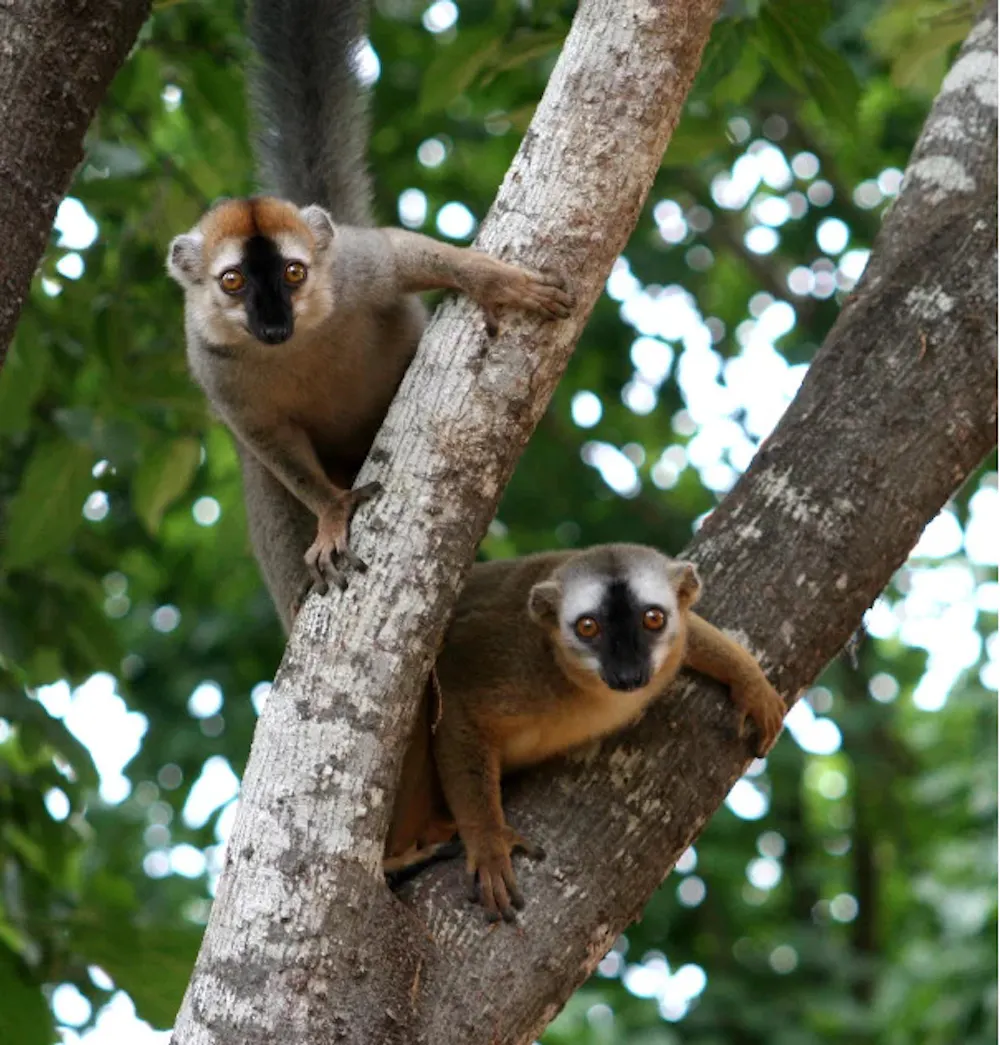
In redfronted lemurs females are the same size as males. Claudia Fichtel, Author provided (no reuse)

But it’s not that simple, as the research of our colleagues and our own work on various primates has shown.

We reviewed studies of primate species and found that power relationships between the sexes varied significantly. In our sample, only 25 species exhibited clear male power, 16 exhibited clear female power, and the remaining species (about 70%) exhibited moderate or no sex biases in power. Most primate females can compete directly with males and often overpower them.

Size and strength differences between males and females

Males don’t always have all the power even when they are much larger and stronger than females.

In an earlier study, we showed that female mandrills in Gabon sometimes outrank males that are more than three times heavier than them.

Female mandrills are smaller than males but can overpower them. Nikos Smit, Author provided (no reuse)

Gorillas are an interesting case too. Apart from the big difference between males and females in body and canine tooth size, they are also typically presented (by scientists and non-scientists) as the species with the strictest male-biased power over females among great apes. They’ve become the “male power archetype” among animals.

We drew on 25 years of data about mountain gorillas in Uganda, to test if males strictly overpower females. Our findings suggest that females may leverage support from the most powerful males to gain power over other males. Or they may leverage access to themselves, and some males yield to females to acquire such access.

Our findings in mandrills and gorillas contribute a new perspective on the ecology and evolution of female-male power relationships in great apes and other primates that is not solely based on size and strength. They call for future work to investigate similar long-standing assumptions regarding the evolutionary origins of intersexual relationships across species.

Factors influencing power across primates

Our comparative analysis showed that intersexual power is influenced by different factors. Generally, females rely less than males on physical force and coercion in order to gain power. Female power is more likely to prevail in species that are monogamous, have little or no body size difference between adult females and males, and/or forage primarily in trees. These are conditions that give females greater control over reproduction.

By contrast, male power is more likely to prevail in species where males mate with multiple females, are primarily terrestrial, and have larger bodies or greater weapons than females.

Even when these conditions are met, however, there isn’t always a clear-cut bias in intersexual power of a social group or species.

Gorilla males weigh almost twice as much as females. Martha M Robbins/ MPI-EVA, Author provided (no reuse)

Male mandrills and gorillas mate with multiple females and are terrestrial. In these species males generally have more power than females, and the highest ranking individual in a group’s social hierarchy is always a male. Yet power is not clear-cut and females can overpower other males.

What males and females compete for

Finally, our studies suggest that females and males often compete directly over access to resources.

In the comparative study across primates, we found that contests between females and males represented on average almost half of all contests in a social primate group.

In the study on mountain gorillas, we found that power relationships between females and males determined priority of access to a precious food resource, and when a female overpowered a male, she always had priority over him.

Altogether, these new findings suggest that:

  • most primate societies do not have clear-cut sex-biases in power

  • even in species with extreme male-biases in size and strength, females can overpower males

  • females and males compete directly over similar resources.

These findings refine our interpretation of intersexual relationships across animals. They caution against oversimplified views based solely on physical strength while neglecting the complexity of their social landscape.

Finally, this work shows that the human profile does not really resemble other primates where there is clear male dominance or clear female dominance. Instead, humans are closer to those “intermediate” species with moderate and flexible dominance relationships. This can inform attempts to reconstruct power relationships between men and women in early humans.

– Who’s got the power? Studies of male and female primates show it’s not simple
– https://theconversation.com/whos-got-the-power-studies-of-male-and-female-primates-show-its-not-simple-263292

Control Risks’ 10th Africa Risk-Reward Index

Source: APO

Control Risks (www.ControlRisks.com), the global specialist risk consultancy, today released the 10th edition of its flagship Africa Risk-Reward Index (ARRI), developed in partnership with Oxford Economics Africa. The 2025 edition of the ARRI marks almost a decade of tracking the economies of 24 African markets, ensuring  the political, security and economic insights remain truly data-driven.

ARRI highlights the diversity of African markets. While aggregate risk across the continent has remained broadly flat since 2017, and reward levels have largely rebounded, the real story is one of divergence. Reform-minded economies are pulling ahead, while several anchor markets face execution challenges.

 “Africa will reward organisations that build resilient, regionally integrated models – not those relying on single-buyer, single-market strategies” explains Patricia Rodrigues, Associate Director, Control Risks.

The 2025 ARRI further shows that companies succeeding on the continent are those embracing localised strategies: building for regional demand, investing in local value chains and structuring for domestic volatility. Reform-led markets offer early-mover advantages, while anchor economies require conditional investment tied to tangible reforms. Across all markets, regional integration and local capital are reshaping how growth is scaled and financed.

ARRI identified the following emerging market trends set to shape the performance of companies in 2025 and beyond:

• Industrial policy is reshaping value chains. From Guinea to Mozambique, countries are moving from raw material exports to regional specialisation

• Corridor economics are gaining traction. Projects like the Lobito Corridor are catalysing cross-border industrial initiatives and inspiring similar ventures

• Local capital is waking up. Panda and samurai bonds, deeper pension pools and rising domestic debt shares are transforming the funding landscape.

• Strategic repositioning is underway. Africa is no longer waiting for external financing but is industrialising on its own terms.

“The aid era is ending; the operating era is here” added Rodrigues.

Distributed by APO Group on behalf of Control Risks Group Holdings Ltd.

Marketing contacts:
Agnes Jumah
EMEA Marketing Lead
Control Risks
Agnes.Jumah@controlrisks.com

Kayley Betchoo
Senior Marketing Executive: Africa
Control Risks
Kayley.Betchoo@controlrisks.com

Media spokespeople:
Patricia Rodrigues
Director
Geopolitical Risk
Kenya and East Africa
Patricia.Rodrigues@controlrisks.com

Vincent Rouget
Principal
Geopolitical Risk
Sub-Saharan Africa
Vincent.Rouget@controlrisks.com

Beverly Ochieng
Senior Analyst
Geopolitical Risk
Senegal and West Africa
Beverly.Ochieng@controlrisks.com

Oludamilare Adesola
Associate Director
Geopolitical Risk
Nigeria and West Africa​
Oludamilare.Adesola@controlrisks.com

About The Africa Risk-Reward Index:
ARRI tracks 24 African countries using 11 political, security and economic indicators to produce annual risk and reward scores with ten-year trendlines. Developed by Control Risks and Oxford Economics Africa, the Index offers a comparative snapshot of market opportunities and risks across the continent.

About Control Risks:
Control Risks is a global security and strategic intelligence firm. Across the physical and digital worlds, we deliver comprehensive security advice and solutions along with strategic intelligence that enable clients to make risk-based decisions and realise opportunities around the world.

About Oxford Economics Africa:
Oxford Economics Africa’s coverage provides comprehensive analysis of immediate and long-term economic prospects in addition to forecasts and commentary by country, sector and city that will benefit organisations monitoring risks or opportunities for their operations or investments in the continent. With headquarters in South Africa Oxford Economics Africa has a strong reputation for local knowledge, independence and quality. The firm employs a highly qualified team of economists, econometricians, quantitative analysts, political analysts and editors.

Media files

.

Foreign Ministers call for the protection and safety of Gaza aid flotilla

Source: Government of South Africa

The Ministers of Foreign Affairs from several countries have expressed concern for the safety of the Global Sumud Flotilla, which involves citizens from their countries and carries critical aid to Gaza.

Global Sumud Flotilla is an international, civil society-led maritime initiative launched in June this year, built on decades of Palestinian resistance and international solidarity.

“The Ministers of Foreign Affairs of Bangladesh, Brazil, Colombia, Indonesia, Ireland, Libya, Malaysia, Maldives, Mexico, Pakistan, Qatar, Oman, Slovenia, South Africa, Spain, and Türkiye have expressed concern for the safety of the Global Sumud Flotilla, which involves citizens from their countries and carries critical aid to Gaza,” the Department of International Relations and Cooperation (DIRCO) said on Tuesday.

According to the department, the movement has outlined its goal of delivering humanitarian aid to the Gaza Strip and raising awareness about the urgent needs of the Palestinian people, as well as the necessity of ending the conflict in Gaza.

France24 reported yesterday that a convoy of about 20 boats carrying aid and pro-Palestinian activists, including Swedish climate activist Greta Thunberg, was preparing to depart from Tunisia in an attempt to challenge Israel’s blockade of Gaza.

Despite delays and drone attacks, the flotilla’s mission is to establish a humanitarian corridor to Gaza and demonstrate global solidarity.

“We, therefore, call on everyone to refrain from any unlawful or violent act against the flotilla, to respect international law and international humanitarian law.

“We recall that any violation of international law and human rights of the participants in the flotilla, including attacks against the vessels in international waters or illegal detention, will lead to accountability, “ the statement read.

In addition, the department emphasised that the goals of peace and humanitarian assistance, alongside respect for international and humanitarian law, are shared by these governments. – SAnews.gov.za
 

Gauteng law enforcement intensifies operations

Source: Government of South Africa

The Gauteng Transport Inspectorate (GTI) has intensified its high-impact stop-and-search operations as part of the province’s broader strategy to tackle criminality, lawlessness and strengthen compliance with traffic laws.

Between 8 and 14 September 2025, the unit’s officers conducted a number of stop-and-search operations throughout the province. 

During these operations, officers issued numerous infringement notices to non-compliant public transport operators, addressing cases of unroadworthy vehicles, and effecting arrests linked to serious traffic violations and attempted bribery.

In total, over 700 manual infringement notices were issued with a further 827 processed electronically through the GTl e-force gadget.

The high-impact operations also saw 72 vehicles served with discontinue notices for non-compliance with various road safety regulations, while one vehicle was impounded for consequential violations.

The stop-and-search operations also exposed more serious offences.

Two motorists were arrested for attempting to bribe officers, one for contravening the Immigration Act, whilst another for assault grievous bodily harm on an officer.

“Tensions escalated on Friday, 12 September 2025, when GTI officers came under attack from taxi drivers near the Randburg Taxi Rank in Johannesburg. 

“An instigator, a driver affiliated with the Alexandra Taxi Association, was promptly arrested for inciting violence against officers, organising a mob to block the road and throw stones at them, damage to State property (vehicle) and assaulting a female officer causing grievous bodily harm demonstrating the unit’s firm stance against intimidation and lawlessness,” the GTI said on Tuesday.

The Inspectorate said these arrests underscore the organisation’s determination to confront not only road safety breaches but also criminal behaviour that undermines law enforcement.

“Undertaken daily, the operations form part of the Gauteng Provincial Government’s commitment to enforce compliance to traffic laws and improve visibility, ensuring that lawlessness will not be tolerated.

“Comprising a team of 96 officers, the GTI remains committed to enhancing road safety, clamping down lawlessness, and upholding the rule of law in the province.” – SAnews.gov.za

Joint Statement Issued By 16 Countries On the Safety of the "Global Sumud Flotilla"

Source: Government of Qatar

Doha – September 16, 2025

The Ministers of Foreign Affairs of Qatar, Bangladesh, Brazil, Colombia, Indonesia, Ireland, Libya, Malaysia, Maldives, Mexico, Pakistan, Oman, Slovenia, South Africa, Spain and Türkiye express their concern about the security of the Global Sumud Flotilla, a civil society initiative in which citizens of their countries are participating.  

The Global Sumud Flotilla has informed about its objective of delivering humanitarian aid to the Gaza Strip and raising awareness about the urgent humanitarian needs of the Palestinian people and the need to stop the war in Gaza. Both objectives, peace and humanitarian aid delivery, together with the respect of international law, including humanitarian law, are shared by our Governments. 

We therefore call on everyone to refrain from any unlawful or violent act against the Flotilla, to respect international law and international humanitarian law. 

We recall that any violation of international law and human rights of the participants in the Flotilla, including attacks against the vessels in international waters or illegal detention, will lead to accountability.

Network International and National Union Bank Partner to Accelerate Digital Payments in Libya

Source: APO


.

Network International (Network) (www.Network.ae), a leading fintech company in the Middle East and Africa (MEA), has entered into a strategic partnership agreement with National Union Bank – مصرف الاتحاد الوطني (NUB), aimed at modernising Libya’s banking sector and expanding access to secure, innovative financial services. 

Under this agreement, Network International will provide NUB with a comprehensive range of digital payment processing services, including end-to-end prepaid card issuance and a variety of value-added solutions. This collaboration will accelerate NUB’s digital transformation, enhance customer experience, and complement Libya’s national financial inclusion goals. 

Through Network’s advanced ‘Digital Payments as a Service’ platform, NUB will benefit from robust fraud prevention tools, a full suite of back-office managed capabilities, and other premier services. These will enable NUB to deliver seamless, secure, and scalable payment experiences to its customers, improve operational efficiency and reduce time-to-market for new offerings.  

“This partnership marks a significant milestone in our commitment to help expand digital financial services across Libya,” said Dr. Reda Helal, Group Managing Director, Processing, Africa at Network International. “We are proud to support National Union Bank’s transformation journey and help bring modern, inclusive banking solutions to more people. Together, we aim to build innovation, improve customer access, and contribute to the growth of Libya’s fintech ecosystem.” 

Mr. Ahmed Sultan, Chief Executive Officer of National Union Bank, added: “Partnering with Network International allows us to leap forward in our digital strategy. With their proven expertise and cutting-edge technology, we can offer our customers faster, safer, and more convenient financial services. This is a major step toward building a more inclusive and digitally empowered banking environment in Libya.” 

This partnership reflects Network International’s strategic focus on expanding its footprint in the MEA region and collaborating with leading financial institutions to deliver next-generation payment infrastructure.  

Distributed by APO Group on behalf of Network International.

Contacts: 
Network International Corporate Communications  

Dubai, UAE  
Tel: +971 4 303 2431  
Email: lambert.espedido@network.global

National Union Bank Corporate Communications  
Benghazi, Libya 
Tel: +218 91 075 66 55  
Email: Info@nubank.ly

About Network International:
Network International is the Middle East and Africa’s leading fintech company. Our purpose is to help businesses and economies grow by simplifying payments and commerce. We serve a diverse ecosystem of banks, fintechs, telcos, merchants, governments, and public sector entities spanning 50+ countries – empowering our partners with innovative technology, value-added services, and deep expertise in payment systems and infrastructure. Our 3,000+ team strength on the ground works closely with 250+ financial institutions and 240,000+ merchants to deliver reliable, scalable, and future-ready payment and fintech solutions across the region.   

About National Union Bank:
National Union Bank is one of Libya’s leading commercial banks, driving economic growth through innovation, financial strength, and customer empowerment. With a capital base of 500,000,000 LYD and profits exceeding 50 million LYD in 2024, NUB serves individuals and businesses across 9 branches with a team of 350 banking professionals. Guided by a vision of digital identity and financial inclusion, the bank offers diverse products and modern digital banking solutions that enhance accessibility, efficiency, and client experience, positioning NUB as a trusted partner in Libya’s economic development.