The African Development Bank Group’s (www.AfDB.org) Board of Directors has approved a Country Strategy Paper (CSP) for Namibia committing $1.78 billion to support economic transformation and inclusive growth in the 2025-2030 period.
The financing is expected to pave the way job for creation and economic diversification while also addressing key challenges facing of the world’s most unequal countries: youth unemployment exceeds 40 percent, and per capita income has fallen from $5,942 in 2012 to $4,240 in 2024.
“This strategy marks a pivotal moment for Namibia’s development,” said Moono Mupotola, the Bank Group’s Deputy Director General for Southern Africa and Country Manager for Namibia. “By focusing on strategic infrastructure and human capital development, we are laying the foundation for inclusive growth that will benefit all Namibians, particularly the young.”
The strategy focuses on two priorities. The first is investment in transport, energy, and water infrastructure to reduce business costs, enhance productivity, and establish Namibia as a regional logistics hub. These investments will strengthen trade facilitation under the African Continental Free Trade Area, enhance energy security through renewables, and expand rural access to clean water and sanitation.
The second priority aims to boost human capital through market-relevant technical and vocational training that creates pathways from education to employment, providing support for the development of micro, small, and medium enterprises (MSMEs), and advancing women’s economic empowerment.
Implementation is expected to diversify the economy beyond mining and agriculture, integrate MSMEs into regional value chains, and enhance manufacturing capabilities while creating thousands of direct and indirect jobs.
Infrastructure improvements will increase electricity access from 59.5 percent towards universal coverage, enhance trade connectivity with Angola and Zambia, and reduce logistics costs. The strategy also supports Namibia’s climate commitments and positions the country as a leader in green hydrogen.
“Recent U.S. tariff impositions and official development assistance cuts have created additional pressures on Namibia’s economy,” said Mupotola. “Our strategy strengthens resilience by diversifying export markets, enhancing regional integration, and building domestic productive capacities.”
The strategy builds on the Bank’s decade-long track record in Namibia, where it has invested $658.1 million in projects including the expansion of Walvis Bay Port, railway upgrades, and 27 educational institutions across all 14 regions.
The Namibia CSP aligns with the Bank Group’s Four Cardinal Points, Namibia’s Vision 2030, and Africa’s Agenda 2063. Implementation begins immediately, with the first operations expected in early 2026.
Distributed by APO Group on behalf of African Development Bank Group (AfDB).
Media Contact:
Emeka Anuforo
Communication and External Relations Department
email: media@afdb.org
Since early November, Fahendrena Vanessa Rose de Lima Body, a trained nurse from Munich University Hospital, has been volunteering with Mercy Ships (www.MercyShips.org) on board the hospital ship Africa Mercy® in Madagascar. This will have been the organization’s fifth field service in the country, and the 28-year-old will return to Germany in mid-December once it concludes. For Vanessa, who was born in Madagascar, this marks the fulfilment of a long-held dream: to bring urgently needed medical support to her home country.
Vanessa Body first learned German as a foreign language during her school years in Madagascar. Inspired by her cousin, who worked as a translator on the Africa Mercy in 2014, she knew early on that she wanted to pursue a medical career and hopefully volunteer with Mercy Ships one day. After staying in Gmund am Tegernsee as an au pair in 2017, strengthening her German through a voluntary social year, she then began her nursing training at the municipal hospital in Bad Tölz. She gained professional experience mainly in anesthesia and emergency care before moving to her current position at Munich University Hospital.
Vanessa speaks vividly about the critical healthcare situation in Madagascar.
“Anyone who needs medical care in Madagascar has to pay. Treatment, medication – everything is expensive, and most people simply cannot afford it,” she explained. “If you have no money, you must accept your illness. There is no universal health insurance.” While there are several hospitals in the capital Antananarivo, where her parents live, the situation for people in rural areas is far more challenging: long distances, underdeveloped road infrastructure, and unaffordable costs. “Sometimes people die simply because there is no help available in the countryside,” she says. “That is why the work of Mercy Ships is so important for this country. Thanks to donations, patients can receive surgery free of charge, and, through training programs, local healthcare workers gain skills that will continue to benefit communities long after the ship has left.”
Vanessa is grateful to finally be able to support her fellow Malagasy citizens in person:
“As part of the anesthesia team on board, I can help overcome language barriers. For patients, everything about the ship is unfamiliar. I help them build trust with the medical team, create a sense of safety, and ease their fears. It is a wonderful service that I am honored to provide.”
Vanessa will return to her job in Munich in mid-December. A few days later, Mercy Ships’ ten-month mission in Madagascar will come to an end.
“Without our volunteers, Mercy Ships simply could not carry out its work,” emphasizes Lydia Rieger, Managing Director of Mercy Ships Germany in Landsberg am Lech. “This year alone, around 100 volunteers came from Germany and Austria. On International Volunteer Day, we want to highlight just how indispensable their contribution is – whether in medical roles, technical support, or numerous other functions on board.”
About Mercy Ships Deutschland e. V.:
Mercy Ships uses hospital ships to strengthen medical care in some of the world’s least developed countries. Its comprehensive and long-term support programme includes donation-funded surgeries at the highest standard, training and capacity-building for local professionals, as well as agricultural and infrastructure projects.
Since its founding in 1978, Mercy Ships has worked in more than 55 countries, delivering services valued at over €1.85 billion. Around 3 million people have directly and indirectly benefited from the organisation’s work. Each year, more than 2,500 volunteers from around 60 nations serve on board – specialists in surgery, dentistry, nursing, health education, teaching, cooking, navigation, engineering, and agriculture, all offering their time and expertise to help those in need.
With 16 national offices and an additional location in Africa, Mercy Ships brings lasting change to individuals and strengthens healthcare systems across entire countries. Mercy Ships is a non-profit organisation funded by donations. To support this work, please use the following bank details:
The Council of the National Holidays Coordinating Committee in the Scandinavian countries conducted a meeting to review activities implemented at the 27th Eritrean community festival and to discuss future programs.
At the meeting, in which representatives of communities from various cities took part, Mr. Alem Teklegergis, Chairman of the Holidays Coordinating Committee in Scandinavian countries, explained the history and experience gained during 26 years of organizing Eritrean community festivals. He also said that since the Eritrean community festival is an important forum for portraying the culture and identity of the Eritrean people, the committee is ready to work earnestly for its continuation as a forum for unity and a bridge for transferring national history and identity.
Ms. Tsigereda Berhe, secretary of the committee, noted that Eritrean community festivals are national forums for consolidating unity and transferring the noble societal values and nationalism to the young generation. She also called on the council to provide constructive reviews.
In the same vein, the YPFDJ organization in the UK conducted its 4th congress on 29 November in Birmingham. The congress was attended by youth representatives from Europe, as well as representatives of national organizations, associations, and national committees.
Indicating that the youth organization in the UK has been actively participating in all social and national activities, Mr. Saleh Abdella, Charge d’Affaires at the Eritrean Embassy, wished the congress success.
At the congress, a two-year activity report was presented and participants conducted extensive discussions. The congress also elected an executive committee for a two-year term.
Likewise, Mr. Tewolde Yohannes, head of Public and Community Affairs at the Eritrean Embassy, conducted public seminars for nationals in the UK cities of Liverpool, Coventry, and Nottingham, focusing on the objective situation in the homeland and regional developments from 16 to 30 November.
The national committee in the UK also conducted a conference with a view to create common understanding on the activities being carried out, as well as preparations for conducting a successful national festival. The conference was attended by heads of national organizations from the UK cities of Birmingham, Coventry, Sheffield, Leeds, Newcastle, Manchester, Nottingham, and Leicester.
Distributed by APO Group on behalf of Ministry of Information, Eritrea.
South Africa, Mozambique sign higher education cooperation agreement
South Africa and Mozambique have reaffirmed their commitment to advancing regional collaboration in skills development through the Southern African Development Community (SADC) Protocol on Education and Training, which guides joint efforts to address shared educational and training priorities.
Higher Education and Training Minister Buti Manamela accompanied President Cyril Ramaphosa to Maputo for the 4th South Africa–Mozambique Binational Commission (BNC), where he led efforts to strengthen bilateral cooperation in the higher education and training sector.
As part of the programme, the Minister participated at the Council of Ministers meeting on Tuesday, 2 December 2025.
A significant outcome of the BNC was the signing of a new Agreement on Cooperation in the field of higher education and training.
The agreement establishes a formal framework to deepen cooperation between the two countries, with a strong emphasis on strengthening institutional capacity to support a knowledge-driven economy and help improve people’s socio-economic wellbeing.
The agreement outlines areas of cooperation, including:
• The exchange of delegations to share knowledge and experience in higher education and training systems. • Collaboration between quality assurance, evaluation, accreditation, and recognition bodies to enhance the quality of higher education. • Increased sharing of information, research, and publications. • Promotion of direct partnerships between higher education institutions to advance joint research and development initiatives in areas of mutual interest as well as expand academic exchange programmes involving researchers, academics, specialists, experts, and students at undergraduate and postgraduate levels. • Facilitation of the exchange of policy documents, curricula, and partnership models in the Technical and Vocational Education and Training (TVET) sector, particularly for colleges, students, and lecturers.
A central focus of the agreement is strengthening the Technical and Vocational Education and Training (TVET) sector, which Manamela described as critical for equipping young people with practical skills necessary for economic growth and development.
“This cooperation is designed to directly improve the skills profile, employability, and entrepreneurial capacity of young people, thereby closing the skills gap and fuelling economic growth in both nations. The agreement will strengthen institutional linkages and build technical capacity, supporting the objectives of South Africa’s National Development Plan (NDP).
“The twinning of institutions of higher education is vital for fostering academic collaboration. This Agreement marks a substantial step forward in solidifying an educational partnership that promises to yield lasting benefits for skills development of citizens of both countries,” Manamela said.
The Minister noted that South Africa and Mozambique, through the respective Ministries will jointly develop a concrete action plan to implement the agreement, with progress to be reported at the next BNC. – SAnews.gov.za
Home Affairs extends operating hours ahead of festive season
The Department of Home Affairs will be extending operating hours at its offices by an additional two hours daily for applications and collections of enabling documents.
From 8 to 19 December 2025 and from 5 to 16 January 2026, the offices will close at 18:00, instead of 16:00.
Services offered during the extended hours will be available at offices equipped to process Smart ID Cards and passports.
The department advised clients to book application or collection appointments before visiting offices, using the Branch Appointment Booking System (BABS), available on the Home Affairs website. Those without a booking may still visit offices as walk-ins.
“We remain committed to providing accessible and people-centred services. With our offices operating on extended hours ahead of and during the festive season, I encourage South Africans to make use of the longer opening hours to ensure that their essential documents are up to date, including travel documents,” Home Affairs Minister Dr Leon Schreiber said.
He said the extended hours will go a long way in assisting people to get the documents they need to spend precious time with friends and family, and to prepare for the New Year.
Schreiber officially launched the Travel Ready Campaign last month at the new Baywest Mall Home Affairs office in Gqeberha, Eastern Cape.
“I salute the commitment of members of #TeamHomeAffairs who will be working longer hours to ensure that South Africans can enjoy their festive season with friends and family.
“My message to citizens who have applied for Smart ID Cards and Passports is that they should take this opportunity to collect their documents. We now offer dedicated counters for collections as we continue our journey towards delivering dignity for all,” Schreiber concluded. – SAnews.gov.za
A coordinated effort between the Border Management Authority (BMA), the South African Revenue Service (SARS) and the Directorate for Priority Crime Investigation (DPCI), has led to the seizure of 17 rhino horn and lion and tiger bones.
This as the BMA, SARS, and the DPCI, working with other stakeholders, have confirmed a breakthrough in the fight against wildlife trafficking, following a coordinated transnational operation that resulted in the seizure of a significant consignment of rhino horns and lion/tiger parts destined for the South East Asian illegal market.
The operation conducted on Monday, was led by the Directorate for Priority Crime Investigation (DPCI) Wildlife Trafficking Section, with support from the BMA, SARS Customs, Tracker Connect, the Gauteng South African Police Service (SAPS) Tactical Response Team and the Gauteng SAPS Airwing, among others.
“The intelligence-driven operation was launched after a suspicious consignment originally dispatched to Singapore, was identified and returned to its sender in South Africa. Investigative teams traced the shipment to a storage facility in Kempton Park [in Gauteng]. Upon execution of the search, four boxes were identified and thoroughly examined.
“Inside the boxes, officials uncovered 17 rhino horns weighing 55.4 kilograms, along with 26.2 kilograms of lion and tiger bones, skulls and claws,” said the BMA in a statement on Thursday.
Two Nigerian nationals, aged 34 and 35, were identified as the receivers of the consignment and were taken into custody.
The two appeared in the Kempton Park Magistrate’s Court on Wednesday, 03 December 2025, on charges relating to the contravention of Section 57(1) of the National Environmental Management: Biodiversity Act (Act 10 of 2004), which prohibits restricted activities involving listed threatened or protected species.
The value of the items has not yet disclosed due to ongoing forensic and valuation processes.
The multi-agency investigation remains active, and additional arrests have not been ruled out as authorities pursue all leads and deepen cooperation with both domestic and international partners.
The Commissioner of the BMA, Dr Michael Masiapato, commended all agencies involved for their seamless coordination and reaffirmed the unwavering commitment to combating wildlife trafficking, which threatens South Africa’s natural heritage and fuels organised criminal networks. – SAnews.gov.za
The Africa’s Business Heroes (ABH) (https://AfricaBusinessHeroes.org) initiative is pleased to announce that Jerry Yang, Co-Founder of Yahoo!, Founding Partner of AME Cloud Ventures, and Board Director of Alibaba Group, will join the judging panel at the 7th ABH Summit & Grand Finale on December 12–13, 2025, in Kigali, Rwanda.
As a leading figure in global technology and entrepreneurship, Jerry Yang offers extensive experience and insights in developing and expanding transformative companies. His involvement highlights ABH’s dedication to connecting African entrepreneurs with international expertise and mentorship.
“Africa’s entrepreneurs are shaping the future of innovation in ways that inspire the world,” said Jerry Yang. “I am honoured to join the judging panel for this year’s Africa’s Business Heroes prize competition and look forward to learning from founders who are building bold, scalable solutions for the continent and beyond.”
In addition to Jerry Yang, the judging panel will include leading African business figures, Diane Karusisi, CEO, Bank of Kigali, and Ibukun Awosika, Founder, The Chair Centre Group.
A Distinguished Lineup of Speakers and Industry Leaders
The 2025 Summit will bring together a powerful roster of speakers and thought leaders shaping entrepreneurship, investment and creative industries across Africa and beyond. Confirmed participants include:
Lijun Sun, Chair of the Board, Alibaba Foundation and President, Alibaba Philanthropy
Juliana Muganza, Deputy CEO, Rwanda Development Board
Clare Akamanzi, CEO, NBA Africa
Tara Fela Durotoye, Founder, House of Tara
Wandia Gichuru, CEO, Vivo Fashion Group
Naa Ashorkor, Journalist and Theatre Producer
Theme and Programme: Defining Africa’s Future Today
Under the theme “Defining Africa’s Future Today,” the two-day event will feature interactive sessions, masterclasses, live pitches from the 2025 Top 10 finalists, and networking opportunities for entrepreneurs, investors and ecosystem builders. The programme will explore key themes including leadership, innovation, investment, sustainability and the cross-sector collaboration driving Africa’s business landscape.
Why Attend: A Pan African Platform for Collaboration and Growth
The 7th ABH Summit and Grand Finale offers a unique opportunity to engage with visionary entrepreneurs, global investors and business leaders who are shaping the future of global and African innovation.
Attendees will gain insights into emerging trends across key sectors while connecting with mentors, partners and ecosystem builders from across the continent. As Kigali hosts the Summit for the third year, this edition reinforces Rwanda’s growing role as a continental hub for entrepreneurship and new business opportunities.
The Summit and Grand Finale are made possible through Alibaba Philanthropies in collaboration with the Rwanda Development Board. The event is supported by key sponsors— Gebeya, Bank of Kigali, Jasiri, and Inkomoko, whose partnership helps amplify the reach and impact of African entrepreneurship. ABH also recognizes the invaluable contribution of its Outreach Partners, including MTN Rwanda, Hanga Pitchfest, BPN Rwanda, Impact Hub Kigali, African Leadership University, Carnegie Mellon University – Africa, Kepler College, and Norrsken Africa, who play a critical role in connecting ABH to vibrant entrepreneurial communities across the continent. The event is also supported by Kabisa – a leading EV Ecosystem in Africa – and Kozo Kigali, who are generously providing transportation and hospitality services. Together, these partners reflect the collective effort driving ABH’s mission to inspire, support, and celebrate Africa’s business heroes.
“Being part of ABH as a Top 10 Hero was a defining moment in my journey. Sponsoring this year’s Finale is my way of giving back to a platform that continues to open doors for African innovators. With the launch of Gebeya Dala at the 7th ABH Summit, we remain committed to accelerating Africa’s digital talent ecosystem, and partnering with ABH reinforces that mission.” said, Amadou Daffe, Co-Founder & CEO, Gebeya; Catalyst Sponsor & Former ABH Top 10 Hero.
Registration
Entrepreneurs, investors, ecosystem builders, and other stakeholders interested in attending the 2025 ABH Summit and Grand Finale can register via the ABH website at https://AfricaBusinessHeroes.org.
Distributed by APO Group on behalf of Africa’s Business Heroes (ABH).
About Africa’s Business Heroes (ABH):
Africa’s Business Heroes is the flagship philanthropic programme of Alibaba Philanthropy committed to identifying, supporting and celebrating the next generation of African entrepreneurs. Each year, ABH awards 1.5 million US dollars in grant funding to outstanding business leaders who are making a positive impact in their communities.
Source: The Conversation – Africa – By Gwen Ansell, Associate of the Gordon Institute for Business Science, University of Pretoria
Ismail Mohamed-Jan – better known by South African jazz fans as Pops Mohamed – has passed away at the age of 75. His life in music represented a struggle against narrow, oppressive definitions – of race, instrumental appropriateness and musical genre.
A few days before his death, a remastered version of his 2006 album Kalamazoo, Vol. 5 (A Dedication to Sipho Gumede) had been released on digital platforms ahead of an official launch.
Mohamed was born on 10 December 1949 in the working-class gold-mining town of Benoni in South Africa. By his mid-teens, the Group Areas Act – which divided urban areas into racially segregated zones during apartheid – had forced his family to move to Reiger Park (then called Stertonville).
The suburb was allocated to residents of mixed heritage: Mohamed’s father had Indian and Portuguese ancestry; his mother, Xhosa and Khoisan forebears.
Influences
Significantly for his musical development, Reiger Park was a stone’s throw from the Black residential area of Vosloorus and the remnants of the historic informal settlement of Kalamazoo, where people of all racial classifications had lived side by side. He told me in a radio interview about travelling in the area with his father:
I used to witness migrant workers from the East Rand Property Mines coming with traditional instruments to the shebeens (taverns) and playing their mbiras (thumb pianos) and their mouth bows … and at the same time you’d have jazz musicians playing Count Basie stuff on an old out-of-tune piano … and these traditional guys would be joining in, jamming on their instruments.
At home, Mohamed’s family played music from LM Radio – which defied apartheid by broadcasting from Mozambique – and Springbok Radio – the first commercial station in South Africa, owned by the state (“I got attracted to Cliff Richard and the Shadows”).
As he became more interested in music, but still at high school, he’d take trips to central Johannesburg, to Dorkay House and the Bantu Men’s Social Centre, both famous as cultural centres for Black artists and thinkers. There he found his first guitar teacher, whose name he remembered as Gilbert Strauss. He heard legends like saxophonist Kippie Moeketsi rehearsing.
His first teenage band was Les Valiants (The Valiants). And by the early 1970s he was with The Dynamics, influenced by the assertive Soweto Soul sound of groups such as The Cannibals and The Beaters (later Harari).
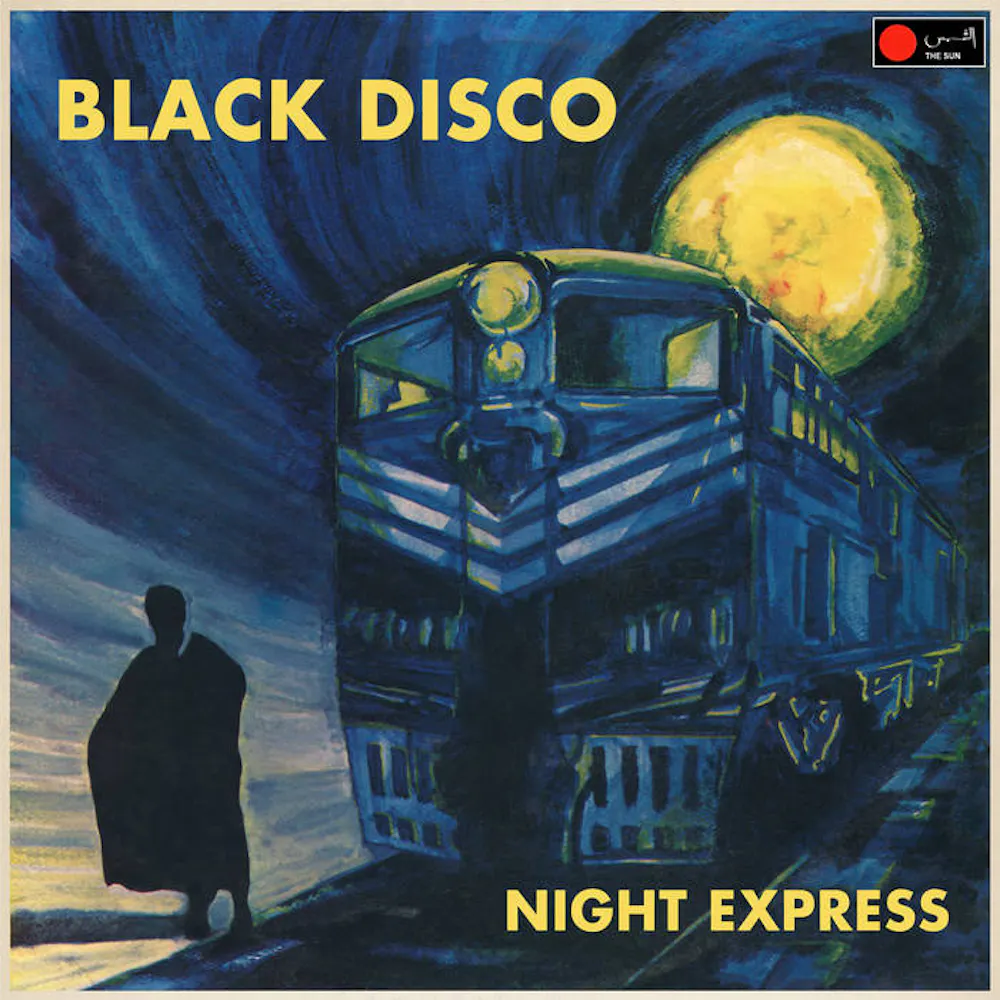
As-Shams/The Sun
Partly to pay school fees and partly out of a sense of adventure, those teenage bands sometimes played in white clubs, enduring the bureaucracy of special permits and sometimes playing behind a curtain while white men mimed out front. Apartheid laws prohibited venues from allowing racial mixing.
Something musically very interesting, he suggested, was emerging at that time from “how we copied the Americans and couldn’t get it quite right”. He was teaching himself to play a Yamaha keyboard with a ‘disco’ pre-set, falling in love with the sounds of Timmy Thomas and Marvin Gaye. “But then I was also influenced by Kippie Moeketsi and those melodies”.
Challenging boundaries
Introduced by As-Shams label founder Rashid Vally to reedman Basil Manenberg Coetzee, and together with an old Dorkay House friend, bassist Sipho Gumede, that eclectic mix went down on record as the first album by the band Black Disco, which produced the popular hit Dark Clouds.
Mohamed wasn’t yet confident to call himself a jazzman, but:
Sipho and Basil told me: just play what your heart is telling you. They were my mentors.
The success of Dark Clouds led to a second album, this time with drummer Peter Morake, called Black Discovery/Night Express – until the officious white minority apartheid censors blue-pencilled the first two words.
And after that the Black Disco band, with shifting personnel, was very much in demand at more upmarket clubs in the coloured townships.
Already the music was challenging boundaries:
We were bridging between a Jo’burg and a Cape Town feel – but still keeping the funk alive … But it was always very important for us not to stay inside the classification.
He explained:
The regime divided us – people classified coloured (mixed race) had identity documents; Black people had the dompas (pass book). We didn’t accept that separation. Black Disco was our way of saying: we are with you.
With work precarious and earnings uncertain, Mohamed played across genres and in multiple bands. Playing pop covers with his band Children’s Society did not satisfy him, but it provided some income. And he scored an even more substantial hit with them in 1975 with the original song I’m A Married Man.
It had been Black Disco that established the politics of his music. And in the shadow of the anti-apartheid 1976 Soweto uprising, with drummer Monty Weber, he established the project Movement in the City – a name he said was code for fighting the system.
Traditional sounds
He began exploring traditional instruments too, fearing that this heritage would be taken away.
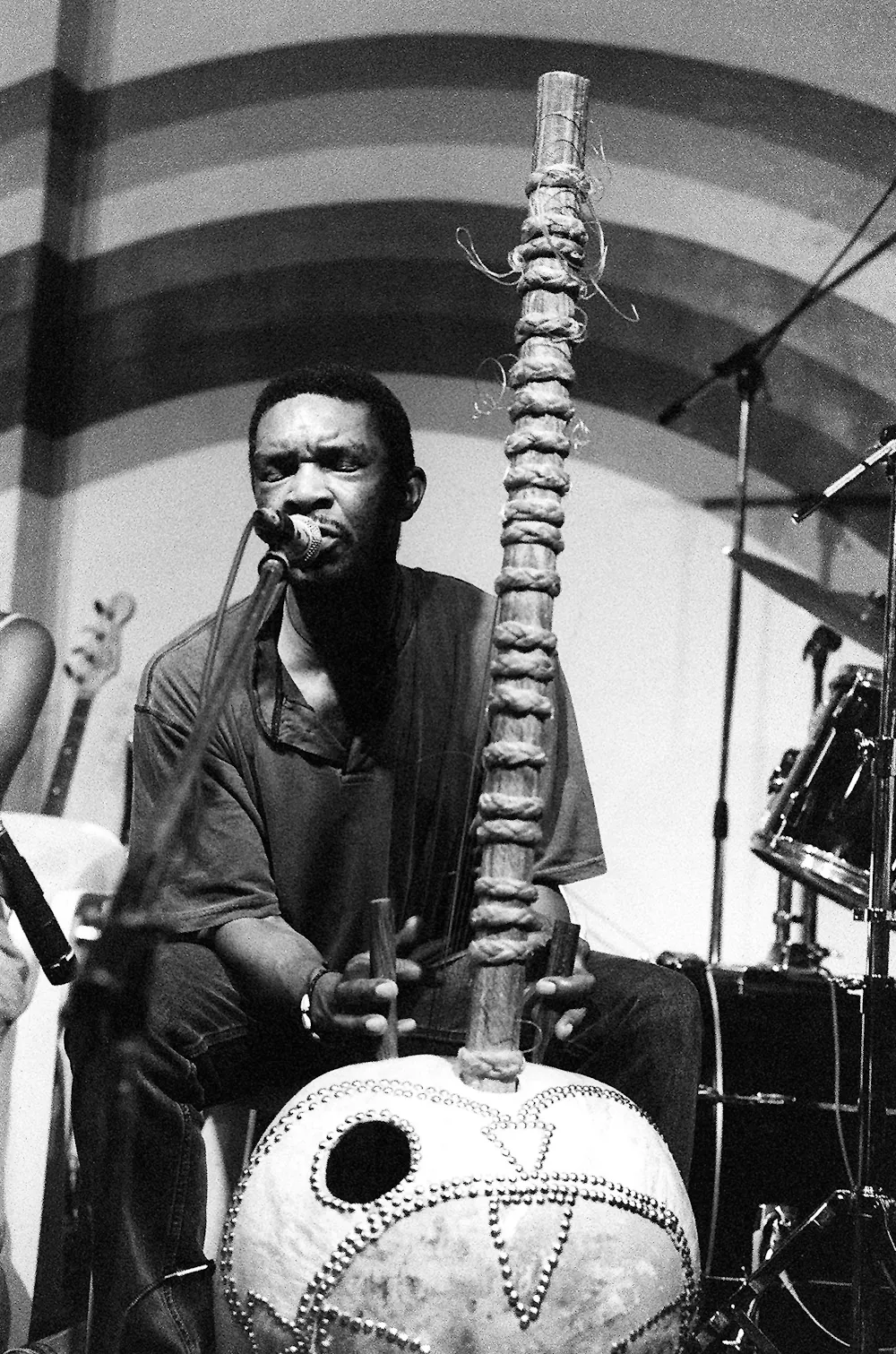
So he mastered various mouth-bows and whistles, berimbau, didgeridoo, a range of percussion and the Senegambian kora, a stringed instrument with a long neck. On the kora, his style was unique, combining West African motifs, South African idioms and his personal, plaintive, tuneful melodies. It became his favourite instrument, “telling me more about what’s happening in myself … about who I am”.
Pops Mohamed live on kora and vocals.Courtesy Rafs Mayet
Mohamed had a prolific and diverse recording career from that time on, producing more than 20 albums. Five of them, titled Kalamazoo, revisited Khoisan and African jazz tunes. He established a close relationship with individual Indigenous Khoisan musicians, healers and their communities, taking frequent trips to visit and play music with them in the Kalahari Desert.
With former Earth Wind and Fire trumpeter Bruce Cassidy he recorded the duo set Timeless. He also toured Europe with the London Sound Collective and voice artist Zena Edwards. Sampling, he said to me, was “a nice way of educating young people about traditional sounds”.
He established a partnership with steelpan player and multi-instrumentalist Dave Reynolds: “We’re both committed to a South African musical identity,” Reynolds says, “and we both play instruments that we weren’t born to – Trinidadian pans and Senegambian kora – but were rather called to.”
Mohamed’s final video.
In late 2021, Mohamed was hospitalised, and his convalescence left him struggling to work for a period. He continued working. His most recent release, Kalamazoo 5, used digital remastering to extend the sound palette of earlier work.
It showed how, never content to stay within anybody else’s boxes, he held on to his mission of “taking the old and mixing it with the new. We’re not destroying the music: we’re giving it a way to live on.” Through his recordings, it will.
– Pops Mohamed mixed old and new to reinvent South African music – https://theconversation.com/pops-mohamed-mixed-old-and-new-to-reinvent-south-african-music-175710
The State of Qatar participated in the signing ceremony of the historic Peace and Economic Agreement between the Democratic Republic of the Congo and the Republic of Rwanda, hosted today by the Government of the United States of America in Washington.
The State of Qatar was represented at the ceremony by HE Minister of State at the Ministry of Foreign Affairs Dr. Mohammed bin Abdulaziz bin Saleh Al Khulaifi.
The agreement represents an important step toward ending the conflict in eastern Democratic Republic of the Congo, strengthening regional stability, and enhancing cooperation in East and Central Africa.
It also comes as a continuation of previous agreements that the State of Qatar and the United States helped facilitate and strengthen, including the Washington Agreement signed on Jun. 27 of 2025, the Doha Declaration of Principles signed on Jul. 19 of 2025 between the Democratic Republic of the Congo and the March 23 Movement (M23), and the Doha Framework Peace Agreement signed on Nov. 15 of 2025 between the Government of the Democratic Republic of the Congo and the Congo River Alliance/March 23 Movement (M23). The latter established several protocols covering access to humanitarian aid, the restoration of state authority, and a pathway toward a comprehensive, peaceful settlement.
In this context, HE the Minister of State at the Ministry of Foreign Affairs affirmed, in a statement to Qatar News Agency (QNA), the State of Qatar’s continued support for mediation efforts aimed at promoting peace, stability, and development in the region, stressing the importance of constructive engagement and adherence to the implementation of all agreed commitments.
His Excellency expressed the State of Qatar’s deep appreciation for the cooperation shown by all parties throughout the negotiation process, underscoring the importance of effective and sustainable implementation on the ground to ensure the protection of civilians and the creation of favorable conditions for economic growth and improved living standards in the affected areas.
His Excellency reiterated the State of Qatar’s firm position that dialogue remains the foundation for achieving sustainable peace, noting Qatar’s commitment to work closely with regional and international partners to support the next phases of this process.
HE Minister of State at the Ministry of Foreign Affairs also expressed the State of Qatar’s full appreciation to HE President of the friendly United States of America Donald Trump and to representatives of the US Department of State, for their tireless efforts in creating the right conditions to advance the negotiations and reach this agreement, as well as for their continued support of the peace process through dialogue and peaceful means.
The seventh informal dialogue on human rights between the State of Qatar and the European External Action Service was held in Doha on Thursday. The Qatari delegation was headed by HE Sarah Abdullah Al Saadi, Acting Director of the Human Rights Department at the Ministry of Foreign Affairs Sarah Abdullah Al Saadi, while the EU delegation was headed by HE Head of the Arabian Peninsula and Iraq Section at the EEAS Anna Maria Panagiotacopoulou. During the dialogue, the two sides discussed ways to enhance joint cooperation in the field of human rights and several issues of common interest, particularly the protection of the most vulnerable groups, strengthening the rule of law, workers’ rights, combating human trafficking, and consolidating the principles of dialogue and multilateral cooperation. The two sides emphasized the importance of exchanging experiences, developing capacity-building programs, and strengthening regular communication channels between relevant institutions. They also focused on continuing joint work and supporting future initiatives that will contribute to promoting human rights at the national, regional, and international levels. The dialogue reflects the commitment of both parties to deepen the existing partnership and work together to support fundamental rights and freedoms.