Deputy President Mashatile to officiate the Annual Police Commemoration Day

Source: President of South Africa –

The Deputy President of the Republic of South Africa, His Excellency, Mr Shipokosa Paulus Mashatile will on Sunday, 07 September 2025, join families of the Police Officers and Reservists who lost their lives in the line of duty at the annual South African Police Service (SAPS) Commemoration Day.

The event will take place at the SAPS Memorial Site at the Union Buildings in Pretoria.

This year’s event commemorates 27 members of the SAPS who have fallen in the line of duty in the 12 months between 01 April 2024 and 31 March 2025.

Members of the media wishing to attend the event are requested to submit credentials to Brigadier Athlenda Mathe (SAPS) on 082 040 8808 or Ms Linah Ledwaba (Presidency) on 066 240 7635.

Details of the commemoration are as follows: 
Date: Sunday, 07 September 2025
Time: 10:00 (Broadcast Media houses to arrive at 05h30 before sweeping)
Venue: SAPS Memorial Site, Union Buildings, Pretoria

NOTE TO MEDIA: Members of the media are reminded that no drones will be allowed for the duration of the programme.

Media enquiries: Mr Keith Khoza, Acting Spokesperson to the Deputy President on 066 195 8840 or Brigadier Athlenda Mathe 082 040 8808

Issued by: The Presidency
Pretoria

The Royal African Society Appoints Stella Okuzu as Director Effective 1st September

Source: APO – Report:

The Royal African Society (RAS) (www.RoyalAfricanSociety.org) is delighted to announce the appointment of Stella Okuzu as its new Interim Director. With an illustrious career spanning over two decades across Africa and the United Kingdom, Stella brings exceptional leadership, financial expertise, and a profound commitment to advancing African enterprise and strengthening global partnerships. 

The Royal African Society, established in 1901, is one of the UK’s oldest and most respected institutions dedicated to promoting a deeper understanding of Africa and fostering stronger relations between the UK, Africa, and the wider world. Through its events, policy advocacy, cultural programming, and educational outreach, the Society provides a vital platform for dialogue and collaboration on Africa’s development and global role. 

Stella Okuzu joins the Society with a track record of pioneering work in banking, finance, and consultancy. As Founder and CEO of EDD Finance & Consulting Limited, she has advised and supported businesses across Africa, the UK, and Europe in market-entry, capital raising, and cross-border growth. Her firm oversees several funding projects with a significant portion dedicated to African development and financial inclusion in emerging markets. 

Previously, Stella served as the pioneering Head of Personal & Business Banking at FCMB Bank (UK) Ltd, where she designed and launched Africa-focused financial products for SMEs and high-net-worth individuals, achieving remarkable growth while ensuring regulatory excellence. She also holds board-level responsibilities as a Non-Executive Director of FastCredit Limited, a Central Bank of Nigeria–licensed institution, where she chairs the Audit & Risk Committee and contributes to the credit and digital finance strategy. 

Alongside her corporate achievements, Stella is deeply engaged in education and thought leadership. She was a lecturer at BPP University, London, up till June 2025, teaching Global Strategy & Sustainability and mentoring international students. She is co-authoring the forthcoming Fintech for Management textbook, further underscoring her dedication to equipping the next generation of leaders with the tools to navigate a rapidly changing financial landscape. Her contributions have been widely recognized: she was named among the Top 200 Voices in Leadership to Watch (2022) by LeadersHum and celebrated by the Mayor of London in 2023 as one of the Women Who Make London Great. These accolades highlight her influence not only within Africa’s business and finance ecosystem but also as a global advocate for diversity, sustainability, and cross-cultural exchange. 

Commenting on her appointment, Stella Okuzu said: 

“It is a privilege to join the Royal African Society as Interim Director at such an important moment in its history. Africa stands at the intersection of extraordinary challenges and opportunities—from digital innovation and entrepreneurship to sustainability and cultural exchange. My vision is to strengthen the Society’s role as a bridge between Africa and the rest of the world, amplifying African voices, ideas, and enterprises on the global stage.” 

Arunma Oteh, Chair of the Royal African Society added: 

“We are thrilled to welcome Stella Okuzu. Her exceptional blend of financial expertise, strategic vision, and commitment to Africa’s growth and inclusion make her ideally suited to lead the Society. We look forward to working with her as we continue to promote greater understanding of Africa’s global role as well as help our members and other stakeholders foster meaningful partnerships.” 

The Society also extends its heartfelt thanks to Andrew Skipper MBE, who is stepping down from the role. Under Andrew’s leadership, the Society has enhanced its unique and dynamic platform, ensuring that the organisation is well-positioned for future growth and impact. His dedication and hard work have continued to showcase the Society as a leading voice for Africa in the UK and globally. 

With Stella Okuzu’s appointment, the Royal African Society continues to build on its century-long legacy of cultural, political, and economic engagement. It will also ensure that it remains a beacon of thought leadership and collaboration between Africa and the rest of the world. 

– on behalf of Royal African Society.

Media Contacts: 
Uchechi Eke, Royal African Society 
Head of Fundraising & Operations 
Email: ue3@soas.ac.uk 

Tracy Walakira N., APO Group 
Account Director of Public Relations and Strategic Communications 
Email: tracy.walakira@apo-opa.com

About the Royal African Society:
The Royal African Society (RAS) is a UK-based membership organisation dedicated to fostering understanding and building partnerships on Africa. Through conferences, cultural festivals, publications, and policy dialogues, the Society brings together business leaders, academics, policymakers, artists, and civil society to showcase Africa’s achievements and address its challenges. 

For more information, please visit: www.RoyalAfricanSociety.org

Media files

.

In implementation of Directives of HH the Amir, Qatar Operates Air Bridge Carrying Humanitarian Aid to Afghanistan

Source: Government of Qatar

Doha, September 3, 2025

In implementation of the directives of HH the Amir Sheikh Tamim bin Hamad Al-Thani, four Qatari Amiri Air Force aircraft arrived Wednesday in the Afghan capital, Kabul, carrying humanitarian aid, including two field hospitals, food and medical supplies, and shelter materials provided by the Qatar Fund for Development (QFFD) for approximately 11,000 beneficiaries.

This aid is part of an air bridge operated by the State of Qatar to help alleviate the suffering of the brotherly Afghan people following the earthquake that struck eastern Afghanistan, which resulted in hundreds of deaths and injuries.

The State of Qatar’s delegation to Afghanistan was headed by HE Minister of State for International Cooperation Dr. Maryam bint Ali bin Nasser Al Misnad, with the participation of representatives from the Qatar Armed Forces, the Ministry of Foreign Affairs, the Qatar International Search and Rescue Group of the Internal Security Force (Lekhwiya), and the Qatar Fund for Development (QFFD).

This aid comes within the framework of the State of Qatar’s continued support for the Afghan people and reflects its unwavering commitment to humanitarian solidarity and support for those affected by natural disasters. 

Mónica’s story: the woman shipped from Ghana to Portugal in 1556 to stand trial for using traditional medicine

Source: The Conversation – Africa – By Jessica O’Leary, Senior Lecturer, Monash University

Standing before the Inquisition in Lisbon, Portugal in 1556, Mónica Fernandes, a woman from the coast of modern-day Ghana, was accused of casting malevolent spells and making pacts with demons. Her crime? Seeking a traditional Akan remedy for a simple cat bite.

The Portuguese Inquisition was a powerful institution tasked with identifying, investigating and punishing any belief or practice that deviated from official Catholic doctrine. The Inquisition was established in 1536 during the expansion of the Portuguese empire, one of the world’s first global maritime powers.

Fernandes’ trial, recorded in meticulous detail by the Inquisitor, Jerónimo de Azambuja, offers a rare and powerful window into a 16th-century clash of cultures. It reveals how a colonial power systematically misunderstood and criminalised local customs, rebranding Indigenous knowledge as dangerous sorcery.

As a historian, I spend my time searching for connections between people across the early modern world, especially the lives of women and children within the vast Portuguese empire. While I was researching the trials of Indigenous women in colonial Brazil, a question began to form: were women in other parts of the empire, like west Africa, also being targeted for their traditional knowledge? This question led me to the archives of the Portuguese Inquisition and to a remarkable case file from 1556.


Read more: Colonial powers tried to stifle traditional healing in Zimbabwe. They failed and today it’s a powerful force for treating mental illness


The file detailed the trial of Mónica Fernandes, an Akan woman from what’s now Ghana. Her story opens a rare window onto the personal, human impact of colonisation. It shows how a vast imperial power operated on the ground: by misunderstanding, criminalising, and attempting to erase Indigenous ways of knowing.

Recovering stories like this helps us understand a legacy of cultural suppression that continues to resonate today.

A life between two worlds

Mónica was born to Akan parents. The Akan are a collection of related peoples, primarily living in modern-day Ghana and Côte d’Ivoire. Organised into matrilineal states, they had established sophisticated societies with rich cultural, religious and social knowledge systems long before the arrival of Europeans.

The Portuguese first arrived on the west African coast in the late 15th century, driven by a desire for gold. They established their authority by constructing fortified trading posts like São Jorge da Mina (now Elmina Castle) that imposed their laws and religion on the surrounding communities.

Mónica lived and worked in and around São Jorge da Mina, a place of intense cultural collision. Baptised into the Catholic faith, she existed between two worlds: the rigid, hierarchical society of the European fortress and the vibrant Akan village of Edina that surrounded it.

Like others, she moved between these spaces to socialise, shop and, crucially, seek medical care. It was this last activity that brought her to the attention of the Inquisition. Instead of visiting the Portuguese apothecary at the fortress, Mónica consulted a local Akan healer, an ɔkɔmfoɔ or odunsinni, to treat a cat bite. She procured an ointment, a common practice she saw as rudimentary healthcare.

To the Inquisitor, however, this was proof of heterodoxy, or a belief, opinion, or practice that went against the officially established doctrines of Catholicism. Mónica’s choice to trust her community’s medical expertise over that of the Portuguese was seen not just as a rejection of European authority, but as evidence of a pact with the devil.

Custom vs. crime

The accusations against Mónica were dramatic and personal. The initial charge stemmed from a quarrel with another African woman, Ana Fernandes, who was visiting São Jorge da Mina from Lisbon. Witnesses claimed that after an argument, Mónica cast a spell on Ana. Weeks later, after returning to Portugal, Ana succumbed to a mysterious illness that allegedly caused the skin to peel from her face. This rumour, spread by a single witness, became the centrepiece of the case.

The rumour of Mónica’s curse spread, prompting a formal inquiry by the Portuguese captain at São Jorge da Mina. It was only after this local investigation, which took months, that Mónica was officially detained and transported as a prisoner to face the main tribunal in Lisbon.

The Inquisitor’s interest went beyond this single event, expanding to include other, more everyday practices. Witnesses interviewed at São Jorge da Mina also claimed Mónica conducted spells using chickens and yams. While these details were recorded as evidence of sinister rituals, they were in fact staple elements of Akan cultural life. Yams, a starchy, edible tuber, similar to a potato, were a vital food source and central to ceremonies honouring ancestors, while animal sacrifice was a common preparation for deities.

What the Portuguese Inquisitor labelled feitiços (witchcraft or charms) was, for Mónica and her community, simply aduro (medicine) and amammerɛ (custom). The trial documents painstakingly list her heterodoxical activities, but in doing so, they inadvertently preserve a record of the very cultural knowledge the Inquisition sought to destroy. Mónica’s case becomes a catalogue of everyday Akan practices, seen through a distorted colonial lens.

A defiant accused

Throughout months of imprisonment and interrogation, Mónica was pressed to confess to witchcraft. She consistently refused. In Akan culture, the concept of bayie is sometimes translated as “witchcraft”, but it specifically refers to acts of acute spiritual wickedness or illness. Mónica’s actions did not fit this category. She was treating a physical ailment, a cat bite.

Mónica’s refusal to accept the label of “witch” was therefore not simple denial. Her defence was based on a clear cultural distinction, one she clung to despite her limited Portuguese. When she insisted that she had committed no crime because “all the black men and women of Mina did it too”, she was not admitting to collective guilt. She was trying to explain that her actions were customary medicine, not malevolent spiritual work.

She understood the difference between her own system of knowledge and the crime of which she was accused, and she refused to conflate them.

The verdict and legacy

Ultimately, Mónica was found guilty of witchcraft, but the Inquisitors deemed her actions “minor”. She was given the light sentence of a period of religious re-education in Lisbon to study Christian doctrine. Mónica secured her release by demonstrating good Christian behaviour, but was forbidden from returning to her homeland.

Mónica’s light sentence was relatively uncommon but unlikely to have been the first instance of re-education. It is possible that women from other Portuguese colonial territories also suffered similar fates, but many records have been lost due to the Lisbon Earthquake (1755) and the deliberate destruction of the Goa Inquisition cases which also took in east Africa.

We don’t know what happened to her after her release. But her story, buried in the archives for over 450 years, remains deeply relevant. It is a powerful, personal account of how colonialism operated not just through military force, but through displacement and the deliberate suppression of local knowledge. Mónica’s trial is a stark reminder that the branding of Indigenous practices as “magic” or “superstition” was a tool used to assert dominance and erase entire ways of knowing the world.

– Mónica’s story: the woman shipped from Ghana to Portugal in 1556 to stand trial for using traditional medicine
– https://theconversation.com/monicas-story-the-woman-shipped-from-ghana-to-portugal-in-1556-to-stand-trial-for-using-traditional-medicine-263929

BBC has a long history in Africa. New book offers a critical take on the broadcaster

Source: The Conversation – Africa – By Albert Sharra, Postdoctoral Research Fellow, University of the Witwatersrand

The British Broadcasting Corporation (BBC) established its first radio transmitter sites in Africa in the 1930s, to reach the British colonies and beyond. It became a model for radio in Africa and later a model for TV news.

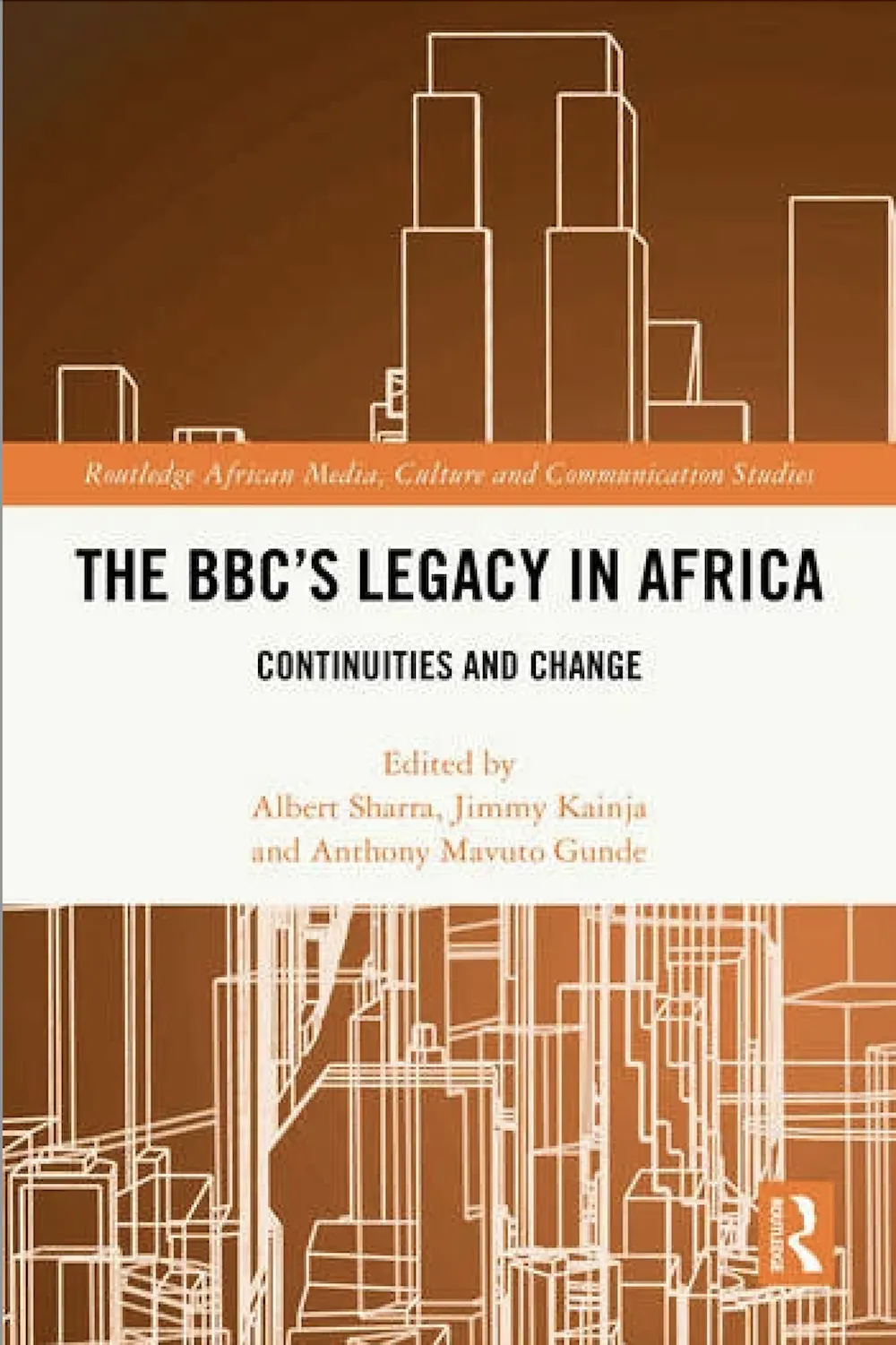
But, almost a century on, what is the BBC’s colonial legacy and how does the public broadcaster serve a post-colonial media space? We asked the editors of a new book, called The BBC’s Legacy in Africa: Continuities and Change, about their study.


What was the BBC’s colonial operation all about?

The BBC was established in 1922. Within a few years, it became a colonial platform. This began with the British Colonial Office’s decision to set up radio broadcasting in its colonies. The goal was to enhance communication between the governors and the governed. The BBC was engaged to help with the project.

Between the late 1920s and 1930, the BBC tried broadcasting in most parts of the empire, including Africa. At the 1930 Imperial Conference, it was agreed to set up the Empire Service, a broadcast network to advance administration of the colonies. By 1932, the Empire Service was in full operation and many countries were getting connected to the broadcasting grid. Kenya was connected in 1928 and Ghana in 1935. In central Africa, Zambia was connected in 1945 to cover Zambia, Malawi and Zimbabwe.

Routledge

At the time, private radio stations were thriving in other parts of the continent, particularly in South Africa, Angola and Mozambique. The unique approach of the BBC was to establish public service radio.

By 1971, there were 43 national radio services in sub-Saharan Africa. This is attributed mainly to the BBC’s expertise in developing broadcasting services and programming models, and training African broadcasters.

This was more than just communication; it was a form of cultural imperialism and soft power. It embedded British values through English-language dominance and news formats that reflected British norms.

This remains the BBC broadcasting model today, as well as that of former British colonies. At independence, newly established African states adopted these norms to establish national broadcasters.

Our book argues that the end of colonisation did not dismantle the BBC’s colonial legacy. That’s because the style was already embedded in the broadcasting system. We used evidence from different countries, including Malawi, Zimbabwe, Uganda and Nigeria, to demonstrate this.

How did this shape African media?

Post-independence broadcasters inherited BBC-style structures, formats and journalistic ethics. Over time, these elements were blended with local languages, music and storytelling traditions.

The BBC has remained in these countries through the BBC World Service and programmes like Focus on Africa. It recruits African correspondents who influence local journalists to write news in the same ways.

We argue that the failure of African media to decolonise has something to do with the BBC’s efforts to keep influencing broadcasting worldwide.


Read more: Hype and western values are shaping AI reporting in Africa: what needs to change


Many national broadcasters in Africa still operate under public service broadcasting principles inspired by the BBC. In some countries – like Malawi, Zambia and Zimbabwe – these are public broadcasters on paper, but in practice they are state media, operating in the interest of the state. They are abused and used for state propaganda. So, the influence of the BBC, in some instances, is not successful in practice.

At first, the BBC was promoting English only. Later on, it started to invest in African languages. The BBC’s World Service programming has incorporated Hausa, Igbo, Somali, Swahili, Afaan Oromo, Amharic and Tigrinya.

As the book discusses, BBC programmes like Focus on Africa and political interview styles like HARDtalk have influenced talk shows and political debate programmes in African media. These hybrids often continue to reproduce western-centric norms and biases.

What can we learn from some of the countries discussed?

In Uganda, radio continues to reflect the influence of the BBC in programming content, ownership patterns and journalist training.

The BBC’s reliance on Ugandan correspondents reinforces its authority and shapes professional norms, making BBC-trained journalists aspirational figures. The BBC sustains many local outlets by providing international and sports content.


Read more: Western media outlets are trying to fix their racist, stereotypical coverage of Africa. Is it time African media did the same?


Its enduring presence has also been facilitated by government goodwill, including the allocation of scarce frequencies, as part of maintaining diplomatic ties.

The Zimbabwe Broadcasting Corporation initially embraced the BBC’s public service broadcasting ideals. But later it became a propaganda arm for the ruling party.

What are some of the problems with the BBC in Africa today?

Its perceived neutrality as a public service broadcaster is questioned in the book because the BBC’s editorial choices often mirror British foreign policy priorities. The discussions in the book mirror some of the public backlash the BBC has faced in cases like its coverage of the Israel-Palestine conflict.

The dominance of BBC-trained journalists and formats has the potential to marginalise other storytelling traditions. Most African cultures are rich in storytelling but BBC correspondents tend to control the storytelling through an insistence on quick questions and answers and limited time.

Although African languages are included, news framing often perpetuates Eurocentric narratives.

What needs to change?

BBC should be commended for setting up what became a model of broadcasting not only in Africa but also beyond. This model has fostered quality broadcasting and the watchdog role of the press.

Moving forward, in its African programming and operations, the BBC needs to go beyond tokenism. Representation should encompass more than language. It should include agenda-setting, framing and adopting African storytelling techniques.

African broadcasters should uphold and embrace local knowledge and approaches by incorporating local cultural logic into their programming. They should strive to be creative and innovative.


Read more: African media are threatened by governments and big tech – book tracks the latest trends


Partnerships that empower African broadcasters instead of relying on BBC resources can promote genuine media sovereignty.

The future depends on hybridisation on African terms, upholding high production and ethical standards while anchoring media systems in African socio-political realities, rather than copying and reproducing colonial frameworks.

The book argues that decolonisation in African broadcasting is an ongoing process and requires creating more spaces for open conversations.

– BBC has a long history in Africa. New book offers a critical take on the broadcaster
– https://theconversation.com/bbc-has-a-long-history-in-africa-new-book-offers-a-critical-take-on-the-broadcaster-264052

Ghana’s films don’t often make it to Netflix – local solutions may be the answer

Source: The Conversation – Africa – By Robin Steedman, Lecturer of Creative Industries, School of Culture and Creative Arts, University of Glasgow

African filmmakers have long faced challenges in securing wide-scale distribution for their films. In this context, digital platforms such as Netflix and YouTube have been hailed as bringing huge new opportunities.

This optimism in filmmaking resonates with the hype digital technologies more generally have had in Africa. They have been seen to offer almost unlimited opportunities for African entrepreneurs to transform and grow their businesses. Ghana’s communication minister, for example, declared in 2017 “it’s Digitime in Ghana”.

We are researchers in film studies, theatre studies, sociology and geography, and in this study, we set out to understand how platforms were being used and thought about in the Ghanaian film industry. We wanted to look beyond the techno-optimistic hype – the idea that technological progress can solve every problem known to humans.

We held interviews and focus groups with 50 filmmakers in Ghana to understand the experience of platform entrepreneurship in filmmaking across the country. We found that while filmmakers were very optimistic about technology, they were also deeply sceptical of what existing platforms could do for them in Ghana. Creating local platforms was an important alternative.

Enthusiastic but short on know-how

Ghana’s film industry dates back to its colonial roots when the Gold Coast Film Unit was established by the British in the 1940s. Although it has achieved remarkable successes, they haven’t been consistent. In the sub-region the industry is dwarfed by Nigeria’s Nollywood.


Read more: How Nollywood films help Kenyan housemaids make sense of their lives


Film distribution in Ghana is in a transitional moment, driven in large part by technological change. For a long time, Ghanaian movies reached their audiences on CDs and DVDs. With the rise of digital television and internet streaming, this once lucrative model collapsed. Ghanaian filmmakers are now experimenting with platforms in their businesses.

We found that they used and thought about platforms in three principal ways.

First, many filmmakers enthusiastically embraced platforms and believed they had the power to create global reach and dramatic business growth. Many felt, like prominent Accra filmmaker Isaac, that “opportunities are endless in the industry” because of new technologies.

Some Ghanaian filmmakers distribute their films on major global platforms such as Netflix, but it was only a very small minority. They did not feel that working with platforms had revolutionised their businesses, but rather that being on Netflix enhanced their status, and they hoped this would help them attract financing for future projects.

Second, filmmakers were also well aware of the limits of platform distribution. Those with films on Netflix were the most affluent and well connected. Others struggled to access some global platforms. They also found it very difficult to make money on easy-to-access platforms such as YouTube. They struggle to make the large volume of content needed to get high viewing numbers and thus monetise their content. It was almost impossible to make enough to justify the cost of production.

Some filmmakers felt that they did not know enough about how to use platforms. Emerging filmmaker Esther expressed a common view when she said:

We need more education in filmmaking. Those of us here, we have the talent, we want to do movies, we are doing our best, but most of us have not been to film school to learn.

Some felt they were not benefiting from the potential of platforms yet, but could in the future. Thus, they were motivated to continually experiment and develop new strategies for making and distributing their movies online and offline.

Third, some filmmakers experimented with creating Ghanaian platforms.

John, a leading figure in a national association, said:

In five years, the industry will be better, far, far better than ten years ago. … if we are able to move with time, build a platform like Netflix.

He wanted to create something that would focus on Ghanaian film and support the local industry.

John was not alone. Selwyn, a film and TV entrepreneur, for example, had created an app specifically for local language film.

Ghanaian filmmakers could see that the business models of global tech giants did not favour them, and that Netflix and other American platforms would not transform film distribution in Ghana or fulfil their dreams of global audiences and business growth.

Local solutions

Film makers did not give up in the face of these challenges. Rather they worked hard to devise their own solutions to the challenge of film distribution – solutions that were tailored to their circumstances and put Ghanaian filmmakers at centre stage. Local Ghanaian platforms were one such solution.

The idea that technology can change the world emanates powerfully from Silicon Valley in the US and has been exported globally. Yet Ghana is starkly different from Silicon Valley and thus the experience of technological entrepreneurship is likely to be different too.

– Ghana’s films don’t often make it to Netflix – local solutions may be the answer
– https://theconversation.com/ghanas-films-dont-often-make-it-to-netflix-local-solutions-may-be-the-answer-261087

God and Nollywood: how Pentecostal churches have shaped Nigerian film

Source: The Conversation – Africa – By Elizabeth Olayiwola, Senior Lecturer in Broadcast, Film, and Multimedia, University of Abuja

In Nigeria today, one doesn’t have to attend a church service to hear a sermon. The pulpit has moved – onto screens, into living rooms, and across YouTube.

Along with this shift, a fascinating genre has emerged: Nigerian evangelical cinema. These films blend entertainment with Pentecostal spirituality, turning prayers into special effects and spiritual battles into dramatic storylines.

This transformation is not accidental. It reflects a wider trend in which religion and media intersect to shape how Nigerians – and increasingly, Africans in the diaspora – understand the spiritual world.

As a media scholar I have been researching the Nigerian evangelical screen world for over a decade. As I show in my latest study in the book Contemporary African Screen Worlds, the rise of evangelical cinema is tied to Nigeria’s Pentecostal boom and the explosion of Nollywood, the country’s vast film industry, in the 1990s.

Duke University Press

In the early days of Nollywood, films were distributed on video cassettes and shown in communal venues, including church halls. They spread to TV, where audiences embraced early Nollywood productions like Agbara Nla (The Ultimate Power) produced in 1993 by Mount Zion Faith Ministries International. Broadcast as a series, it dramatised spiritual warfare between Christians and demonic agents and became a national phenomenon.

The ministry, founded in 1985, houses Mount Zion Film Productions, the most prolific Christian film company in Nigeria.

Evangelical films blur the line between devotion and drama, prayer and performance. My study shows that they are not just niche productions aimed at church audiences. Their impact is far greater. The films reveal how millions of Nigerians imagine the spiritual world, how they navigate everyday crises, and how religion adapts to new technologies.

The Nigerian evangelical film culture also shows how a range of networks can build and push a cinematic culture forward, offering lessons to industries around the world about the power of leveraged networks.

How it all started

At the centre of this story is Mike Bamiloye, co-founder of Mount Zion Faith Ministries. Established by a small group of college graduates, it began with church stage plays before moving into video and TV.

Like the Yoruba theatre tradition from which it drew some of its inspiration, Mount Zion toured churches and neighbouring countries, staging plays and building audiences.

With fewer entertainment options available back then, TV audiences embraced Agbara Nla. The film tells the story of a village that is constantly punished by the forces of darkness because of a malevolent herbalist. God sends a young Christian missionary couple to battle him and deliver the community from evil.

What made Agbara Nla and similar films resonate was their familiarity. Nigerians had long been exposed to supernatural storylines. In the 1960s through to the 1980s, they occurred in Yoruba travelling theatre productions, a popular form of entertainment.

Later, the supernatural was kept alive in Nollywood’s many occult-themed films. Often involving witchcraft and magic, these films tend to tap into a blend of Christian and traditional Nigerian cosmologies. They revolve around the idea of spiritual warfare, of good versus evil and God versus the Devil.

Evangelical filmmakers simply retooled the formula, swapping out witchdoctors for pastors, charms for prayer, and gods for Christ.

The power of the gods on display in a Nollywood film. Bestvillage/Wikimedia Commons, CC BY-SA

In many evangelical films, prayer is not just words muttered in the quiet of the heart. It is dramatised, given visual form, and staged as a battle with unseen forces. A woman kneeling in prayer might suddenly find herself in a parallel “spirit realm” where angels and demons clash. Her whispered incantations are translated into fireballs, lightning bolts, or shields of protection.

The effect is powerful. For Christian audiences, these films make visible what is usually invisible: the spiritual consequences of prayer. They confirm a belief that prayer works, not metaphorically but literally, in the everyday struggles of life.

Social messages

These films are more than just entertainment. They carry social messages too. One striking feature I’ve discussed in my earlier research is their focus on women.

Women are often depicted as especially vulnerable to spiritual attack – but also as powerful prayer warriors. In many films, a woman’s reproductive life – her fertility, sexuality, or motherhood – is given spiritual significance.


Read more: How Nollywood films help Kenyan housemaids make sense of their lives


This framing reflects Pentecostal theology, where sex itself is sometimes cast as an act with spiritual consequences. So these kinds of Nollywood stories both challenge and reinforce gender norms.

On one hand, women are shown exercising spiritual authority. On the other, their bodies are often treated as sites of moral or spiritual conflict.

Entrepreneurship of faith

Behind the scenes, evangelical Nollywood also illustrates a different kind of creativity: entrepreneurship. Many film makers juggle ministry with business innovation, building networks of production, distribution and audience engagement. Evangelical film maker Opeyemi Akintunde, for example, started with short web stories, moved into publishing, and went on to adapt her work into films circulated on YouTube and in cinemas.

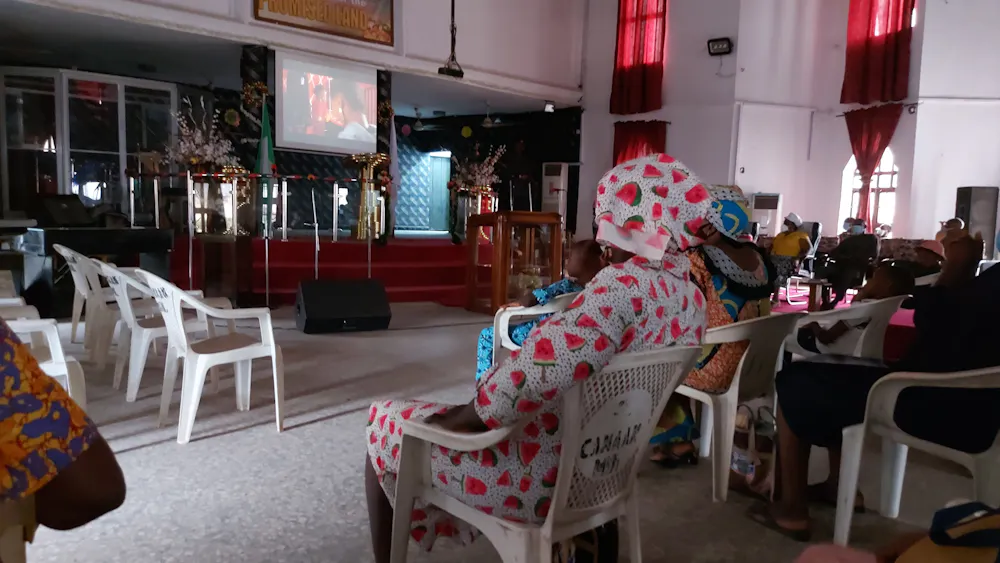
A church screening of a Nollywood film. Courtesy Elizabeth Olayiwola

This entrepreneurial spirit is part of a broader pattern across Africa. Studies have shown how Pentecostal media – from films to radio to social media – are reshaping both religious practice and cultural economies.

In Nigeria, the church itself provides infrastructure, from funding and publicity to venues and technical equipment, making film ministry possible.

Beyond Nigeria

Studies have also shown how Nollywood is spreading, embraced by a global audience. The influence of Nigerian evangelical cinema is not limited to Nigeria.


Read more: The rise of African prophets: the unchecked power of the leaders of Pentecostal churches


Riding on Nigeria’s transnational churches, these films and their film-making style today reach audiences across Africa, Europe and the US. Diaspora churches screen them during services; people watch them on their phones for inspiration or moral guidance.

This global circulation highlights the adaptability of both African Pentecostalism and Nollywood – and their capacity to shape imaginations (and souls) far beyond their local roots.

– God and Nollywood: how Pentecostal churches have shaped Nigerian film
– https://theconversation.com/god-and-nollywood-how-pentecostal-churches-have-shaped-nigerian-film-264279

Talks to postpone naval exercise with Russia, China amid G20 Summit preparations

Source: Government of South Africa

Talks to postpone naval exercise with Russia, China amid G20 Summit preparations

In light of the activities of South Africa’s Group of 20 (G20) Presidency, the Department of Defence has announced that it is in discussions regarding the postponement of the joint naval exercise scheduled for November 2025, involving South Africa, Russia, and China. 

According to reports, the upcoming naval exercise was set to coincide with the G20 Leaders’ Summit, which will take place on 22 and 23 November 2025, in Johannesburg.

“In consultation with the Presidency and the Department of International Relations and Cooperation (DIRCO), the Department of Defence is engaging its counterparts in the People’s Republic of China on a postponement of the exercise to a mutually suitable date.

“This is to ensure that the exercises do not impact the logistical, security and other arrangements associated with South Africa’s G20 Presidency,” the statement read. 

The Department of Defence said this is the third iteration of the exercise, which takes place every two years between these BRICS partners, with China as the host for this year’s exercise.

The department believes that South Africa’s participation in military exercises of this nature with various countries is part of the furtherance of sound multilateral and bilateral relations. 

“As it has in the past, South Africa continues to hold joint military exercises with a broad range of countries. In the last few years, the SANDF [South African National Defence Force] has conducted joint and multinational military exercises with countries such as Brazil, China, France, Germany, Russia and the United States.” 

A naval exercise is a military drill intended to evaluate tactics, enhance interoperability, and foster cooperation among navies. 

These exercises typically incorporate both simulations and real-world scenarios, including tactical manoeuvres, search and rescue operations, and anti-piracy drills. – SAnews.gov.za
 

Gabisile

68 views

Justice department taps into AI to improve its work

Source: Government of South Africa

Justice department taps into AI to improve its work

The Department of Justice and Constitutional Development (DJCOD) has begun work with the Law Reform Commission and other agencies to assess how artificial intelligence (AI) will impact South African laws and how the technology can enhance the work of the department.

This, according to Minister Mmamoloko Kubayi, who participated in a webinar on intellectual property, artificial intelligence, justice and rights on Thursday afternoon.

“This will help us to review and suggest possible amendments of our policies and legislation.

“We currently do not have a policy as a country, [however] we are in the process of making the policy through the Department of Communication and Digital Technology, and the document has been released again in July this year for final comments and therefore going to cabinet and should be adopted,” she said.

The Minister reflected on how there are “many areas” within which AI can enhance and support the department’s work and boost service delivery. 

“For example, part of our work includes the work of the Masters office, which deals with millions of South Africans on daily basis… giving them information on how the Masters office can assist them. In this area we can introduce bots that are now very popular in the private sector.

“These robots are able to interact, offer services, give information, and so on. I believe this is how this is the low-hanging fruit that as a department, you can be able to exploit,” she said.

Kubayi cited the SA Revenue Service’s (SARS) use as how this technology can be seamlessly integrated.

“SARS is already using bots that are powered by ChatGPT and I visited the offices in Centurion and I was actually impressed. We are working with them to be able to assist us in terms of our services but also to be able to automate and provide responses to some of the questions that people are having.

“Also AI can assist automating our IT system so that our work can be more efficient and effective,” Kubayi said.

The Minister highlighted that the technology is also being looked at as a tool to proactively detect corruption and in the process of undertaking lifestyle audits.

“AI can detect patterns and can collect data about individuals at a rapid rate and be able to detect unusual behaviour that suggests corruption or fraud activities. 

“So if we look at this one…whether it’s within the work that is done by [Special Investigating Unit] or the IDAC  [Investigating Directorate Against Corruption], we believe this is one of the critical areas utilisation of AI, and that’s why we’ve taken a decision to train quite a number of our investigators in this area and prosecutors.

“[We] do believe that this will be able to assist us to pick up lifestyle patterns, to pick up where there are issues to be able to spot areas of concern and individuals of interest so that they can be able to cap corruption [at source]…because we do believe that prevention would be more better than having to react,” Kubayi explained. – SAnews.gov.za

NeoB

157 views

Mashatile to officiate annual SAPS Commemoration Day

Source: Government of South Africa

Mashatile to officiate annual SAPS Commemoration Day

Deputy President Paul Mashatile is scheduled to join the families of police officers and reservists who lost their lives in the line of duty at the annual South African Police Service (SAPS) Commemoration Day on Sunday, 7 September 2025.

This poignant event will be held at the SAPS Memorial Site, located at the Union Buildings, in Pretoria.

According to the Presidency, this year’s commemoration will honour 27 members of the SAPS who have tragically fallen while serving in the twelve months from 1 April 2024 to 31 March 2025.

Every year, on the first Sunday of September, the nation pays tribute to those who have made the ultimate sacrifice in the service and protection of its citizens.

Last year, the country honoured the 39 women and men in blue who died in the line of duty between April 2023 to March 2024. 

Their names have been engraved on the SAPS memorial wall at the Union Buildings as a symbol of gratitude for the sacrifices made in serving and protecting the nation.

Speaking at last year’s commemoration day, the Deputy President said an attack on the SAPS is an assault on the state itself and that those responsible for such acts, equivalent to treason, must face decisive action.

“National Commissioner General Fannie Masemola, police officers must not die with their service firearms in their holsters when criminals refuse to surrender and start firing at police. When a shootout ensues between police and criminals, police have a duty to protect their lives, as well as those of their colleagues and all community members,” he said then. 

He also took the time to acknowledge that being a police officer was one of the most dangerous occupations, and one may feel anxious knowing that they may leave their family for work and never return.

The Deputy President emphasised the urgent need for a collaborative approach to tackle internal challenges within the SAPS. 

This includes addressing low morale among officers, the involvement of some members in criminal activities, and the issues related to ageing infrastructure.

He believes that such measures are essential to empower the police force to effectively fulfil their constitutional obligations and serve the community. – SAnews.gov.za
 

Gabisile

98 views