
Ruth First and activist research: the legacy of a South African freedom fighter

Source: The Conversation – Africa – By Saleem Badat, Research Professor, UFS History Department, University of the Free State

Ruth First, born 100 years ago, was a South African freedom fighter, journalist and scholar who worked against the racist system of apartheid during white minority rule. She was assassinated by apartheid forces in her office at the Eduardo Mondlane University in Mozambique in 1982.

Her ideas, work and legacy live on. Sociologists Saleem Badat and Vasu Reddy have edited a new book called Research and Activism: Ruth First & Activist Research. We asked them about her and their project.


Who was Ruth First?

Heloise Ruth First was born on 4 May 1925 in Johannesburg to Jewish parents who had migrated from eastern Europe to South Africa in the early 1900s. Her parents were founder members of the South African Communist Party.

She joined the Young Communist League and the Federation of Progressive Students and graduated from the University of the Witwatersrand in 1946 with a Bachelor of Arts degree.

At 21, First joined the left-wing South African newspaper The Guardian. When it was banned, the New Age took its place until it too was banned in 1962. She served as the newspaper’s Johannesburg editor for 17 years.

In 1963, First was arrested at the University of the Witwatersrand library and held in solitary confinement for 117 days, during which time she was ruthlessly interrogated. The following year she and her three children left South Africa for England on an exit permit, where they joined her partner, the activist and politician Joe Slovo. She would not set foot again in South Africa. Continuing with her activist research in England, she taught at Durham University and then joined Eduardo Mondlane University until hear death.
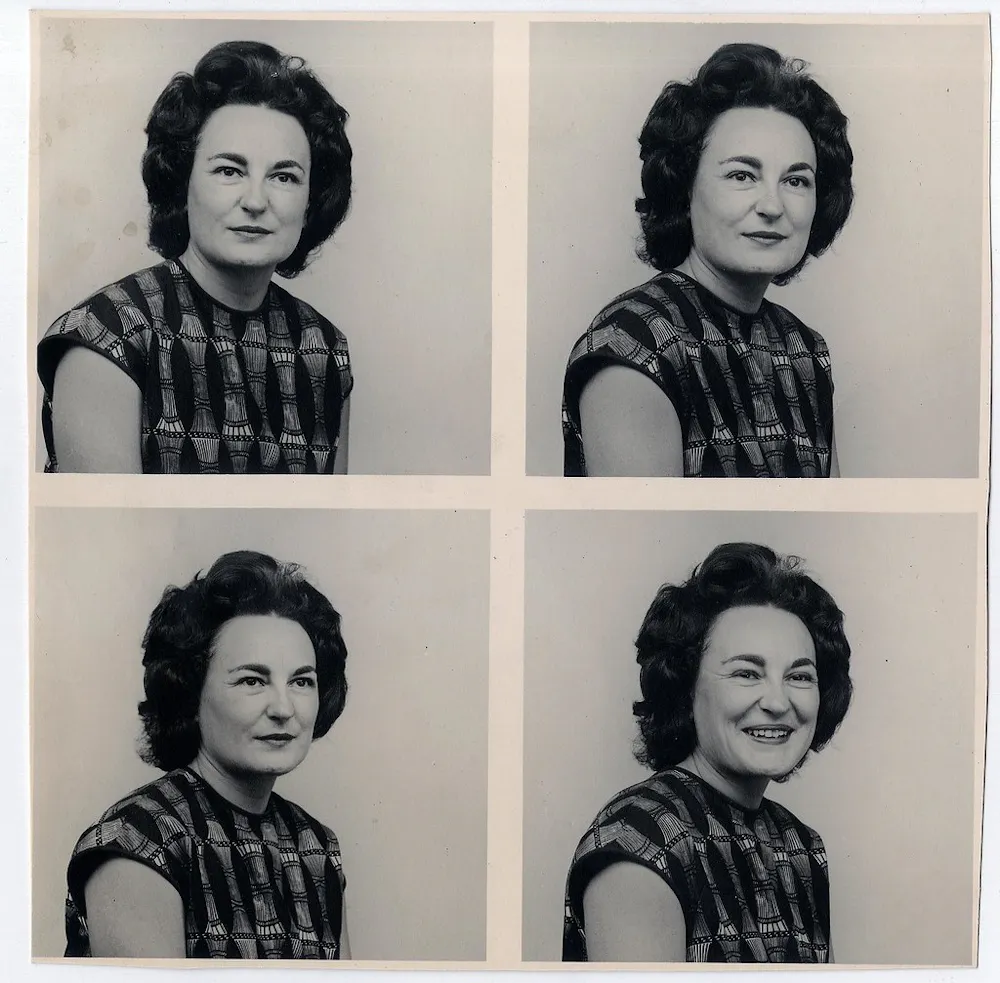
Ruth First. Courtesy the Slovo family

The mid-1940s to early 1960s were tumultuous years in South Africa. With the rise of formal apartheid in 1948, racial segregation was intensified.

First’s intrepid and penetrating journalistic research exposed her to the brutality of labour exploitation and control on the mines and the farms. It reinforced her understanding of South Africa in Marxist terms.

She wrote:

Silence in the face of injustice is complicity.

For her:

The will to fight is born out of the desire for freedom.

She was confident that:

The power of the people is greater than the power of any government.

First believed that ignorance is “the enemy of progress and justice” and that knowledge and education are “key to empowering individuals and challenging oppressive systems”. These words ring true in today’s global events driven by right-wing authoritarianism, US imperialism and acts of genocide.

On learning of her death, former South African President Nelson Mandela recalled:

I was in prison when Ruth First was assassinated, felt almost alone. Lost a sister in arms  … It is no consolation to know that she lives beyond her grave.

What is activist research and how is it applied in the book?

As authors, we revisit Ruth First’s life, work and ideas and its relevance for the current context. We focus especially on the nature of her scholarship and how she navigated the tensions between her activism and her research – whether journalistic or for her books on South West Africa (today’s Namibia), Libya or western investment in apartheid. Other of her acclaimed books included The Barrel of a Gun: Political Power in Africa and the Coup d’etat and, during her Mozambican sojourn, Black Gold: The Mozambican Miner, Proletarian and Peasant.

In the process we invite renewed critical reflection about her life and work. Inspired by First’s contributions, the book considers how universities and scholars engage with institutions and social movements beyond the university.
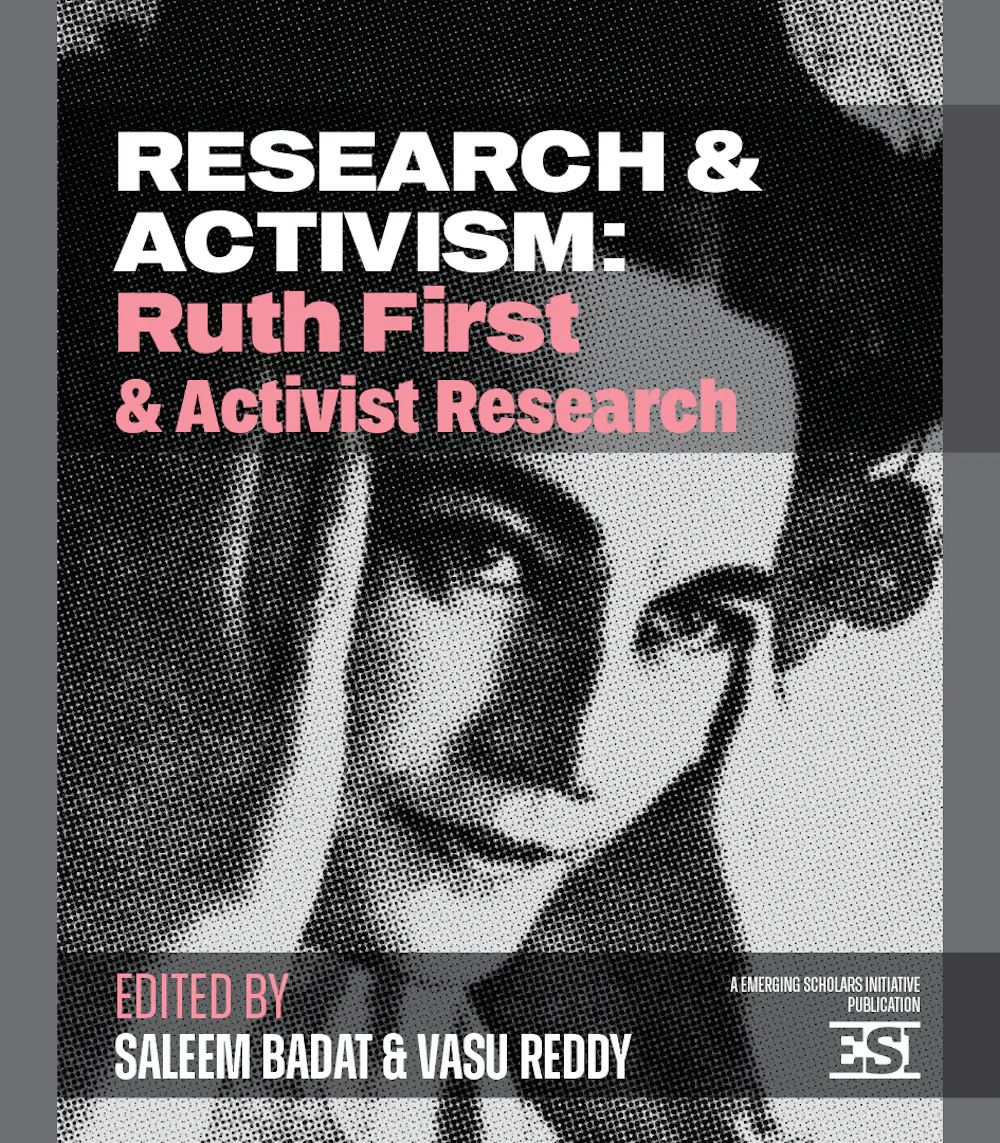
ESI Press

For example, in the book a research group from Durham University in the UK considers how to balance objectivity (showing no bias) with more politically participatory research methods and how objectivity can be enhanced despite the difficulties faced by activist research.

Other scholars reflect on the work of the assassinated South African anti-apartheid activist scholar and lecturer Rick Turner on climate change. And on the complexities of undertaking activist research in Marikana with a women’s organisation, Sikhala Sonke. Marikana was the site where South African police opened fire on and killed 34 striking mineworkers in 2012.

There is examination of a research partnership between University of Cape Town activist scholars and some Khoi-San communities, reflection on the challenges of legal practice and education, and critical analysis of the decolonisation challenges of the KwaZulu-Natal Society of the Arts.

How do you frame activist research in your book?

The book shows that there is a difference between engaged research, critical research and activist research.

Engaged research tries to connect knowledge produced by academics with institutions, movements and experts outside the university to collaboratively address issues and promote cooperation.

Critical research uses radical critical theory to critique oppression and injustice, to show the gap between what exists today and more just ways of living. However, it does not necessarily connect with political and social movements.

Ruth First addresses a rally in Trafalgar Square, London in 1960. Courtesy the Slovo family

First’s research was not only engaged, but also critical in orientation and activist in nature. As activist research it challenged oppression and inequality.

It both critiqued the status quo in South Africa and elsewhere and tried to change it. It was linked with movements and connected to political activism that was anti-colonial, anti-imperialist, and committed to socialism.


Read more: Lessons learnt from taking sides as a sociologist in unjust times


First’s activist research did not confine itself to the academic arena but engaged with larger, wider and more diverse publics. It used this experience to critique dominant and often limited thinking at universities and promoted other ways of producing knowledge. The expertise developed was used to improve scholarship in various ways.

What do you want readers to take away?

There is much talk about the “engaged university” and engaged research. However, only certain connections and engagements seem to be valued.

Prior to democracy in 1994, South African researchers connected with social movements for change. Now this is seldom the case. Universities and scholars largely engage with those with money – the state, business, elites and donors.


Read more: Regina Twala was a towering intellectual and activist in Eswatini – but she was erased from history


This raises questions about the roles of researchers in South Africa, whose interests are prioritised and the place of critical and activist research in the engaged university.

How should Ruth First be remembered?

We must honour her for her intellectual and practical activism. What matters is not just her knowledge archive, but also her example as both an outstanding interpreter of the world and an activist scholar committed to changing society in the interests of the downtrodden, marginalised and voiceless.

First was a critical and independent thinker who refused to accept anything as settled and beyond questioning. But that intellect was committed to loyalty to the national liberation movement of which she was an invaluable cadre.


The views expressed in this piece do not reflect or represent the position of the university to which Badat and Reddy are affiliated.

– Ruth First and activist research: the legacy of a South African freedom fighter
– https://theconversation.com/ruth-first-and-activist-research-the-legacy-of-a-south-african-freedom-fighter-257687

Cabo Verde presente nos trabalhos da 21.ª sessão do Comité de Coordenação da Comissão Sub-Regional das Pescas (CSRP)

Baixar logotipo

No quadro da agenda oficial no Senegal, o Ministro do Mar, Eng.º Jorge Santos, participou ontem, quarta-feira, juntamente com a delegação Cabo-verdiana que o acompanha, na 21.ª sessão do Comité de Coordenação da Comissão Sub-Regional das Pescas, CSRP, que vinha decorrendo desde ontem, naquele país.

Recorda-se que a CSRP, é uma organização intergovernamental que promove a cooperação em questões de pesca entre os seus Estados-membros, nomeadamente Cabo Verde, Senegal, Mauritânia, Guiné-Bissau, Guiné-Conacri, Serra Leoa, Gâmbia e Libéria, e visa a gestão e exploração sustentável dos recursos da pesca por forma a garantir o futuro de novas gerações.

Os trabalhos da 21.ª sessão decorreram na terça e quarta-feira, 1 e 2 de julho, sendo a delegação Cabo-verdiana ainda integrada pelo Diretor Nacional das Pescas e Aquacultura, pela Inspetora Geral das Pescas e por uma Técnica, membro do comité de Coordenação da CSRP.

Após as alocuções da presidência da organização e votos de boas-vindas aos participantes, deu-se então o início dos trabalhos seguindo de análise e discussão dos vários temas e assuntos, nomeadamente, análise do Relatório de Atividade do Secretário Permanente em relação aos anos de 2023 e 2024; análise da Convenção SCS: um instrumento sólido para combater à pesca IUU no espaço da CSRP; análise e discussão das Orientações para o próximo Plano Estratégico da CSRP 2025-2029; nota de orientação sobre “A Gestão da Pesca da Sardinha no Noroeste de África: medidas políticas para garantir a sua sustentabilidade; validação do Projeto de Protocolo Adicional à Convenção CMA sobre a Limitação das Capturas Acidentais de Tartarugas Marinhas (TM) e Aves Marinhas (SB); apresentação e validação do relatório da 21.ª sessão do Comité de Coordenação da CSRP.

À margem da reunião ordinária do Comité de Coordenação da CSRP, seguiu-se a realização de um ato de cerimónia do 40.º aniversário da CSRP e homenagem aos quadros que de uma forma ou de outro deixaram marcas importantes na organização.

Cabo Verde, na pessoa da Técnica Iolanda Brites, recebeu um prémio de Menção Honrosa pelo seu contribuído e trabalho dedicado à organização da CRSP.

Hoje, quinta-feira, 3, vai dar-se continuidade aos trabalhos com a realização da Conferência dos Ministros dos países membros presentes, ente os quais, o Ministro do Mar, que fará uma intervir no evento.

Distribuído pelo Grupo APO para Governo de Cabo Verde.

Cabo Verde: Projeto de Empoderamento e Autonomia Económica das Mulheres e Jovens encerra com balanço positivo e novas medidas para a inclusão

Baixar logotipo

O Ministro da Família, Inclusão e Desenvolvimento Social, Fernando Elísio Freire, presidiu esta quinta-feira, 3 de julho, à cerimónia de encerramento do projeto “Promover o Empoderamento e a Autonomia Económica das Mulheres e Jovens”.

Trata-se de uma iniciativa financiada pela Agência Espanhola de Cooperação Internacional para o Desenvolvimento, implementada pelo Instituto Cabo-verdiano para a Igualdade e Equidade de Género (ICIEG), sob a tutela do Ministério da Família, Inclusão e Desenvolvimento Social.

Ao longo de três anos, o projeto permitiu formar e capacitar mais de 500 mulheres e jovens em situação de vulnerabilidade, contribuindo para a sua inserção socioprofissional. Através da formação, do estímulo ao empreendedorismo, da formalização das relações laborais e da valorização do trabalho de cuidados, a iniciativa constituiu um instrumento relevante de promoção da autonomia económica e da inclusão social.

Durante a sua intervenção, o Ministro sublinhou que garantir a independência financeira das mulheres é uma condição fundamental para o desenvolvimento sustentável e equitativo do país.

“Metade da população cabo-verdiana é composta por mulheres. Não há país que se desenvolva excluindo metade dos seus cidadãos. A autonomia económica é essencial para garantir igualdade de oportunidades e inclusão real”, afirmou.

Fernando Elísio Freire reforçou ainda que a concretização da igualdade de género exige uma transformação cultural contínua, sustentada em ações efetivas.

“Temos a legislação, os instrumentos e a vontade política. Mas a igualdade só se alcança com o compromisso de cada um de nós, nas nossas escolhas, atitudes e na forma como educamos”, destacou.

O governante anunciou também um conjunto de medidas que visam reforçar os direitos das famílias, em particular das mulheres cuidadoras e das pessoas em situação de maior fragilidade. Entre as propostas apresentadas, salientou-se a revisão do regime do subsídio de doença, que eliminará o limite de idade para os cuidadores de pessoas com deficiência ou necessidades especiais, assegurando assim o acesso ao apoio sempre que necessário.

“Uma pessoa com deficiência precisa de cuidados a vida inteira, independentemente da idade. Por isso, quem cuida deve ter o mesmo direito ao apoio, em qualquer fase”, defendeu.

Foi igualmente anunciado o reforço do Sistema Nacional de Cuidados com a mobilização de mais de 60 cuidadores comunitários distribuídos por todos os municípios do país para prestar apoio a crianças, idosos e pessoas com deficiência. A revisão do Código Laboral está em curso e prevê a introdução de um subsídio de desemprego e medidas específicas para a valorização do trabalho doméstico.

O Ministro realçou também o empenho do Governo na eliminação das desigualdades salariais.

“Ainda existem casos de remuneração desigual entre homens e mulheres para funções idênticas. Vamos reforçar a fiscalização para garantir que trabalho igual seja sempre pago de forma igual”, assegurou.

Entre as outras medidas em desenvolvimento, destacou-se a ampliação do acesso ao crédito por meio do Banco Jovem Mulher, a implementação de políticas públicas que promovem a conciliação entre a vida profissional e familiar e o reforço das ações de combate à violência baseada no género.

Fernando Elísio Freire afirmou que o encerramento do projeto representa, na verdade, o início de uma nova etapa centrada no aprofundamento das políticas de inclusão, justiça social e igualdade de oportunidades.

“Não estamos a fechar um ciclo, estamos a iniciar outro. O sucesso destas mulheres e destes jovens depende agora da sua própria força, da sua persistência e da sua capacidade de aproveitar as oportunidades”, frisou.

Durante o evento foram também apresentados três marcos estruturantes para a dignificação e regulamentação do trabalho doméstico. A Plataforma Digital do Trabalho Doméstico, o Guia do Trabalho Doméstico – Direitos e Deveres, em versão revista e ampliada, e a proposta de Regulamentação da Profissão de Trabalhadora Doméstica, que será submetida ao Conselho de Ministros.

O Ministro concluiu com um apelo à responsabilidade coletiva.

“O Estado tem a obrigação de criar condições de igualdade, mas a mudança só se concretiza com o envolvimento de todos. Queremos uma sociedade justa, inclusiva e com oportunidades reais para todas e todos”

Distribuído pelo Grupo APO para Governo de Cabo Verde.

Ministro Gilberto Silva reafirma compromisso de Cabo Verde com segurança alimentar na Conferência da Organização das Nações Unidas para a Alimentação e a Agricultura (FAO)

Baixar logotipo

44.ª Conferência da FAO – Ministro da Agricultura e Ambiente apresenta visão de Cabo Verde para sistemas alimentares resilientes na Reunião Ministerial de Alto Nível da FAO, sob o tema: “Da Vulnerabilidade à Resiliência – Fortalecendo a Segurança Alimentar e Melhorando os Meios de Subsistência em Pequenos Estados Insulares em Desenvolvimento, Países Menos Desenvolvidos e Países em Desenvolvimento em Litoral”.

Na sua intervenção na plenária da 44.ª Conferência da FAO, o Ministro da Agricultura e Ambiente, Gilberto Silva, reafirmou o compromisso de Cabo Verde com o fortalecimento da segurança alimentar, tanto a nível nacional como global.

Num contexto internacional marcado por conflitos, mudanças climáticas e choques económicos, o Ministro destacou os desafios específicos enfrentados pelos Pequenos Estados Insulares em Desenvolvimento (PEID), como Cabo Verde — desde a elevada dependência de importações até à escassez de recursos naturais.

Apesar disso, o país tem adotado medidas estruturantes para tornar o seu sistema alimentar mais resiliente, incluindo: investimentos em irrigação e dessalinização com energias renováveis; apoio financeiro à produção agrícola local; educação alimentar nas escolas e reforço da alimentação escolar; aprovação da Lei do Direito à Alimentação Adequada; e criação de um sistema nacional de informação sobre segurança alimentar.

O Ministro anunciou ainda a elaboração de uma nova Estratégia Nacional para o Sistema Alimentar, com foco na governança, sustentabilidade e envolvimento das comunidades.

À margem da conferência, o Ministro reuniu-se também com o Diretor-Geral da FAO, com vista a reforçar a cooperação entre Cabo Verde e a organização.

Com solidariedade internacional e ação coordenada, Cabo Verde acredita que é possível garantir dietas saudáveis, sustentáveis e acessíveis para todos.

Distribuído pelo Grupo APO para Governo de Cabo Verde.

Kenya: Amb. Guo Haiyan Paid a Courtesy Call on Hon. Cabinet Secretary (CS) Deborah Mlongo Barasa

Source: APO

On July 2, H.E. Amb. Guo Haiyan paid a courtesy call on Hon. Dr. Deborah Mlongo Barasa, Cabinet Secretary, Ministry of Environment, Climate Change and Forestry. Mr. ZHOU Jun, DPR of China to UNEP, and Amb. Jane Makori, Deputy Director General, MFDA, Kenya attended the meeting.

Amb. Guo shared China’s latest progress and important achievements in the field of ecological and environmental protection. China stands ready to share its experience with Kenya, promoting cooperation in the field of climate change, green BRI and green industry investment, with an aim of jointly enhancing ecological and environmental governance capacity.

Hon. Dr. Deborah Mlongo Barasa positively acknowledged the process in China-Kenya environmental cooperation, and expressed the willingness to enhance collaboration in the field of circular economy, waste management, biodiversity, and South-South cooperation on climate change.

Distributed by APO Group on behalf of Embassy of the People’s Republic of China in the Republic of Kenya.

Media files

.

The Praia-Dakar maritime link should be operational by the end of 2026

Source: APO


.

The implementation of Praia-Dakar maritime link will mark an important step in regional integration within the Economic Community of West African States (ECOWAS). A workshop to evaluate and validate the various financial options for implementing the Praia-Dakar maritime link opened on Monday 30th of June 2025 in Dakar, Senegal.

The aim of this workshop is to define the management and operating procedures, analyse the financial viability and the most appropriate governance models for this maritime link, anticipate the socio-economic and environmental impacts, and propose mitigation measures. It also intends to identify mixed financing mechanisms (public-private partnership, regional funds) and propose a monitoring and evaluation plan incorporating performance and sustainability indicators.

Speaking on behalf of Sédiko Douka, Commissioner for Infrastructure, Energy and Digitisation of the ECOWAS Commission, Chris Appiah, Director of Transport of the ECOWAS Commission, reiterated the crucial importance of the Praia-Dakar maritime link in strengthening economic integration and increasing regional trade. “The Praia-Dakar maritime link, once implemented, will link Cabo Verde, an island state, to the other states of West Africa” said Chris Appiah. He expressed his gratitude to the technical and financial partners supporting ECOWAS in the implementation of the Praia-Dakar-Abidjan transport corridor project.

Mamoudou Alassane Camara, Senegal’s Director General of Road Infrastructure and Opening-up, and Chairman of the Committee of Experts from the Member States of the Praia-Dakar maritime link, also expressed his gratitude to these partners. He stressed the need and the obligation for West Africans to work towards the realisation of the Praia-Dakar-Abidjan transport corridor project. This multimodal project, he said, should contribute to the development of West Africa. “We must ensure that the vision of ECOWAS leaders for the implementation of this project becomes a reality. We must move forward together. Together, we can achieve a great deal. What unites us is more important than what divides us” he said.

For his part, the Director General of the Senegalese Maritime Affairs Agency, Becaye Diop, informed the audience of the strategic importance of this project for his country and Cabo Verde. For him, this project has received renewed interest and attention since the visit to Praia, in Cabo Verde, on the 24th of May 2024, by the Senegalese President, Bassirou Diomaye Diakhar Faye, he made a commitment with the Cape Verdean authorities to set up the Dakar-Praia maritime link to improve trade and strengthen economic and social cooperation between Senegal and Cabo Verde.

The Dakar-Praia maritime link, scheduled to be operational by the end of 2026, is a component of the Praia-Dakar-Abidjan multimodal transport corridor project. Considered strategic, it should be the subject of a specific management model proposal.

As for the Praia-Dakar-Abidjan multimodal transport corridor project, it represents an essential element of the wider strategy of ECOWAS aimed at facilitating the free movement of people and goods within the Community area, strengthening trade cooperation, promoting economic development and stimulating regional trade.

Considered one of the essential steps towards a more integrated and prosperous West Africa, this regional corridor, which aims to connect the capitals and port areas of eight ECOWAS member states, aims to integrate several modes of transport: road, rail and sea. These states are Cabo Verde, Côte d’Ivoire, The Gambia, Guinea, Guinea Bissau, Liberia, Senegal and Sierra Leone.

Through this project, ECOWAS intends to turn the Praia-Dakar-Abidjan corridor into a genuine West African economic hub, driving economic development and regional integration.

Distributed by APO Group on behalf of Economic Community of West African States (ECOWAS).

West Africa Health Organisation (WAHO) convenes strategic communications workshop to fortify regional Lassa fever response and sensitization

Source: APO


.

The West Africa Health Organisation (WAHO), in close collaboration with the Coalition Secretariat Partners (CSP), the ECOWAS Commission, and Member States, successfully concluded a pivotal two-day Strategic Communications Workshop in preparation for the 2nd Lassa Fever International Conference, held in Abuja, Nigeria. from June 30th to July 1st, 2025, the gathering aimed to create political will, advance prevention efforts, enhance preparedness and strengthen a unified regional response to Lassa Fever across West Africa.

The workshop’s objectives included identifying and analysing communication gaps, fostering mutual understanding of each entity’s communication roles and responsibilities, developing a unified communication strategy for the 2nd Lassa Fever International Conference, defining clear communication protocols, and establishing a joint roadmap for sustained regional communications, collaboration, and sensitization.

During the workshop, Dr. Virgil Lokossou, Acting Director of Health Services at WAHO, delivered the opening remarks on behalf of Dr. Assi Melchor, the Director General of WAHO. He emphasized the importance of putting in place effective communication tools, addressing specific Lassa Fever communication issues, and establishing a more visible regional platform for collaboration and decision-making. Dr. Lokossou stressed the need for increased awareness and prevention of the Lassa Fever threat, aligning strategies with scientific evaluation, and collectively developing a regional plan for the upcoming conference. He urged all participants to commit to this cause, working together to identify and address difficulties for the benefit of the entire region.

At the conclusion of the two-day event, Dr. Sombie Issiaka, Acting Director of Public Health and Research at WAHO, provided the closing remarks on behalf of the Director General of WAHO. He expressed sincere appreciation to the Nigerian Watch team for their smooth collaboration in combating Lassa Fever and other emerging diseases, as well as for organizing the workshop. He also extended thanks to all communication experts from participating member states, the Boom Public Health Group, and the Corona Management Systems Group.

Dr. Issiaka highlighted the significance of the coalition, emphasizing that all strategies discussed would move into the implementation stage, ensuring all stakeholders are effectively involved through clear communication in the fight against Lassa Fever. He thanked the Nigerian authorities as the host country, colleagues from WAHO and the ECOWAS Commission’s communication directorate for their support and collaboration, formally declaring the workshop closed and expressing anticipation for continued joint efforts. The workshop marks a significant step forward in ensuring a coordinated, impactful, and visible response to Lassa Fever across West Africa.

Distributed by APO Group on behalf of Economic Community of West African States (ECOWAS).

Economic Community of West African States (ECOWAS) Commission holds a 3-day regional consultation of national human rights institutions in West Africa, Abuja, Nigeria

Source: APO


.

The Department of Political Affairs, Peace, and Security (PAPS) of the Economic Community of West African States (ECOWAS) Commission, in partnership with the Network of National Human Rights Institutions in West Africa (NNHRI-WA), is holding the 7th Regional Consultation under the theme “Justice for Africans and People of African Descent Through Reparations: The Role of NHRIs” taking place from 1st to 3rd July 2025 in Abuja, Nigeria.

The Regional Consultation is aimed at enhancing the overall role of NHRIs towards the promotion and protection of human rights with added focus on protection of migrants and internally displaced people, implementation of regional and international human rights mechanisms, improving conditions of detention, human rights and reparative justice framework, and the shrinking civic space in West Africa.

Welcoming participants to the Consultation, Dr. Anthony Ojukwu, SAN, Executive Secretary of the National Human Rights Commission of Nigeria (NHRC) expressed appreciation to the participants for honouring the invitation and commended the continued support and partnership of the ECOWAS Commission and the relevant UN systems (UNOWAS and UN-OHCHR) towards the successful organisation of the regional consultation. He further noted the escalating violations of human rights across West Africa occasioned by undemocratic changes of governments, shrinking civic spaces, conflicts, terrorist insurgency, forced displacements of populations and climate change. To this end, he urged for solidarity among NHRIs towards advancing a unified, stable, and human rights friendly West Africa.

Delivering the Opening Remarks, Ambassador Abdel-Fatau MUSAH (Ph.D.), Commissioner for Political Affairs, Peace and Security, represented by Mr Ebenezer Asiedu, Head of Democracy and Good Governance, expressed ECOWAS Commission’s appreciation to the government of the Federal Republic of Nigeria and particularly the National Human Rights Commission of Nigeria for successfully hosting this regional consultation. He also congratulated the participants on commemoration of the 50th Anniversary of ECOWAS. While stressing the importance of reparatory justice for Africans and people of African descent to addressing historical injustices, in line with the theme of the Consultation, he noted that the conversation should embrace current realities of our societies as it relates to the enjoyment of rights by the Rights-holders and reparations of human rights violation in the region. Accordingly, he recommended the need for a Human Right-based approach to reparatory justice for both past and present injustice and human rights violations. To this end, he noted the Commission’s ongoing efforts to develop a regional transitional justice framework with a particular focus on the principle of reparatory justice. He therefore urged the participants to enrich the framework with their inputs and guidance on how human rights principles and role of National Human Rights Institutions can be further entrenched in transitional justice generally and reparatory justice in particular.

Declaring the Regional Consultation open, Dr Salamatu H. Sulaiman, Chairperson of the Governing Board of the, National Human Rights Commission of Nigeria expressed her gratitude to participants on behalf of the government of the Federal Republic of Nigeria. She emphasized the need for multi-stakeholders’ collaboration towards a unified agenda for reparative justice to address the needs of Africans, restore dignity and foster reconciliation. She therefore urged participants to take advantage of the consultation to make insightful contributions and renew their unwavering commitment to the promotion and protection of human rights in West Africa.

Goodwill Messages from Mr Benjamin Hounton, Deputy Regional Representative of the United Nations High Commissioner for Human Rights for West Africa Region and Ms. Barrie Lynne Freeman, Deputy Special Representative of the UN Secretary-General for West Africa and the Sahel commended the network for the annual consultation as a unique space for in-depth dialogue, peer-to-peer exchange that strengthen collaboration, ensure accountability and an opportunity to reflect on how the role of NHRI’s can be further enhanced to advance human rights across the subregion.

Participants at the Regional Conference included Hon. Prince Lateef O. Fagbemi, SAN, Attorney-General of the Federation and Minister of Justice, Nigeria, Dr Joseph Whittal, President of the NNHRI-WA and Commissioner for the Commission on Human Rights and Administrative Justice CHRAJ, as well as members of the Governing Council of the Nigerian NHRC and Heads of NHRI’s of Member States.

Distributed by APO Group on behalf of Economic Community of West African States (ECOWAS).

Soudan : un rapport de Médecins Sans Frontières (MSF) décrit les violences de masse contre les civils à El Fasher et à Zamzam, au Darfour du Nord


Des exactions de masse ont lieu dans la région du Darfour du Nord au Soudan, alerte Médecins Sans Frontières (MSF) dans un rapport publié aujourd’hui, intitulé « Assiégés, attaqués, affamés ». MSF appelle les belligérants à mettre fin aux violences, dont le rapport documente le caractère ethnique, ainsi qu’à faciliter une intervention humanitaire immédiate à grande échelle. MSF s’inquiète de la perspective d’une attaque de grande ampleur sur la ville d’El Fasher et du bain de sang qu’elle pourrait entraîner alors que des centaines de milliers de civils y sont bloqués.

Le conflit en cours au Soudan depuis avril 2023 s’est particulièrement intensifié depuis un an autour d’El Fasher et les civils continuent d’en être les principales victimes.

« Les civils ne sont pas simplement piégés au milieu des combats violents entre les Forces de soutien rapide (RSF), les Forces armées soudanaises (SAF) et leurs alliés respectifs, ils sont aussi activement pris pour cible par les RSF et leurs alliés, notamment en raison de leur appartenance ethnique », explique Michel Olivier Lacharité, responsable des opérations d’urgence de MSF.  

Sur la base des données de MSF, d’observations directes et de plus de 80 entretiens menés entre mai 2024 et mai 2025 auprès de patients et de personnes déplacées d’El Fasher et du camp voisin de Zamzam, le rapport expose des violences systématiques, des pillages, des massacres, des violences sexuelles, des enlèvements, la privation de nourriture et des attaques contre des marchés, des établissements de santé et d’autres infrastructures civiles. 

« Les patients et les communautés ont raconté leur histoire à nos équipes et ont demandé de dénoncer cette situation, leur souffrance étant largement ignorée par la communauté internationale. Nous avons estimé qu’il était de notre devoir de documenter ces violences systématiques qui ont fait d’innombrables victimes dans l’inaction générale au cours de l’année écoulée », explique Mathilde Simon, autrice du rapport.  

Le rapport décrit également l’offensive terrestre massive menée par les RSF et leurs alliés contre le camp de déplacés de Zamzam en avril 2025, provoquant la fuite d’environ 400 000 personnes en moins de trois semaines dans des conditions désastreuses. Une grande partie de la population du camp a fui vers El Fasher où elle est restée piégée, hors d’atteinte de l’aide humanitaire et exposée à des attaques et à de nouvelles violences de masse. Des dizaines de milliers de personnes ont, elles, fui vers Tawila, à environ 60 km, et vers des camps situés de l’autre côté de la frontière tchadienne, où des centaines de rescapés ont reçu des soins prodigués par MSF. 

« Compte tenu des violences de masse à caractère ethnique commises contre les Masalit dans l’ouest du Darfour en juin et en novembre 2023, ainsi que des récentes violences ethniques et massacres perpétrés dans le camp de Zamzam, il existe un risque réel qu’un tel scénario se répète à El Fasher, en particulier à l’encontre des Zaghawa », déclare Mathilde Simon.  

Des témoins ont également rapporté que des soldats des RSF avaient évoqué des plans visant à « nettoyer El Fasher » de sa communauté non arabe. Depuis mai 2024, les RSF ont imposé un siège quasi total à El Fasher, dans le camp de Zamzam et d’autres localités environnantes, privant la population de nourriture, d’eau et de soins. Cela a contribué à la propagation d’une famine et a bloqué la réponse humanitaire. 

Les attaques répétées contre les structures de santé ont contraint MSF à mettre fin à ses activités médicales à El Fasher en août 2024 et dans le camp de Zamzam en février 2025. Au cours du seul mois de mai 2024, les structures de santé soutenues par MSF à El Fasher ont subi au moins sept incidents de bombardement ou de tirs provenant des deux camps.  

Les frappes aériennes aveugles menées par les Forces armées soudanaises (SAF) ont eu des conséquences dévastatrices pour les civils. « Les SAF ont bombardé notre quartier par erreur, puis sont venues présenter leurs excuses à la population. Leurs avions ont parfois bombardé des zones civiles sans aucune présence des RSF, je l’ai vu à plusieurs endroits où il n’y avait pas de RSF », témoigne une femme de 50 ans.

Sur les routes empruntées par les personnes qui tentent de fuir El Fasher et Zamzam, les hommes et les garçons sont particulièrement exposés aux meurtres et aux enlèvements, tandis que les femmes et les jeunes filles sont victimes des violences sexuelles. La plupart des témoins font également état de risques accrus pour les communautés zaghawa. « Personne ne pouvait sortir [d’El Fasher] s’il disait qu’il était Zaghawa », déclare une femme déplacée.  

Un autre homme raconte que les RSF et ses alliés « demandaient aux gens s’ils appartenaient aux Zaghawa, et si c’était le cas, ils les tuaient. » « Ils ne laissaient passer que les mères avec des enfants de moins de cinq ans », raconte une femme à propos de sa fuite vers l’est du Tchad. « Les autres enfants et les hommes adultes ne passaient pas. Les hommes de plus de quinze ans peuvent difficilement franchir la frontière [avec le Tchad]. Ils les prennent, ils les poussent sur le côté et ensuite nous n’entendons que le bruit des coups de feu, signifiant qu’ils ont été tués […] Cinquante familles sont venues avec moi. Il n’y avait même pas un seul garçon de 15 ans ou plus parmi nous. » 

La situation nutritionnelle catastrophique n’a cessé de se détériorer à mesure que le siège se resserrait : « [Il y a trois mois] à Zamzam, nous passions parfois trois jours par semaine sans manger », raconte un homme à MSF. « Les enfants sont morts de malnutrition. Nous mangions de l’ambaz [résidu d’arachides broyées pour en faire de l’huile], comme tout le monde, alors que d’habitude c’est utilisé pour les animaux », témoigne une femme déplacée. « Zamzam était complètement bloqué », explique une autre personne déplacée. « Les puits dépendent du carburant et il n’y avait pas d’accès au carburant, alors ils ont tous cessé de fonctionner. On avait très peu d’eau et elle était très chère. » 

MSF exhorte les belligérants à épargner les civils et à respecter leurs obligations en vertu du droit international humanitaire. Les RSF et leurs alliés doivent immédiatement mettre fin aux violences ethniques perpétrées contre les communautés non arabes, lever le siège d’El Fasher et garantir des itinéraires sûrs aux civils fuyant la violence. Un accès sûr et sans restriction à El Fasher et à ses environs doit être accordé aux organisations humanitaires pour qu’elles puissent fournir l’aide nécessaire. MSF exhorte les Nations Unies et ses États membres ainsi que les États qui soutiennent les belligérants, à se mobiliser de toute urgence et à faire pression pour empêcher de nouvelles violences de masse et permettre l’acheminement de l’aide. Les récentes annonces unilatérales d’un cessez-le-feu local ne se sont pas encore traduites par des changements concrets sur le terrain.

Distribué par APO Group pour Médecins sans frontières (MSF).

North West engages with youngsters in agriculture

Source: Government of South Africa

The North West MEC for Agriculture and Rural Development, Madoda Sambatha, is embarking on a series of engagements with young people in agriculture across the province.

According to the North West Department of Agriculture and Rural Development, the sessions aim to empower youth to take an active role in shaping the future of the sector, reflecting their commitment to supporting sustainable, youth-led growth in agriculture.

The first leg of the district engagements kicked off on Monday, 30 June 2025, in Coligny, within the Ngaka Modiri Molema District. 

The department said that at the heart of this focused intervention is the Youth in Agriculture and Rural Development (YARD) structure, whose elected leadership has been tasked with advancing youth representation and development at all levels of the sector.

The rollout continues in the Dr Ruth Segomotsi Mompati District on Friday, 4 July, at Mooilagte Farm in the Naledi Local Municipality. 

This will be followed by engagements in the Dr Kenneth Kaunda District on 11 July at Ga-Matsapola Farm, and in the Bojanala Platinum District on 14 July at the Moses Kotane Local Municipality.

The initiative brings together key stakeholders, including the National Youth Development Agency (NYDA), North West University Business School, the Small Enterprise Finance and Development Agency (SEFDA), AgriSETA, the Agricultural Research Council (ARC), commercial banks, and development finance institutions. 

“The sessions serve as a gateway for young people to access critical information on funding, skills development, mentorship, and market access tools essential for building resilient and sustainable agri-enterprises.” 

Held in partnership with local municipalities through the District Development Model (DDM), the engagements aim to ensure that the needs and aspirations of young farmers are integrated into local economic development plans.

“In addition to dialogue and presentations, each session includes live demonstrations and planting activities, exposing participants to practical techniques and climate-smart agricultural methods.” 

Addressing youth during the Coligny engagement held on Monday, Sambatha emphasised the department’s commitment to creating an enabling environment for youth in agriculture.

“This is not a ceremonial exercise; it is a deliberate strategy to reposition young people as central drivers of agricultural growth and rural development. We are here to remove bottlenecks, unlock opportunities, and invest in future producers,“ Sambatha said.

The department encourages all young people involved in farming, agri-processing, and rural enterprises to take full advantage of these sessions and the wide range of support offered through government and its partners. – SAnews.gov.za