
Enslaved Africans, an uprising and an ancient farming system in Iraq: study sheds light on timelines

Source: The Conversation – Africa – By Peter J. Brown, Honorary Fellow in Archaeology, Durham University

Written accounts tell the story of the Zanj rebellion – a slave revolt that took place in the late 9th century in southern Iraq. Some of the rebels were enslaved Africans working in various sectors of the local economy.

Thousands of ridges and canals still stand today across a floodplain in southern Iraq. They’ve long been believed to be the remains of a massive agricultural system built by these enslaved people. Creating them, and farming here, could have been what drove the rebellion that’s often thought to have led to the rapid decline of the historic city of Basra and the local economy.

Courtesy the authors/Cambridge University Press

For the first time, our archaeological study offers a firmer timeline for when farming occurred across this landscape. This also allows an insight into how the Zanj rebellion affected the region.

We dated four of the 7,000 abandoned ridge features which cover a large swathe of the Shatt al-Arab floodplain, attesting to a period of agricultural expansion.

Our study finds that this agricultural system was in use for far longer than was previously assumed, calling into question the impact of the rebellion on farming and the local economy.

Our findings enhance our knowledge of the landscape history of southern Iraq and draw attention to the historical significance of landscape features which have often been overlooked.

The secret of the abandoned ridges

Abandoned and eroding earthworks litter the floodplain of the Shatt al-Arab – the river forming at the confluence of the Tigris and Euphrates. This flows through southern Iraq out into the Gulf and the Indian Ocean.

Most noticeably, groups of massive, raised, linear ridge features, some of which extend for over a kilometre, are arranged in regular formations. Among these features, the remains of dried-up canals and smaller, adjoining, secondary water channels can be traced.


Read more: Book review: how Africa was central to the making of the modern world


Today, agriculture in the floodplain is restricted to the band roughly within 5km of the river. But the abandoned features relate to farming in the past across a much larger area. While we don’t know exactly what was grown, cereals like barley or wheat, dates or sugarcane are the most likely crops.

Accounts from travellers who visited the area, as well as historical maps, indicate that the modern agricultural pattern has existed, essentially unchanged, at least since the 17th century. So, the features we see in the landscape today must have been constructed, in use, and abandoned in an earlier period.

Satellite photo of the ridge features in the study area. Courtesy US Geological Survey

New scientific evidence for the dating of these features helps us to understand when this occurred and the historical circumstances around this phase of agricultural expansion.

In 2022, we excavated small trenches into the top of four of the ridges. This allowed us to extract soil samples from their cores. Using a method called optically stimulated luminescence dating, individual grains of soil could be analysed. This allows the length of time since these grains were exposed to sunlight to be calculated. As our samples came from inside the ridge features, where they would have been permanently hidden from the sun, these samples should give the date when the soil was originally deposited.

The Zanj rebellion

Until now, no significant fieldwork had been carried out to investigate these features. However, these traces of pre-modern farming have often been linked with one particular historical episode – but without concrete evidence. Documents from the early Islamic period (from about the mid 7th to mid 13th century) provide a detailed account of a slave revolt in southern Iraq during the late 9th century, between 869 and 883.

The Zanj Rebellion saw large groups of slaves rebel against the forces of the Abbasid Caliphate – which ruled most of the Islamic world. The rebellion included violent episodes, including the sacking of the nearby city of Basra and clashes with the forces of the caliph sent to suppress the revolt. This threw southern Iraq into turmoil.

An Arab slave ship in the Red Sea in the 1500s or 1600s. New York Public Library

The identity of the Zanj people involved in the uprising has been a focus for debate. “Zanj” is an Arabic term used throughout the medieval period to refer to the Swahili coast of east Africa, though it was also used to refer to Africa more generally. As a result, the Zanj have typically been regarded collectively as enslaved people transported to southern Iraq from east Africa.

While the evidence for slaving traffic between Africa and Iraq during the early Islamic period is uncontroversial, the scale of the trade has been questioned. Based on genetic evidence, and the logistics of shipping large numbers to the Gulf, it has been argued that the majority of African slaves at the time of the revolt came from west and western central Africa via Saharan trade routes, rather than coastal east Africa. Importantly, the people involved in the revolt were not all African slaves – some seem to have been local farmers – so the rebels were a mixed group.

We know little about what the group known as the Zanj were doing before the 869 revolt. Their presence in Iraq is documented for centuries beforehand – smaller scale rebellions occurred in the late 7th century but only a few details are available about the lives of the slaves before the 9th century rebellion.

Some were involved in tasks like transporting flour. Others were dispersed in groups of 50-500 in work camps across the floodplain. Details relating to life within these camps are unavailable yet the written sources suggest the slaves were treated poorly by the “agents” who oversaw them. Other than for agriculture, it’s difficult to explain why such camps would have existed across this zone.

What we know about the Zanj fits closely with the scale of the landscape features visible today. Large numbers of labourers would have been needed, both to transport the soil forming the raised ridges and to farm the areas in between. This must have been enormously difficult work.

Unanswered questions

It’s often been assumed that the Zanj rebellion caused a significant decline in the region’s economy, including activities like farming. Our results, however, indicate that the earthworks date to the period after the rebellion.

While some samples date to the period immediately after the rebellion, others gave dates from a century or two later, in the 11th, 12th or 13th centuries. Rather than features created in one go, these traces in the landscape were likely added to over a longer period – perhaps as part of the annual farming cycle.

This means the samples we dated likely do not relate to the earliest farming activity but provide a “snapshot” of ongoing work. Since some of the features date to shortly after the rebellion, the slaves discussed in the written sources were likely involved in creating these ridge features. However, farming across this landscape certainly continued for a significant period after the revolt’s conclusion.


Read more: The incredible story of how East African culture shaped the music of a state in India


Be it climatic change, the impact of a pandemic, or wider economic and political shifts, exactly why such a large area of farmland was later abandoned remains an unanswered question. One which requires further research to answer.

But, by more definitively linking these landscape features to their historical context, we are one step closer to understanding social and economic processes in southern Iraq during the medieval period.

Archaeology adds another dimension to what we know about a historical event like the Zanj rebellion.

– Enslaved Africans, an uprising and an ancient farming system in Iraq: study sheds light on timelines
– https://theconversation.com/enslaved-africans-an-uprising-and-an-ancient-farming-system-in-iraq-study-sheds-light-on-timelines-262977
African migration: 5 trends and what’s driving them

Source: The Conversation – Africa – By Kevin J.A. Thomas, Distinguished Professor of Sociology, Rice University, Rice University

The Donald Trump administration issued an executive order in June 2025 banning nationals from 12 countries from travelling to the United States. It also imposed entry restrictions on nationals from seven others.

About half of the countries affected by these measures are in Africa. This raises concerns about the future of African migration to the US.

The restrictions are among several new threats and opportunities that affect the dynamics of African migration.

I am a social demographer and in a recent study my co-author and I identified trends that will shape the future of African migration flows and are different from migration patterns of the past. There are at least five emerging trends:

  • Migration between African countries is not following colonial labour migration patterns.

  • Africans are migrating to new destinations (for example in South America and Asia).

  • There’s more diversity in the types of African migrants, based on who they are, why they are migrating and how they are doing it.

  • There is significant migration to Africa from non-African countries (like China).

  • Institutions (such as municipal and traditional authorities) have an expanding role in migration.

I argue that these trends are likely to be accelerated by changes in Africa’s demography. For example, the continent is expected to have the world’s largest population of youth by 2050.

The tendency to migrate is typically concentrated in younger age groups. So Africa’s large youth population is likely to shape the course of future international migration flows more than migrant populations elsewhere.

Shaping the trends

One factor shaping the trends is the expansion of efforts to regulate African international migration. Trump’s executive order is only one example of these strategies.

Many western countries have developed new policies that directly or indirectly restrict the opportunities available for migration from Africa.

For example, there is Canada’s Strong Borders Act, tabled as a bill in June 2025. There are fears it will restrict refugee protections and cause refugee applicants in Canada without legal status to live in hiding. These consequences could negatively affect the resettlement of African refugees in the country.

As part of the tighter controls, countries in the west are restricting Africans’ access to visas. Africans applying for visas to travel to Europe experience disproportionately high rates of visa rejections.


Read more: Africans who apply for Schengen visas face high rejection rates – migration scholar explains why


Such restrictions are not accounted for in major theories of migration, most of which focus on the influence of economic, social and political factors. It’s possible that these restrictions by themselves will negatively affect overall African migration flows.

The second driver of trends in African migration is the changing patterns within the continent.

The number of Africans migrating to other African countries has always been higher than the number migrating to the west. In the past, these intra-continental migrations revolved around the movement of labour migrants to facilitate the colonial extraction of resources in countries such as Côte d’Ivoire and South Africa.

In recent years, however, the dynamics of these movements have been changing. For example, the fastest growing destinations for Africans on the continent are now in Central Africa. The United Nations’ estimates of international migrants living in African countries indicates that between 1990 and 2020, the number of migrants increased from 2,740 to 230,618 in Equatorial Guinea; from 33,517 to 656,434 in Angola; and from 74,342 to 547,494 in Chad.

Other new destinations are also emerging on the continent. According to the International Organisation for Migration, these include Egypt, Morocco, Burkina Faso and Ethiopia.

These changes suggest that factors like better economic opportunities and the search for safe havens from conflict are causing many Africans to migrate to destinations that are different from those that were most attractive to African migrants during the colonial period.

A third important driver of trends has been a change in the global destinations to which Africans now migrate. As opportunities for migration to the west decline, African migrants are increasingly exploring opportunities for migration to Asia, South America and Australia.

Africans have been arriving in Asian countries such as China and Japan in significant numbers over the past three decades to study or pursue business opportunities.

For example, it’s estimated there are now around 500,000 Africans living in China.

Many are entrepreneurs in business hubs such as Guangzhou. But they also include Africans who have settled in large numbers in places such as Hong Kong, Shanghai and Beijing.

The African-born populations living in Australia, Israel, Japan and Russia are also increasing. For example, although there were very few African immigrants in Japan before 1980, by 2015 there were about 12,000.

African migrants are also increasingly travelling to Central and South American countries, either as transit destinations in their efforts to migrate to the US or as countries of permanent settlement.

Migrants from Africa are also increasingly willing to take risks while migrating to high-income countries. This has resulted in the loss of thousands of lives among migrants attempting to travel to Europe by crossing the Saharan desert and the Mediterranean Sea.

There is no doubt that policy restrictions that affect African migration to western countries will have many negative consequences. However, migration flows always adapt to support the welfare of communities around the world.

– African migration: 5 trends and what’s driving them
– https://theconversation.com/african-migration-5-trends-and-whats-driving-them-261511

Elite schools in South Africa: how quiet gatekeeping keeps racial patterns in place

Source: The Conversation – Africa – By Samantha Kriger, Lecturer, Cape Peninsula University of Technology

In South Africa, children’s admission to a particular public school is decided by province. Each provincial education department manages its own digital admissions system. The Western Cape province introduced an online admissions portal in 2018 which became fully operational in 2024. The aim was to make school placement more transparent. This is important because historically, under apartheid, South African education was racially segregated and unequally funded. White schools received the best resources.

Education researcher Samantha Kriger took a closer look at what actually happens in admissions to schools in the Western Cape that used to be exclusively white (known as Model C schools). She set out her findings in a book coauthored with education academic Jonathan Jansen. Though Who Gets In and Why was published in 2020, she says the circumstances remain the same in most of these schools. Here she answers some questions about what she found.

How is the admissions portal supposed to work?

Parents apply online to a minimum of three and maximum of ten schools, via the Western Cape education department admissions portal. The schools receive the applications via the portal and assess them based on provincial guidelines. That implies schools can discriminate between applications.

Schools submit a list of accepted, declined and waiting-list learners to the province via the portal.

Why and how did you research school admissions?

We wanted to know why formerly white schools still looked much as they had under apartheid (with high enrolment of white pupils).

The initial research included school data from the Centralised Education Management Information System, the official data management system used by the Western Cape Education Department. This digital database records and tracks all key information about learners, teachers and schools in the province. The data revealed that many former “Model C” schools continued to preserve their historically exclusive enrolment criteria.

Under apartheid Model C schools were whites-only public schools. In 1990 they were semi-privatised, giving their governing bodies greater control over finances, admissions and staffing.


Read more: South Africa’s no-fee school system can’t undo inequality


We used a qualitative case study approach, focusing on 30 historically white primary schools in the wealthier southern suburbs of Cape Town. All the schools allowed us to visit and shared information about their admissions processes.

As researchers we visited sites and interviewed principals, admissions officers, staff and stakeholders (such as estate agents and provincial education officials). We also analysed school documents and enrolment data. The study used pseudonyms to protect participant anonymity.

We then analysed admissions practices in relation to broader political, policy and socio-economic contexts.

Some of the schools were wealthy institutions, as measured by the school location and facilities, tuition fees and the range of extramural activities that they offered. Others were not wealthy.

What did you find?

The majority of the schools maintained their white enrolment. This was not simply the result of lingering residential segregation, but was often tied to school-level practices and socio-economic gatekeeping.

These schools frequently employ subtle, yet effective, admissions strategies that indirectly exclude lower-income, predominantly Black families. For example they choose applicants from specific feeder areas with high property prices, emphasise English or Afrikaans proficiency tests, or charge high school fees. Strong alumni networks and parent bodies, historically dominated by white families, also play a role in sustaining existing demographics by influencing school governance and admissions decisions.

South Africa’s public education policy promotes equal access. Yet we found that, in practice, these schools filter who gets in.

In South Africa, prior to 1994, the racially segregated education system privileged white learners while systematically underfunding schools for Black African, Coloured and Indian communities. More than 30 years later, deep inequalities persist because race and class remain closely linked.

High-fee former white schools often exclude, in practice, many Black, Indian and Coloured families who cannot afford the costs or meet other socio-economic entry barriers.


Read more: What young people have to say about race and inequality in South Africa


Admissions criteria such as language preference, application deadlines, early registration practices and school proximity can function as indirect mechanisms of exclusion.

For example, many parents are unaware that certain schools “lock in” preferred candidates years before formal Grade R or Grade 1 enrolment. This often occurs through unofficial feeder systems, where pre-primary schools enrol children as young as two years old, typically at a substantial financial cost. By the time applications open to the general public, most places have already been informally allocated.

This dynamic is evident in high school admissions too. Preference is frequently given to learners from designated primary schools. Candidates without prior affiliation may stand a chance only if they bring added value, such as athletic excellence, or musical or artistic abilities that align with the school’s interests.

These practices can unintentionally disadvantage families from lower socio-economic backgrounds who engage the system later or lack access to early-stage enrolment opportunities.

Language requirements are often framed as necessary for ensuring that learners can cope with the school’s curriculum. But they may indirectly exclude applicants from homes that mostly use African languages. For many black African families, especially those from lower-income or rural backgrounds, limited exposure to English or Afrikaans before school entry can disadvantage their children in admissions assessments or interviews.

The emphasis on early “lock in” and complex documentation also benefits families who are digitally literate, well-resourced and socially networked.

Another troubling finding was the role of parental profiling in admissions. Some schools assess the social standing of families, including their income, occupation, and perceived “fit” with the school’s culture.

Why does it matter that school admissions work this way?

The implications are serious. While the constitution and education policy mandate non-discrimination and the right to basic education, the reality is that access to elite public schools remains stratified. This is not only by geography or academic ability but by social capital. The effect is to reinforce existing race and class divides.


Read more: South Africa can’t crack the inequality curse. Why, and what can be done


If transformation in education is to be more than cosmetic, policies must be matched with oversight, transparency, and a commitment to dismantling the quiet mechanisms of exclusion.

– Elite schools in South Africa: how quiet gatekeeping keeps racial patterns in place
– https://theconversation.com/elite-schools-in-south-africa-how-quiet-gatekeeping-keeps-racial-patterns-in-place-258720

2 in 3 Africans will live in cities by 2050: how planners can put this to good use

Source: The Conversation – Africa – By Astrid R.N. Haas, Research associate at African Centre for Cities, University of Cape Town

Africa’s population is projected to nearly double by 2050, with 80% of that growth being concentrated in urban areas, leaving two out of three Africans living in cities. This expansion of cities at an unprecedented rate will bring both challenges and opportunities for African countries. In this edited extract from a discussion with the OECD’s Women Leading Change podcast series, feminist urban economist Astrid R.N. Haas explores three pillars for inclusive and sustainable growth: governance, planning and financing.

What can policymakers do to plan effectively for this rapid growth?

Policymakers must be more proactive. They need to anticipate future needs for infrastructure, services and housing. And they need to plan and invest in those spaces.

To do this, national policymakers must treat urbanisation not just as a city issue, but as a national priority. If they work properly, cities are engines of growth for the whole country. National strategies must support cities with appropriate policies, financing mechanisms and investments.

So African institutions must fit the purpose and context. Institutions must have clear responsibilities to avoid fragmented decision making. Administrative structures must underpin this, not only from a sectoral but also from a geographic perspective.

One challenge is that local governments are often positioned under the authority of national governments, and in many contexts, working at the local level may not carry the same level of recognition or prestige as national roles, despite the critical responsibilities they shoulder.

The one place that is working to overcome this is South Africa, where the municipal government is a separate sphere of government but equal to the other levels. Here the national treasury is working towards developing a single remuneration framework so that employees performing the same tasks in different spheres of government are compensated equitably.

More thought needs to go into how to support other cities across the continent in a similar way, ensuring they are adequately staffed in terms of numbers and skills. It is about making local government a more attractive place for talent to work and grow.

Most importantly, effort needs to go into making sure governance structures are both legitimate and responsive to citizens. Local government, as the level of government closest to the people, plays a critical role in this. Local authorities must be equipped to engage with residents and incorporate their priorities into decision-making.

What steps can governments take to create long term financing strategies?

African governments must plan beyond the typical two-, three- or five-year horizons. Long-term planning is often challenging because it doesn’t align with shorter political cycles. But infrastructure and service delivery require sustained, long-term investment and commitment.

We also need to think carefully about which services and investments should be the responsibility of government, and which can be delivered by the private sector. Policymakers play a crucial role in prioritising interventions that offer the greatest public benefit, whether by boosting productivity, advancing key social goals like livability through expanded social housing and services, or, ideally, both. Once priorities are set, investments must be appropriately balanced between public and private actors to ensure impact and equity.

How can policymakers guide sustainable and economically productive urban growth?

By making investments in the places people are moving to. This can be done through projections and then urban expansion planning. And here the OECD is at the forefront of some innovative work on data production for African cities.

Together with the United Cities and Local Governments, an association of local and regional governments, they’ve also produced what is probably the most comparable data on subnational financing: the World Observatory on Subnational Government Finance and Investment.

Used well, data like this can help more equitable decisions to be made. These tools can show us where populations are expanding, where services are lagging, and how people move and work across urban areas. Policymakers can then respond with targeted investments that improve livelihoods and expand opportunity. Therefore, for people like me who work with cities, data is an invaluable resource.

A note of caution is also in order. It’s not just about what the data shows, it’s also about what it leaves out. Who’s missing from the numbers? Who isn’t represented? What don’t we see? And why?

If people are underrepresented in official data sets, they risk being forgotten in policymaking too. That is why it is so important that institutions like the OECD not only produce data, but also help identify and fill these gaps. Governments also need to find ways to complement official statistics to “see the unseen” and build a fuller picture of urban life.

An example is the role of women in the informal food economy, urban agriculture, and service sectors. Their contributions are immense, yet often invisible in the data. That invisibility poses a major challenge for urban planning.

Can municipal financing be reimagined to prioritise gender equity and inclusivity?

Most cities around the world have been designed predominantly by men, and, more specifically, by white men from privileged backgrounds. As a result, even today, in cities across Europe and the US, urban spaces continue to reflect patriarchal notions of livability. They often fail to account for the different ways that women and other marginalised groups experience life in cities.

In Africa most urban spaces are yet to be built as most countries have yet to fully urbanise. So there is this unique opportunity to design cities from the outset that are truly inclusive. And here, municipal financing is key. Where we get the money from, and how we spend it, will ultimately shape the urban outcomes that define our cities for generations.

On the revenue side, African countries must carefully examine how both formal taxes and informal fees affect different groups, men, women, and other marginalised communities, and consider who is bearing the greatest burden.

The expenditure side is, in some ways, deemed to be more straightforward. However, it involves trade-offs as African countries need to invest in infrastructure and services that expand not only economic but also social opportunity, such as accessible public transport, affordable childcare, and adequate public spaces.

Borrowing is another critical component of the municipal finance equation. If you look at the OECD-UCLG data, you’ll see that very few African cities currently have access to capital markets. This severely limits their ability to finance the infrastructure they need.

Even where borrowing becomes possible, it carries long-term responsibilities. Borrowing is not just a short-term financial tool; it’s an intergenerational contract. The funds borrowed today will be repaid not only by current taxpayers but by future generations as well.

The full discussion is available via this link.

– 2 in 3 Africans will live in cities by 2050: how planners can put this to good use
– https://theconversation.com/2-in-3-africans-will-live-in-cities-by-2050-how-planners-can-put-this-to-good-use-251414

Young South Africans don’t bother with elections: would lowering the voting age make a difference?

Source: The Conversation – Africa – By Dirk Kotze, Professor in Political Science, University of South Africa

South Africa is due to hold local government elections in 2026. In the last election in 2021, only 15% of the eligible voters aged 18 to 21 registered for the election. In view of this, it’s worth considering whether the minimum voting age of 18 years should be reduced to increase participation.

What are the main driving forces for such a consideration? Based on international comparisons, how advisable would it be? What would be some of the implications of such a change for elections in South Africa?

The South African constitution does not state explicitly that the voting age is 18 years, but it is implied. Section 1(d) entrenches the constitutional principle of universal adult suffrage. Section 19(3) says “every adult citizen has the right (a) to vote in elections of any legislative body and (b) to stand for public office”.

The legal description of an adult is found in South African common law. At the age of 18 years, a person becomes legally an adult or reaches the age of majority.

The South African Electoral Act, as amended in 2003, provides that a person can register as a voter at the age of 16 years but the name can be placed on the voters’ roll only once the applicant becomes 18 years old.

South Africa’s current dispensation is currently the same as those of most countries in the world.

The United Arab Emirates is the state with the oldest minimum voting age: 25 years. In the following states it is 21 years: Singapore, Lebanon, Oman, Kuwait, Samoa and Tonga. Three of them (plus the UAE) are in the Middle East. All seven of these are very small states and the majority of them are not democratic.

By far the majority of state entities (202 in total) use 18 years as the minimum voting age. Indonesia, North Korea and Greece, on the other hand, decided on 17 years as the voting age, while in Brazil, Argentina and Ecuador it is 16 years.

Lowering of the voting age is not an uncontested idea. A number of considerations can be presented as its pros and cons. The general contention is that if a larger proportion of the population elects their public representatives, it would enhance public trust in elections. But, in South Africa at least, that is offset by young people’s lack of enthusiasm in elections.

For the moment, a change in the voting age would most possibly not add major advantages to South Africa’s electoral dynamics, because it would not necessarily increase the number of voters or change the outcome of elections.

Main considerations

Voting for a political candidate is one of the most important decisions a citizen of a state can make. What determines sound decision-making?

A person should understand what the decision is about: what the issues are and what the options and their implications are. The question therefore is: at what age would a person make rational voting decisions?

In the era of populism, fake news and manipulation, a voter should be a person who can think independently, who can distinguish between reliable and misleading information and be strong enough not to be manipulated.

A voter should also have a vested interest in the future of their country and therefore participate in voting to determine what is in the best interest of that country. An illustration of this point is the 26th amendment of the American constitution in 1971 when the voting age was reduced from 21 to 18 years. The decision was influenced by the apparent contradiction that 18-year-old American citizens were drafted to fight in the Vietnam war while they were still excluded from voting.

But how well a person is informed about politics or the issues in a country isn’t determined by age. Especially in the era of easily accessible internet information and the different forms of social media. This implies that knowledge of the issues or politics in general is not a sufficient motivation for lowering the voting age.

The critical factor is how that information is used to take an informed and rational decision.

The rationale of why minors need guardians who must assist them in decision-making is that they do not have yet the life experience and judgement abilities to take the responsibility for a decision on their own. Voting is an individual and independent action and therefore no assistance in the decision-making process can be allowed.

Implications

Do 16- or 17-year-old people have a different attitude towards elections or politics in general than 18-year-olds?

In the absence of survey data, an informed guess is: no.

Adding them would not necessarily change the outcomes of elections. The minority Economic Freedom Fighters party in South Africa is the only one that has a strong appeal to young voters. But it has been losing support.

How many new registered voters could be added by 16- and 17-year-old newcomers? Statistics SA provides figures only for the age bracket 15-19, which is slightly more than 9% of the total population. The age group 16-17 years therefore might be around 3%-4% of the population. Given the trends of low voter registration among the young eligible voters, the percentage it would add to the total might therefore be quite small.

If the 16-17-year bracket were to be added to the electorate, the total number of eligible voters would increase but because the rate of registration as voters is in decline, the total percentage of registered voters would most possibly decrease. Young eligible voters are proportionally less likely to register than their older counterparts.

With a decline in the voting age, voter turnout based on the number of registered voters might not decrease dramatically. The main difference would be seen in the voter turnout as a percentage of the eligible voters, because of the low level of young eligible voters who are willing to register as voters.

Probably an unintended consequence of a 16-year voting age is that school pupils would be eligible voters during the last two or three years of their school studies. This has the potential to politicise schools, especially during election times. Political parties might insist on campaigning at schools.

At the same time, it would be an opportunity for more concentrated civic and voter education of a captured audience. Following this argument, a registered voter who complies with the constitution’s section 47 could stand as a candidate and be elected as a public representative in a legislature.

For now, the chances are slim that the voting age will change at a time when several other electoral reform processes are in the pipeline affecting the electoral system, party funding and even electronic voting.

– Young South Africans don’t bother with elections: would lowering the voting age make a difference?
– https://theconversation.com/young-south-africans-dont-bother-with-elections-would-lowering-the-voting-age-make-a-difference-262818

Cameroon’s conflict is part of a bigger trend: negotiations are losing ground to military solutions

Source: The Conversation – Africa – By Jacqui Cho, PhD Fellow, swisspeace Mediation Program, University of Basel

In central Africa, a violent conflict has been unfolding for nearly eight years. What began in 2016 as peaceful protests by lawyers and teachers against the increasing “francophonisation” of the legal and education systems in Cameroon’s anglophone regions quickly escalated into an armed conflict between separatist groups and government forces.

It has come at a devastating human cost. With both sides of the civil war using education as a weapon, over 700,000 children have been forced out of school since 2017. By October 2024, the conflict had resulted in more than 6,500 deaths and displaced over 584,000 people internally. More than 73,000 have been forced to seek refuge in neighbouring Nigeria.

Yet Cameroon’s government has refused meaningful negotiations. Though a key party to a conflict that remains unquestionably unresolved, Yaoundé insists that the situation is under control. In practice, it has pursued a dual strategy of military repression paired with a façade of dialogue. Behind the scenes, it has quietly stalled and derailed authentic efforts for peace.

Why has Yaoundé been able to avoid a peace settlement with so little international backlash? I sought answers as part of my PhD research in mediation, focused on the conflict in Cameroon.

In an era of revived rivalry between great powers, Cameroon has learned to navigate and exploit the interests of competing global actors. Western governments, eager to keep Cameroon within their sphere of influence and fearful of growing Russian and Chinese engagement, have not applied pressure for peace. Pushing hard for negotiations would risk jeopardising relations with Yaoundé – an outcome western capitals are keen to avoid.

Cameroon’s case reveals a broader trend. Across Africa and beyond, the post-cold war norm of resolving political conflicts through negotiation is losing ground. In its place, a militarised approach is becoming increasingly common. Global powers are tolerating, even encouraging, forceful approaches. This is particularly true when the regimes in question serve, or help protect, their respective strategic interests. This shift is quietly reshaping the rules of conflict resolution, with serious implications for peace and democracy.

Calculated defiance of dialogue

Between 2019 and 2022, Switzerland attempted to facilitate peace talks between the Cameroonian state and various separatist groups. The process failed, largely due to the Cameroonian government’s aloofness and lack of commitment. When the Swiss initiative was quietly shelved, there was little international backlash.

Cameroon’s ability to walk away from the facilitation effort, while escalating military operations, was a result of its diplomatic manoeuvring within the Franco-Russian rivalry. By signing a military deal with Russia in April 2022, Cameroon signalled to France and others that it had diplomatic options. This move reportedly shifted France’s stance to one of allowing Yaoundé to do as it pleased, as long as it remained within the French sphere of influence. The French president’s visit to Cameroon just months afterwards reinforced the idea that strategic relationships would take precedence over conflict resolution or democratic norms.

Cameroon has also cultivated a circle of “quiet enablers” over decades. Its strong relations with states as diverse as the US, China, Israel and Japan have similarly provided tacit support as Yaoundé took a more militarised approach and have shielded it diplomatically.

Global drift towards force

The anglophone crisis in Cameroon illustrates a troubling global development. While negotiated settlements were the dominant, or preferred, model for resolving conflicts in the post-cold war era, today that model is under threat.

This challenge to the norm of negotiated settlements stems from various sources. On the one hand, changes within so-called liberal western states, particularly since the “global war on terror”, have led to a renewed emphasis on security, sometimes at the expense of liberal democratic principles. This has generated greater tolerance for authoritarian regimes and tacit acceptance of the use of force.

On the other hand, rising powers like Russia and China are promoting alternative models of conflict management. They favour approaches that empower strong states to maintain peace, even through the use of force. Russia, for example, views its military engagements in Syria as a form of “peacemaking”. It prioritises order over justice. China’s model for peace similarly focuses on building a strong central state.

African states are far from passive observers in this evolving landscape. Drawing on experiences from the eras of empire and the cold war, African states are looking to further their own interests both domestically and internationally.

It’s not just global powers objectifying Africa. It is also about African actors strategically playing the game because they benefit.

Elections and the stakes for democracy and governance

With a presidential election looming in October 2025, the stakes for Cameroon’s democracy, governance and peace could not be clearer. At the age of 92, President Paul Biya has formally announced his candidacy for an eighth term.

Opposition parties describe a system already rigged against them, with reported incidents of harassment and intimidation. The ongoing conflict in the anglophone areas is expected to make voting harder, if not impossible. This is a situation that will likely favour Biya.

The regime’s ability to defy calls for dialogue is emboldened by geopolitical cover and a fragmented opposition. It raises the risk of a militarised status quo being mistaken for stability. Everyday violence, kidnappings, and killings – especially in rural areas – have become normalised, with little international outcry. The regime continues to pursue its strong-arm tactics without concerns about international repercussions.

Dangerous precedent

The case of Cameroon’s anglophone crisis is emblematic of a broader, worldwide struggle between a negotiations-oriented model and a militarised approach to ending violent political conflicts. The erosion of the norm of negotiated settlement, coupled with the increased agency of African states to withstand external pressure, brings an additional challenge to an already difficult process of encouraging conflict parties to come to the table.

Cameroon shows how global silence and strategic use of the geopolitical environment can give rise to and legitimise conflict resolution through brute force. Without a renewed commitment to inclusive dialogue and political settlements, the precedent being set today may shape the conflict management of tomorrow across Africa and beyond.

– Cameroon’s conflict is part of a bigger trend: negotiations are losing ground to military solutions
– https://theconversation.com/cameroons-conflict-is-part-of-a-bigger-trend-negotiations-are-losing-ground-to-military-solutions-261697

Hype and western values are shaping AI reporting in Africa: what needs to change

Source: The Conversation – Africa – By Sisanda Nkoala, Associate professor, University of the Western Cape

News media shape public understanding of artificial intelligence (AI) and influence how society interacts with these technologies. For many people, especially those who have not sought more knowledge about AI elsewhere, media platforms are a primary source of information.

This is particularly significant in Africa, where historical and socioeconomic contexts like colonial legacies and uneven technology transfer shape how AI is understood and adopted.

Consequently, the way African news media represent and frame AI carries weight in shaping broader public discourse.

To explore how African media report on AI, we, as media researchers, analysed 724 news articles about AI from 26 English-speaking African countries. These were published between 1 June 2022 and 31 December 2023. We looked at how these publications contributed to the hype about AI – exaggerated excitement, inflated expectations, and often sensationalised claims about what artificial intelligence can do.

Hype is often contrasted with the notion of something called an AI winter. This is a period of diminished interest and investment in AI technologies. It’s a cyclical trend that has been seen since AI’s inception in the 1950s. It manifests in exaggerated language, overly optimistic or pessimistic views and significant investments in AI.

Our study examined how AI was portrayed in African news media – whether it was exaggerated or overly optimistic. Media portrayal can influence policy, investment and public acceptance of new technologies. For example, in Germany it was found that positive media coverage of different fuels changed public perception in a positive way.

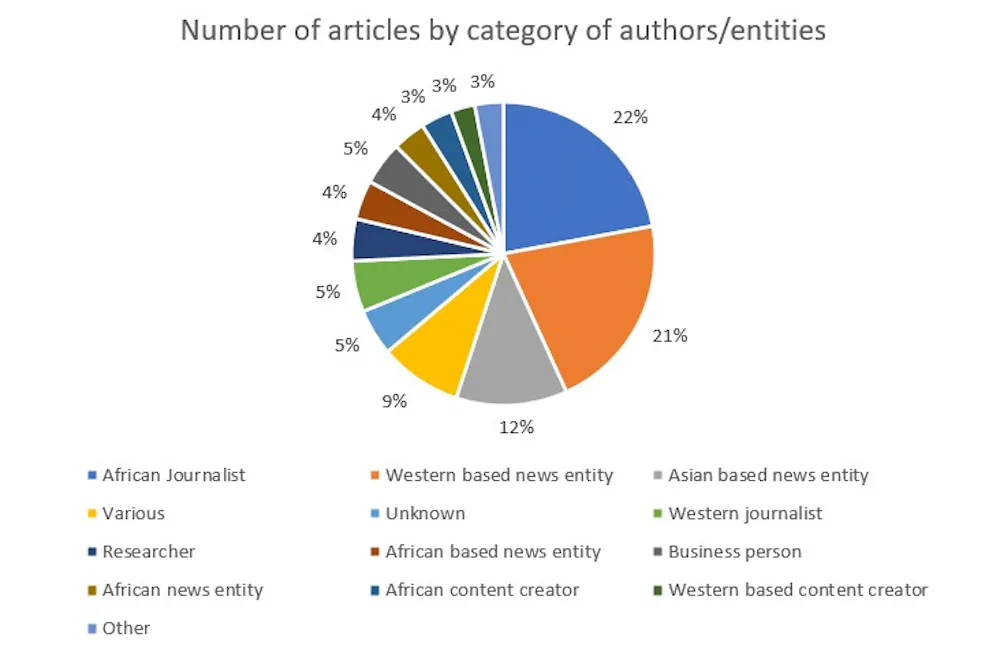
Our findings show a clear pattern in placement and authorship of articles. The most common placement of AI articles (36%) was in the technology section of publications, followed by general news (24%) and then the business section (19%). This shows that these publications mostly talk about AI as a practical tool that can solve problems and create economic opportunities. They highlight its usefulness and potential benefits, rather than exploring its social or ethical implications. Discussion of issues like employment, inequality and cultural values was largely missing.

African journalists, news entities and content creators contributed some 29% of the articles. But western-based news entities (21%) and journalists (5%) had a considerable influence. Global news agencies like AFP (15%) and Reuters (6%), along with tech news providers like Research Snipers (13%), frequently wrote these pieces.

Only a small proportion of articles (4%) were written by researchers. This suggests that the voices of those directly engaged in AI research and development in Africa were muted. But they are crucial for a locally informed understanding.

To sum up the patterns:

  • practical benefits of AI are emphasised at the expense of social and ethical conversations

  • African perspectives on how AI should be developed and used are often overlooked in favour of a western, business-focused viewpoint.

Supplied

What words are used to describe AI?

We also analysed the words used most frequently. The frequent mention of Google, Microsoft and ChatGPT reflects the dominance of western tech giants in the AI landscape. Words like “he” and “his” appeared disturbingly frequently, while feminine pronouns weren’t among the top words. This indicates a bias towards male perspectives.

The scarcity of terms like Africa, African and African countries suggests that the coverage seldom regards specific African needs and challenges. This overlooks Africa’s growing AI ecosystem.

Supplied

We found three main themes around AI in African news:

  • AI’s transformative potential, for example for agriculture, administration, healthcare and economic growth

  • concerns about AI’s potential negative effects, the unknown and disruptive nature of AI

  • articles that offered a more balanced view and useful information, aiming to demystify AI tools and explain developments.

What this means for Africa

The dominance of technical and economic framing, often by western voices, might steer policy decisions towards uptake without adequate local consultation or ethical oversight. This might lead to policies that mirror global hype rather than community-specific needs.

The overemphasis on “tools” and “solutions” risks overlooking the broader effects of AI on employment, inequality and cultural values.

The lack of Afrocentric terms in the reporting contributes to a symbolic exclusion, where Africa’s specific needs and opportunities are marginalised.

Towards a more inclusive AI narrative

To encourage a more responsible and locally relevant AI journalism in Africa, African journalists and researchers should be empowered to report on and analyse this technology.

The range of voices should expand to include local researchers, policymakers and communities experiencing AI’s effects firsthand. This means balancing coverage of AI’s economic potential with sustained attention to its social, cultural and ethical implications. African media can resist one-dimensional hype and create a more inclusive and socially responsible conversation around AI.

– Hype and western values are shaping AI reporting in Africa: what needs to change
– https://theconversation.com/hype-and-western-values-are-shaping-ai-reporting-in-africa-what-needs-to-change-262551

Drought can make farmers feel worried and hopeless: Ghana study finds social networks help

Source: The Conversation – Africa – By Seth Asare Okyere, Teaching Assistant Professor, University of Pittsburg and Adjunct Associate Professor, Osaka University, University of Pittsburgh

Droughts are a familiar hardship in Ghana’s semi-arid north, where rainfall is erratic and agriculture is the mainstay of rural economies. The economic and environmental effects of drought have been well documented. But less attention is paid to its psychological toll on farmers and their families.

We conducted a study in the Talensi district of Ghana’s Upper East region to assess the impact of drought on the mental wellbeing of peri-urban farmers in semi-arid Ghana. We are a multidisciplinary team of scholars working in the area of resilience, sustainability and more recently psychological wellbeing.

We also investigated whether social capital (people’s social support networks) affected the impact of drought on three mental health outcomes: depression, anxiety and stress.

Based on a survey of 507 farmers, we found that prolonged periods of drought were strongly linked to increased levels of depression, anxiety and stress.

Our research also offers hope, however: personal social capital reduced the severity of these mental health impacts.

Our findings offer important insights for policymakers, especially in the context of climate change, which is intensifying drought conditions in the region. This study is among the first in Ghana – and the broader west African region – to empirically examine the mental health effects of drought on farmers using validated psychological tools.

It opens a crucial conversation about how vulnerability in the era of climate change is addressed. Our study demonstrates that climate adaptation planning is incomplete without integrating psychological wellbeing.


Read more: Climate anxiety is real. Why talking about it matters


Vulnerabilities

Droughts are slow-onset disasters. Their effects accumulate gradually. But their impact on livelihoods and psychological resilience is deep.

In northern Ghana, where rain-fed agriculture dominates, even short delays in rainfall can trigger food insecurity, livestock losses and economic instability.

In the Talensi district, where we conducted the study, average annual rainfall is around 950mm. But it’s poorly distributed and increasingly erratic. The land has shallow, gravelly soil that has low moisture retention. These environmental conditions, compounded by the lack of irrigation infrastructure, make farmers highly vulnerable to climatic shocks.

For the study, we randomly selected 507 farmers across two communities – Awaredone and Yameriga. These communities combine crop cultivation with livestock rearing. Farmers cultivated mainly millet, rice, maize, cowpea and soybeans. Livestock were cattle, sheep and goats. We conducted our survey between September 2022 and March 2023. We used a combination of validated psychological scales and structured interviews in local languages to assess the impact of drought on mental health outcomes. We then used structural equation modelling to model our findings.

Our results were striking.

Stress levels

Our statistical modelling showed a significant link between the severity of the effects of drought and elevated levels of depression, anxiety, and stress. Farmers experiencing longer or more intense drought periods were more likely to report psychological distress.

Many farmers spoke about the hopelessness they felt when they watched their crops wither, or their animals die. They also spoke of the weight of not being able to provide food or income for the household.

Farmers reported symptoms such as insomnia, irritability, persistent worry, and even suicidal thoughts.

As one farmer we interviewed put it:

When the rains fail, it is not just the crops that die. Sometimes, our spirits die too. But when a neighbour shares food or even just listens, it brings life back.

Not all farmers were equally affected. Those with strong social support networks – including relationships with family, friends, neighbours and community groups – reported better mental health outcomes, even when they experienced the same drought conditions.

This is where the concept of personal social capital comes in. It refers to the resources – emotional, informational, or material – that individuals can access through their social relationships. In rural and peri-urban Ghana, this might mean receiving food from a neighbour, emotional support from relatives, or shared labour during the farming season.

Social capital acted as a buffer, we found. It moderated the relationship between drought and mental health outcomes. In other words, farmers with strong social ties were better equipped to cope with the psychological impacts of drought.


Read more: Five questions for African countries that want to build climate-resilient health systems


Why it matters

We conclude from our findings that combining social capital with other forms of capital – human, physical, financial and natural – alongside sustainable livelihood diversification programmes could reduce the underlying issues that make people vulnerable to the mental health impacts of drought.

This points to an urgent need to include mental health in disaster response and climate adaptation planning. As climate change intensifies, droughts are expected to become more frequent and severe in Ghana’s northern regions.

We argue that interventions should not only focus on boosting agricultural productivity or providing technical training. Instead, a more integrated approach is needed – one that combines climate adaptation with mental health support and community mobilisation. This is particularly relevant for the region, where health services are overstretched and mental health is often a taboo subject.

Therefore, enhancing social capital – through savings groups, farmer cooperatives, or traditional mutual aid networks – can improve psychological resilience. In practical terms, this might mean strengthening farmer-based organisations, promoting inclusive governance, and incorporating mental health education into climate adaptation services.

Donors and NGOs can also play a role by supporting psychosocial support programmes that are culturally sensitive and locally grounded.

If left unaddressed, the psychological burdens of drought could erode the social fabric of farming communities, reduce productivity, and trap households in cycles of poverty and distress. But if we recognise the value of social support systems – and invest in them – we can build more resilient, healthier communities.

– Drought can make farmers feel worried and hopeless: Ghana study finds social networks help
– https://theconversation.com/drought-can-make-farmers-feel-worried-and-hopeless-ghana-study-finds-social-networks-help-262627

Ghana’s war on illegal mining has failed – we set out to find out why

Source: The Conversation – Africa – By Gordon Crawford, Professor of Global Development, Coventry University

Early in his eight-year tenure, in 2017, then Ghanaian president Nana Akufo-Addo declared a moratorium on all small-scale gold mining. He established an inter-ministerial committee on illegal mining and a joint military-police taskforce – Operation Vanguard – to enforce the ban.

The tough measures aimed to reduce the severe environmental degradation caused by illegal small-scale gold mining, known as “galamsey”. Initially for six months, the ban lasted for 20 months until December 2018, when it was lifted for newly registered miners.

But illegal mining continued unabated. A statement made in Ghana’s parliament by the country’s lands minister outlined the scale and gold production from small-scale mining increased during the period of its ban.

As political scientists, we investigated why the government-declared “war” on illegal small-scale gold mining and associated environmental degradation failed so spectacularly.

We conducted our investigations through field visits to communities in mining areas in the western and central regions of Ghana. We interviewed small-scale miners, community residents and people affected by illegal mining. We followed this up with a review of official reports, published scientific research and media reports.

We concluded from findings that the involvement of government officials and business elites in illegal mining practices was behind the failure of the interventions. We describe this as “democracy capture”. We argue that, despite Ghana’s much-vaunted electoral democracy, the country’s democratic processes and institutions have been captured by political and economic elites for their own personal enrichment.

Scandals

By mid-2023 a series of corruption scandals had emerged around Ghana’s attempt to curb illegal mining. These included the release of an undercover investigation by journalist Anas Aremeyaw Anas. Machinery seized by the military from illegal mining sites went missing under mysterious circumstances. Also, military personnel assigned to protect forest reserves were accused of becoming a protection racket for illegal miners.

In April 2023, the scandals peaked. A report on the work of the inter-ministerial committee by its former chair, Kwabena Frimpong-Boateng, was leaked. It detailed the involvement of high-level government and ruling party officials in illegal and environmentally destructive mining at a time when all mining was banned.

The report was submitted to government in 2021 but didn’t become public until it was leaked. No clear official statement was issued about the report, but some government officials attempted to discredit and challenge its findings.

The scandals brought fresh attention to the fact that the government’s policies to curb illegal mining had failed. This failure is indicated by the official gold production figures from small-scale mining during the moratorium period. In 2017, production held steady at almost 1.5 million ounces and then in 2018 increased to its highest level ever at almost 2 million ounces, precisely when the ban was in place. Small-scale output in 2018 was 41.4% of total gold production, higher than any previous year. These figures question the extent to which the moratorium on mining was enforced. It indicates that mining continued throughout the purported ban.

Democracy capture and elite enrichment

The objective of democracy capture is to appropriate the benefits of state control for purposes of personal enrichment. It goes beyond individual acts of opportunistic corruption. It entails systematic processes of capture by political elites organised in established political parties who act alongside associated business elites. Importantly, the benefits go beyond the appropriation of state resources. It include private financial gains from illicit activities with state protection.

Although we focus on the government under Akufo-Addo (2017-2024), our contention is that “democracy capture” in Ghana extends to the two main political parties.

We analyse how this has come about. We also set out the implications for democracy in Ghana, and what can be done to reverse the trend.

Elements of democracy capture are evident in the various scandals and corrupt practices that were exposed during the government’s ostensible campaign against illegal mining. The scandals expose an organised network at the highest level of government. It includes politicians, officials and senior ruling party members.

How democracy capture works

First, the presidency and its chief of staff appear to have played a role in controlling operations and protecting those exposed. The chief of staff as a political appointee from the ruling party, rather than a career civil servant, is crucial to strengthening the link between the executive and the ruling party. Additionally, senior party members are appointed to key roles within the presidency.

Second, there is tight party control over relevant state agencies. For example, a former general secretary of the governing party was appointed as CEO of the Forestry Commission (a key regulator in the issuance of mining licences).

Third, the loyalty between members of the party elite has been highlighted by the high-level protection from prosecution and conviction when criminal activities are exposed. The case of Charles Bissue is an example. A top official of the inter-ministerial committee on illegal mining and prominent member of the governing party, he was caught on camera in the undercover investigation. He was charged with corruption but six years later the case still hasn’t been concluded.

Fourth, the military and law-enforcement agencies are allowed to benefit from illicit activities. They can sell confiscated equipment and take bribes to protect illegal mining sites. An official investigation found that the police also habitually did this.

What next?

Ghanaians value political stability and civil liberties. However, the capture of democracy has become a path to personal wealth for the political elite and their business associates.

Elites have been able to act outside the law with relative impunity. The consequence of democracy capture is that socio-economic development is sidelined. Wealth cascades upwards and inequalities intensify. Our study clearly identifies these elements.

Combating democracy capture will require a major effort from civil society organisations and the media, to expose government and state involvement in these illegal activities. This must go hand in hand with a stronger legal and judicial regime committed to prosecutions.

The current attorney general has ordered an investigation into Frimpong-Boateng’s report, but we await to see what action, if any, will be taken.

– Ghana’s war on illegal mining has failed – we set out to find out why
– https://theconversation.com/ghanas-war-on-illegal-mining-has-failed-we-set-out-to-find-out-why-262644

South Africa has chosen a risky approach to global politics: 3 steps it must take to succeed

Source: The Conversation – Africa – By Adam Habib, Vice-Chancellor, SOAS, University of London

South Africa finds itself in a dangerous historical moment. The world order is under threat from its own primary architect. The US wants to remain the premier global political power without taking on any of its responsibilities.

This dangerous moment also presents opportunities.

South Africa’s response has been one of strategic autonomy. This involves taking independent and non-aligned positions on global affairs, to navigate between competing world powers. But South African policymakers lack the political acumen and bureaucratic ability required to navigate this complex global order and to exploit the new possibilities.

Strategic autonomy is not the norm in global affairs. It is very rare for small countries to succeed at it without at least some costs.

Drawing from our expertise – as a political scientist and an economist working on the international economy – we conclude that if South Africa is to succeed in its strategic autonomy ambitions the country must do three things. First, its economic and foreign policy priority must be the African continent. Second, it must pursue bureaucratic excellence, especially in its diplomatic and security apparatus. Third, it must prepare for reprisals that are likely to follow its choice of an independent path to global affairs.

Strategic autonomy

A handful of countries have been able to pursue strategic autonomy in navigating the international system. They include Brazil, India and the Republic of Ireland.

These countries have four necessary assets: global economic importance; leverage; bureaucratic capability; and political will and agency manifested in foreign policy cohesiveness and agility.

India’s size – over 1.4 billion people and the fourth largest market in the world – makes it a location of both production and consumption. This has become more important given the US and western desire to create a counter balance to China as a low-cost producer and a market for exports.

Brazil’s assets are its geographic size, its mid-size population (three times South Africa’s), its mineral wealth, and its political importance to South America. It is also the tenth largest economy in the world.

Ireland is a small country, but it uses its strategic location in the European Union to influence global affairs.

South Africa is currently lacking on all these fronts. But, with strategic planning and reforms, and in partnership with other African countries, it is possible to enhance the country’s strategic importance to the global economy.

Where to from here?

If South Africa is to succeed as a nation, become globally relevant, and have autonomy in the global economy, it must recognise its challenges, understand their drivers and address them pragmatically.

So what should it do?

First, it’s important to recognise that South Africa is a small country. Its economy is marginal to the rest of the world. The continent of Africa has a population of around 1.5 billion people, which is likely to double by 2070 – the only part of the global economy in which demographic growth will occur.

Purely in terms of population size, Africa will be more important than ever before.

This can only be a strategic lever if countries across the continent integrate their economies more strongly. Thus, South Africa’s economic and foreign policy should focus on Africa and on building the African Continental Free Trade Area. Without this, its long-term economic development is in danger and it can’t develop the political leverage that enables independence in global affairs.

With its African partners, South Africa should be rebalancing its international trade. It should shift from being an exporter of raw materials to being a manufacturing and service economy.

Many countries across Africa have deposits of minerals that are strategically important to the global economy, especially as the climate transition shapes relations. This must be used to build integration across the continent so the region engages with powerful economies as a regional bloc.

Second, professional excellence must be taken seriously. South Africa’s political stewardship of the economy has been poor, and driven by narrow political objectives of the ruling party-linked elite. For example, policy in the important mining sector has been chaotic, at best. It has not served as a developmental stimulant or as a political lever for strategic autonomy.

Specific to international affairs, South Africa has to professionalise the diplomatic corps. It has been significantly weakened and its professional capability eroded through political appointments. These make up the vast majority of ambassadorial deployments.

There should be limits to the political appointments of ambassadors from the cohort of former African National Congress politicians and their family members.

In addition, South Africa should have fewer embassies, located in more strategic countries, with appropriate budgets to their job. It is embarrassing that embassies in places like London don’t have enough budget to market the country, undertake advocacy and advance the country’s national agenda.

But professional excellence needs to be extended far beyond the diplomatic corps.

South Africa cannot continue to be compromised by incompetent municipal and national governance. And this is not solely the result of corruption and cadre deployment. It’s also tied to a transformation agenda that eschews academic and professional excellence.

In addition, South Africa cannot pretend to be leading an independent path in global affairs without having the security apparatus that goes with such leadership. On this score, the country is sadly lacking.

Its security apparatus – the South African National Defence Force, police and intelligence service – needs attention. The defence force is poorly funded and, like the police and intelligence, largely a “social service” for former ANC operatives combatants.

Third, South Africa needs to prepare for the reprisals that are likely to follow if it charts an independent path in global affairs, such as the current response from the Trump administration to discipline South Africa for taking an autonomous position on Gaza.

This requires understanding the form that such reprisals could take and their consequences and being prepared for them. This would require diplomatic agility to proactively seek new markets, alternative sources of investment and additional political allies.

In contrast, South Africa’s responses have largely been reactive.

Dangers, as well as opportunities

While it’s a dangerous and uncertain world, it is also full of new possibilities. A new bipolar or multipolar world could enable South Africa and Africa to play off global powers against each other, to maximise opportunities for national economic development and independence.

This will only happen if South Africans collectively become agents of their own change. It will require developing leverage which others take seriously, and a government and public administration that works for the people of the country.

– South Africa has chosen a risky approach to global politics: 3 steps it must take to succeed
– https://theconversation.com/south-africa-has-chosen-a-risky-approach-to-global-politics-3-steps-it-must-take-to-succeed-262370