One year on: South Africa’s coalition government boosted optimism, but will it last?

Source: The Conversation – Africa – By Matthias Krönke, Lecturer, University of Reading

For the first time since the end of apartheid in 1994, the ruling African National Congress lost its parliamentary majority in 2024. After 30 years in power, it had to form a coalition with 10 other political parties to govern the country. The creation of the “government of national unity” marked a turning point in the country’s democracy.

This development appears to have rekindled hope and positive sentiment among South Africans about the country’s future and its democratic processes.

The period leading up to the 2024 elections was characterised by widespread pessimism. Years of economic stagnation, high unemployment, severe electricity shortages, and high-level corruption cases had taken their toll on public trust and satisfaction with the ANC’s governance. Previous analyses by Afrobarometer (a research network that conducts public attitude surveys) had consistently shown declining satisfaction with the country’s direction and the functioning of democracy.

We are political scientists who have worked with public opinion data in South Africa for almost a decade. We analysed data from a special Afrobarometer survey just before and after the country’s 2024 election. The results show a sharp turnaround in attitudes on three issues: the direction of the country, government performance, and views on democracy.

One of the most significant findings is the shift in citizens’ perceptions about the general direction of the country. Before the election, a mere 14% of South Africans believed the country was heading in the right direction. Post-election, this figure surged to 39%.

South Africans’ renewed optimism after the formation of the unity government underscores the importance of electoral processes in shaping citizen perceptions of democracy and governance. Whether these sentiments are sustained will depend on a few things, including the coalition government’s ability to meet citizen expectations and address their most pressing concerns.

The post-election optimism boost

Afrobarometer interviewed the same group of adult South Africans before (April/May 2024) and after (August/September 2024) the election. This allowed us to track which respondents changed their views and in which direction. Here, we focus on citizens’ views of the overall direction of the country (optimism), government performance, and views on democracy.

A surge in optimism: The data show that 35% of the population became more positive in their outlook after the election. This was consistent across gender, age, and education levels. At the same time, 4% of the population maintained their positive outlook on the country’s trajectory.

About half (48%) continued to say that South Africa was going in the wrong direction after the election. A further 10% moved towards a negative outlook.

Renewed faith in democratic processes: Beyond general optimism, there was a resurgence in pro-democratic attitudes. The proportion of South Africans who believe democracy is preferable to any other form of government increased from 45% before the election to 55% after. Satisfaction with the way democracy works in South Africa jumped from 36% to 59%. These levels of support for and satisfaction with democracy were the highest recorded by Afrobarometer in South Africa since 2018 and 2011, respectively.

We found that three in 10 (29%) respondents were newly in favour of democracy after the elections. About four in 10 (39%) shifted from dissatisfaction or a neutral opinion before the election to stating they were “fairly” or “very” satisfied with the country’s democracy afterwards.

Where are the sore losers?: In both the case of support for and satisfaction with democracy, we found that a greater proportion of poorer citizens shifted their opinions, compared to their wealthier counterparts. In contrast, there were no clear patterns of opinion change by respondents’ gender, age, level of education, or race.

When examining the same question by party affiliation, the outcome was interesting. The share of partisans who preferred democracy increased among supporters of the ANC, the Economic Freedom Fighters and the MK Party after the election. A majority of supporters from the four major parties were satisfied with how democracy worked in the country.

Even ANC supporters remained largely satisfied with democracy despite the party’s electoral losses. Collectively, these findings suggest a post-electoral vote of confidence in multiparty competition.

Expectations of the new government: Citizens also appeared more hopeful about the new coalition government’s ability to tackle some of the nation’s most pressing issues. Pre-election evaluations of government performance on key services were overwhelmingly negative. The post-election wave showed some modest increases in optimism.

Two-thirds (67%) of South Africans felt the government of national unity would be more effective in the critical area of electricity provision. There was also hope for progress in other areas; 42% expected the new government to be more effective in creating jobs. Another 41% believed it would be more successful in fighting corruption.

Over the past year, the government seems to have met citizens’ expectations. South Africa has not experienced prolonged periods of power cuts over the past 12 months. However, the unemployment rate has remained unchanged, at 32.9%.

Looking ahead

The 2024 elections in South Africa seem to have served as an inflection point. It is contributing to a revival of optimism and pro-democratic sentiment. The shift from pre-election pessimism to post-election hope was palpable. Maintaining renewed public confidence, however, relies on a government’s ability to meet citizens’ expectations and deliver tangible improvements on their concerns.

The ongoing skirmishes between the ANC and the Democratic Alliance illustrate the coalition government’s difficulty in translating agreement on a broad agenda into specific outcomes.

The coming months and years will tell whether the unity government’s infighting ultimately squanders citizens’ goodwill.

– One year on: South Africa’s coalition government boosted optimism, but will it last?
– https://theconversation.com/one-year-on-south-africas-coalition-government-boosted-optimism-but-will-it-last-258497

Kwame Akoto-Bamfo: the Ghanaian artist using work about slavery to find justice and healing

Source: The Conversation – Africa – By Rachel Ama Asaa Engmann, Associate Professor and Director of Christiansborg Archaeological Heritage Project, Associate Graduate Faculty, Rutgers University

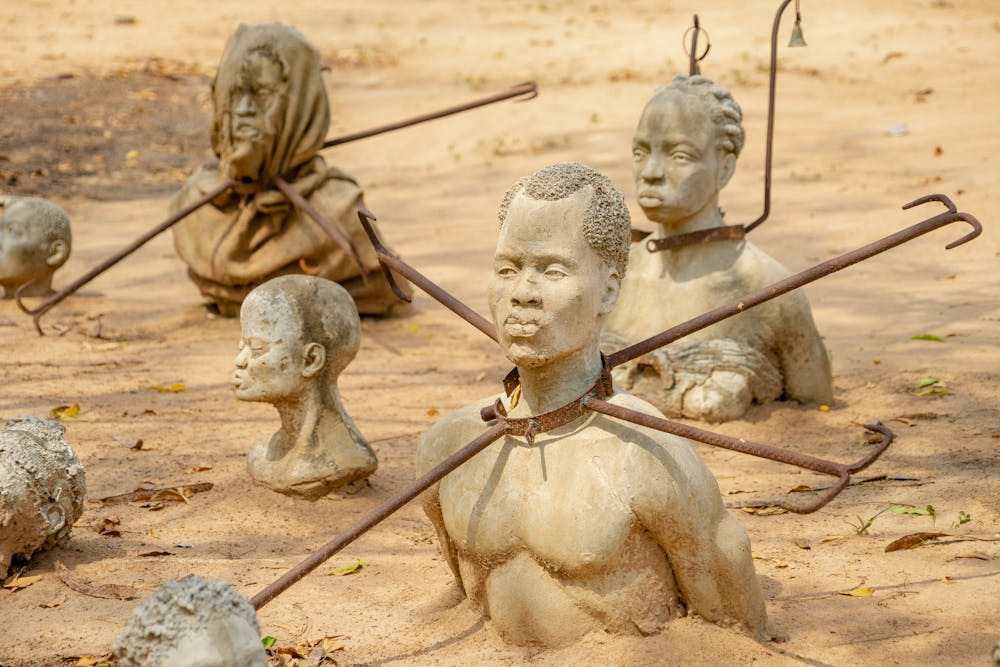
Thousands of sculpted heads – captive African men, women, and children – meticulously created by the artist Kwame Akoto-Bamfo, emerge from the soil at the Nkyinkyim Museum, as a sacred gathering of ancestors. Together, they form a powerful monument to the horror, violence, and resistance to enslavement, as well as the ongoing work of remembrance and healing.

Kwame Akoto-Bamfo.

Kwame Akoto-Bamfo is a Ghanaian multidisciplinary artist who engages with the histories and legacies of the transatlantic slave trade and colonialism at home and, increasingly, internationally, on both sides of the Atlantic.

As an archaeologist who works in the field of critical heritage studies, Akoto-Bamfo’s work is important for its powerful engagement with memory, material culture and restorative justice. I feature it in a chapter of a new book that I co-edited called Architectures of Slavery: Ruins and Reconstructions.

Who is Kwame Akoto-Bamfo?

Akoto-Bamfo studied at the Kwame Nkrumah University of Science and Technology in Kumasi. He obtained his bachelor’s and master of fine arts degrees, both in sculpture. After graduating, the artist worked as a school teacher and a university lecturer.

In 2015, Akoto-Bamfo rose to international fame through a series of large-scale installations. He called it ‘Nkyinkyim’ (“twisting” in the Ghanaian Twi language, as in the proverb, “Life’s journey is twisted”).


Read more: Book review: how Africa was central to the making of the modern world


Four years later, he established the ‘Nkyinkyim Museum’, a non-profit organisation known as the ‘Ancestor Project’. This open-air museum is located in Nuhalenya-Ada, a two-hour drive from Accra. It has become a space for people of African descent to engage in restorative healing through art and education.

Nkyinkyim Museum

At the site’s entrance, three twenty-five-foot monuments are displayed. They are made of stone, concrete and wood. The first is inspired by North and Eastern Africa, and the second by Sudano-Sahelian architecture. The third is inspired by the Forest regions in Central and West Africa.

Sculptures at the museum entrance. Kwame Akoto-Bamfo

The collection includes multiple installations in collaboration with the local community. They illustrate “the diversity in our narratives surrounding history, philosophy, and religious beliefs”. The artist himself, demonstrates a mastery of multimedia art forms, working in cement, terracotta, brass, copper, and wood, noting “one can reach different heights with different technologies.”

Today, the museum features a sacred healing space with a compelling display of thousands of unique concrete life size heads and 7,000 terracotta miniature sculpted heads. They include captive Africans abducted, sold and forcibly trafficked during the transatlantic slave trade.

An installation of the heads of enslaved people. Kwame Akoto-Bamfo

His sculptures capture captives’ shock, horror, anger, distress and fear—emotions. This is communicated through their facial expressions in an installation that is disturbingly evocative and profoundly haunting. It is inspired by ‘nsodie’, an Akan funerary sculpture tradition, that dates back to approximately the twelfth century. Akoto-Bamfo explains during our conversations relating to the research for book:

I wanted to draw upon Akan belief in commemoration and remembrance after death in order to honour the young, old, men and women, who originated from various ethnic groups and who died in the Atlantic Ocean during the Middle Passage and did not get that chance.

Each year, the annual ‘Ancestor Veneration’ ceremony takes place under the guidance of chiefs, priests, and priestess from various ethnic groups.

The museum displays 7,000 terracotta sculpted heads. Kwame Akoto-Bamfo

Visitors are invited to participate in certain Akan rites and ceremonies – free from photography and selfies that undermine or commercialise sacred funerary art practices. Says Akoto-Bamfo:

I am Akan, so initially I began with Akan traditional rites, but now our ceremonies welcome other African ethnic groups including the Ga-Dangme, Ewe, and Yoruba, from Ghana and Nigeria, as well as African descendant people in the African diaspora.

In contrast, the ‘Freedom Parade Festival’ allows participants to creatively express and contribute to an evolving heritage tradition, without the specified observances. For example, painted bodily adornment applied directly onto the skin, yet without the necessary spiritual rites.

A protest monument

Akoto-Bamfo’s sculptures have also gained recognition beyond Ghana’s borders. For instance, the permanent installation at the Legacy Museum and National Museum for Peace and Justice in Montgomery, Alabama in the US.

More recently, in 2021, his Blank Slate Project Monument toured throughout the United States. This included stops at Times Square in New York and the King Center in Atlanta. It depicts an enslaved ancestor, bent forward with his hands behind his back, head turned sideways, face on the ground, with a booted foot on his head.

The Blank Slate Monument in New York. Roshi Sariaslan

Akoto-Bamfo describes this work as “a noisy one — a protest piece that speaks against racist Civil War monuments.” The work was completed prior to the police killing of George Floyd that led to widespread protests in the US in 2020. It was first unveiled in a private viewing in Ghana, prior to its shipment to the United States.

He says:

We had a lot of discussions among those involved in the project: some feared it might incite violence, others said that it was a prediction.

The work is interactive. It holds a removable placard that invites viewers to inscribe their reactions to the statue, which are then exhibited. Akoto-Bamfo emphasises:

I wanted ordinary people, both individuals and communities, to relate, and to contribute to, not only towards my artwork but also to the wider ongoing discussions. As an artist, I believe that I do not have the sole right to speak. I wanted ordinary Americans to add their voices because I am already contributing.

In Europe too, his work is featured at the 169 Museum in Germany.

The effects of enslavement are still felt today. Kwame Akoto-Bamfo

In Ghana, Akoto-Bamfo’s work was initially seen as too controversial. The artist shares:

At first, I had to be extremely resilient because my work was concerned with the slave trade, slavery, colonialism, racism, and human rights. I embraced uncomfortable dialogue. Yet these were difficult topics for galleries and the art world at that time in Ghana.

He adds:

Today, however, some even view me as a spiritual leader… but I have always had an innate antipathy towards injustice. My work is not only about the past but what is unfolding now.

Akoto-Bamfo offers a closing reflection on why this kind of memory work matters:

I just want to use the little knowledge that I have to contribute towards the work of restorative and transformative justice.

– Kwame Akoto-Bamfo: the Ghanaian artist using work about slavery to find justice and healing
– https://theconversation.com/kwame-akoto-bamfo-the-ghanaian-artist-using-work-about-slavery-to-find-justice-and-healing-259184

Are Chinese investors grabbing Zambian land? Study finds that’s a myth

Source: The Conversation – Africa – By Yuezhou Yang, Research Fellow, London School of Economics and Political Science

Media coverage of Chinese land investments in African agriculture often reinforces narratives of a “weak African state” and the “Chinese land grab”, highlighting power imbalances between the actors involved in these land deals.

Are Chinese actors grabbing land in Africa and jeopardising local people’s land rights and food security?

China’s “Agriculture Going Out” policy, launched in 2007 as part of its broader “Going Out” strategy, was reinforced by the Belt and Road Initiative from 2013. Backed by these policies, Chinese foreign direct investment in Africa rose from US$74.81 million in 2003 to US$4.99 billion in 2021. By 2020, US$1.67 billion was invested in African agriculture, with nearly two-thirds targeting cash crop cultivation. Zambia ranked among the top ten African countries receiving Chinese foreign direct investment and loans.

My research on Zambian agriculture finds that Chinese land grabbing is a myth. Instead, Chinese investors have preferred different investment models according to the specific rules of land access, transfer and control of three land tenure systems in Zambia.

What ties the three types of Chinese agricultural investments together is this: land institutions matter. Whether it’s central government rules or traditional authority, these systems shape how foreign investment happens and what impact it has.


Read more: Foreign agriculture investments don’t always threaten food security: the case of Madagascar


Each of the three models raises new opportunities and challenges for rural development and land governance. These findings matter because they offer insights into the future of land rights, livelihoods and state-building in African countries.

Not all land is the same

After independence, all land in Zambia was vested in the president, held in trust for the people. Today, the country still operates under a dual land system, as outlined in the 1995 Lands Act. State land, managed by the central government, includes both private and government leaseholds. Customary land, on the other hand, remains under the authority of traditional chiefs. The exact proportion of state and customary land in Zambia is contested, with estimates of customary land ranging widely from 94% to 54%.

This tenure distinction is significant because each type of land is governed by different rules regarding foreign access and ownership, which shape how foreign investors choose their investment models.

Over four months of fieldwork in Zambia, I gathered data on 50 Chinese agricultural projects (41 remained active) through 96 qualitative interviews. These projects were spread across three types of land tenure: private leasehold (37), government leasehold (1), and customary land (3).

Model 1: Commercial farm on private land

My fieldwork data showed that the majority of Chinese agricultural investments in Zambia are located on private leasehold land, typically following the commercial farm model. This type of land functions much like private property, held under 99-year leases that can be bought, sold or transferred. Investors use it for large-scale farming operations, such as maize, soybean and wheat production.

Even in these seemingly privatised spaces, however, state power remains influential. When Zambia proposed a draft National Land Policy in 2017 aimed at tightening rules for foreign land ownership, Chinese investors responded strategically. Many began aligning their projects with Zambia’s development priorities, emphasising contributions to local food security, donating to charities, and promoting themselves as responsible corporate actors.

Model 2: Farm block on government land

In northern Zambia, for example, a Chinese company partnered with the government to develop a farm block on state-owned land that had been converted from customary tenure for national development. Unlike the commercial farm model, the government played a central role, selecting the investor, managing the land and negotiating the deal. The project promised infrastructure and jobs, enhancing the political standing of local officials.

But this kind of state-led development works only when the promises are delivered. In other areas where farm blocks failed to materialise, traditional chiefs reclaimed the land. In the northern case, actual physical infrastructure investment helped reinforce state authority.

Model 3: Contract farming on customary land

The third model is very different. For instance, a Chinese agribusiness company arranged contract farming deals with over 50,000 smallholders in Zambia’s Eastern Province. Instead of buying or leasing land, the company provided seeds and bought cotton from farmers after harvest. This let the company access land informally, without triggering the legal and political risks of converting customary land to leasehold.

Operating on customary land posed challenges for investors. When farmers defaulted on loans or engaged in side-selling, companies had limited legal recourse and often had to negotiate with chiefs and local communities rather than the state. In such contexts, traditional authorities – not the central government – wielded the decisive power over land and its governance.

Why this matters

In a world where land deals are often controversial, understanding how local rules shape global investment is crucial. It’s not just about who buys the land, but under what terms, and how those terms are enforced. African governments are not just passive bystanders; they’re active players who use land institutions to negotiate power and development.


Read more: China and Africa: Ethiopia case study debunks investment myths


This research urges us to look beyond the headlines about “land grabs” and instead focus on the everyday politics of land. If African states want to steer rural development on their own terms, understanding and strengthening land institutions – both statutory and customary – is key.

– Are Chinese investors grabbing Zambian land? Study finds that’s a myth
– https://theconversation.com/are-chinese-investors-grabbing-zambian-land-study-finds-thats-a-myth-257644

Stone tools from a cave on South Africa’s coast speak of life at the end of the Ice Age

Source: The Conversation – Africa – By Sara Watson, Assistant Professor, Indiana State University

The Earth of the last Ice Age (about 26,000 to 19,000 years ago) was very different from today’s world.

In the northern hemisphere, ice sheets up to 8 kilometres tall covered much of Europe, Asia and North America, while much of the southern hemisphere became drier as water was drawn into the northern glaciers.

As more and more water was transformed into ice, global sea levels dropped as much as 125 metres from where they are now, exposing land that had been under the ocean.

In southernmost Africa, receding coastlines exposed an area of the continental shelf known as the Palaeo-Agulhas Plain. At its maximum extent, it covered an area of about 36,000km² along the south coast of what’s now South Africa.

This now – extinct ecosystem was a highly productive landscape with abundant grasslands, wetlands, permanent water drainage systems, and seasonal flood plains. The Palaeo-Agulhas Plain was likely most similar to the present day Serengeti in east Africa. It would likely have been able to support large herds of migratory animals and the people who hunted them.

We now know more about how these people lived thanks to data from a new archaeological site called Knysna Eastern Heads Cave 1.

Archaeologists at Knysna Eastern Heads Cave 1. Sara Watson, Author provided (no reuse)

The site sits 23 metres above sea level on the southern coast of South Africa overlooking the Indian Ocean. You can watch whales from the site today, but during the Ice Age the ocean was nowhere to be seen. Instead, the site looked out over the vast grasslands; the coast was 75 kilometres away.

Archaeological investigation of the cave began in 2014, led by Naomi Cleghorn of the University of Texas. This work shows that humans have been using the site for much of the last 48,000 years or more. Occupations bridge the Middle to Later Stone Age transition, which occurred sometime between about 40,000 and 25,000 years ago in southern Africa.

That transition is a time period where we see dramatic changes in the technologies people were using, including changes in raw materials selected for making tools and a shift towards smaller tools. These changes are poorly understood due to a lack of sites with occupations dating to this time. Knysna Eastern Heads Cave 1 is the first site on the southern coast that provides a continuous occupational record near the end of the Pleistocene (Ice Age) and documents how life changed for people living on the edge of the Palaeo-Agulhas Plain.

Before the Ice Age, people there collected marine resources like shellfish when the coastline was close to the site. As the climate began to cool and sea levels dropped, they shifted their focus to land-based resources and game animals.

Archaeologists working at Knysna Eastern Heads site. Sara Watson, Author provided (no reuse)

I am one of the archaeologists who have been working here. In a new study, my colleagues and I analysed stone tools from the cave that date to about 19,000 to 18,000 years ago, and discussed how the techniques used to make them hint at the ways that prehistoric people travelled, interacted, and shared their craft.

Based on this analysis, we think the cave may have been used as a temporary camp rather than a primary residence. And the similarity of the tools with those from other sites suggests people were connected over a huge region and shared ideas with each other, much like people do today.

Robberg technology of southern Africa

In human history, tools were invented in a succession of styles (“technologies” or “industries”), which can indicate the time and place where they were made and what they were used for.

The Robberg is one of southern Africa’s most distinctive and widespread stone tool technologies. Robberg tools – which we found at the Knysna site – are thought to be replaceable components in composite tools, perhaps as barbs set into arrow shafts, used to hunt the migratory herds on the Palaeo-Agulhas Plain.

Stone tools, Robberg technology. Sara Watson, Author provided (no reuse)

We see the first appearance of Robberg technology in southern Africa near the peak of the last Ice Age around 26,000 years ago, and people continued producing these tools until around 12,000 years ago, when climate conditions were warmer.


Read more: What stone tools found in southern tip of Africa tell us about the human story


The particular methods and order of operations that people used to make their tools is something that is taught and learned. If we see specific methods of stone tool production at multiple sites, it indicates that people were sharing ideas with one another.

Sites in southern Africa where Robberg technology has been found. Sara Watson, Author provided (no reuse)

Robberg occupations at Knysna date to between 21,000 and 15,000 years ago, when sea levels were at their lowest and the coastline far away.

The Robberg tools we recovered were primarily made from rocks that were available close to the site. Most of the tools were made from quartz, which creates very sharp edges but can break unpredictably. Production focused on bladelets, or small elongated tools, which may have been replaceable components in hunting weapons.

Some of the tools were made from a raw material called silcrete. People in South Africa were heat treating this material to improve its quality for tool production as early as 164,000 years ago. The silcrete tools at Knysna were heat treated before being brought to the site. This is only the second documented instance of the use of heat treatment in Robberg technology.

Silcrete is not available near Knysna. Most of the accessible deposits in the area are in the Outeniqua mountains, at least 50 kilometres inland. We’re not sure yet whether people using the Knysna site were travelling to these raw material sources themselves or trading with other groups.

Archaeological sites containing Robberg tools are found in South Africa, Lesotho and Eswatini, indicating a widespread adoption by people across southern Africa. The tools from the Knysna site share many characteristics with those from other sites, which suggests people were sharing information through social networks that may have spanned the entire width of the continent.


Read more: 65,000-year-old ‘stone Swiss Army knives’ show early humans had long-distance social networks


Yet there are other aspects that are unique to the Knysna site. Fewer tools are found in the more recent layers than in deeper layers, suggesting that people were using the site less frequently than they had previously. This may suggest that during the Ice Age the cave was used as a temporary camp rather than as a primary residential site.

Left with questions

Stone tools can only tell us so much. Was Knysna Eastern Heads Cave 1 a temporary camp? If so, what were they coming to the cave for? We need to combine what we learned from the stone tools with other data from the site to answer these questions.


Read more: Ancient human DNA from a South African rock shelter sheds light on 10,000 years of history


Something we can say with confidence is that we have a very long and rich history as a species, and our innovative and social natures go back a lot further in time than most people realise. Humans living during the last Ice Age had complex technologies to solve their problems, made art and music, connected with people in other communities, and in some places even had pet dogs.

Despite the dramatic differences in the world around us, these Ice Age people were not very different from people living today.

– Stone tools from a cave on South Africa’s coast speak of life at the end of the Ice Age
– https://theconversation.com/stone-tools-from-a-cave-on-south-africas-coast-speak-of-life-at-the-end-of-the-ice-age-258317

What happens when aid is cut to a large refugee camp? Kenyan study paints a bleak picture

Source: The Conversation – Africa – By Olivier Sterck, Associate professor, University of Oxford

Humanitarian needs are rising around the world. At the same time, major donors such as the US and the UK are pulling back support, placing increasing strain on already overstretched aid systems.

Global humanitarian needs have quadrupled since 2015, driven by new conflicts in Sudan, Ukraine and Gaza. Added to these are protracted crises in Yemen, Somalia, South Sudan, and DR Congo, among others. Yet donor funding has failed to keep pace, covering less than half of the requested US$50 billion in 2024, leaving millions without assistance.

Notably, the US recently slashed billions of US dollars from global relief efforts. The slashed contributions once made up to half of all public humanitarian funding and over a fifth of the UN’s budget. Other donors have been cutting aid as well.

As funding shortfalls widen, humanitarian agencies increasingly face tough choices: reducing the scale of operations, pausing essential services, or cancelling programmes altogether. Disruptions to aid delivery have become a routine feature of humanitarian operations.

Yet few rigorous studies have provided hard evidence of the consequences for affected populations.

A recent study from one of the world’s largest refugee camps in Kenya fills this gap.

Our research team from the University of Oxford and the University of Antwerp was already studying Kakuma camp and then had an opportunity to see what happened when aid was cut. We observed the impact of a 20% aid cut that occurred in 2023.

The study reveals that cuts to humanitarian assistance had dramatic impacts on hunger and psychological distress, with cascading effects on local credit systems and prices of goods.

Kakuma refugee camp

Kakuma is home to more than 300,000 refugees, who mostly came from South Sudan (49%), Somalia (16%), and the Democratic Republic of Congo (DRC) (10%). They have been housed here since 1992. With widespread poverty, lack of income opportunities, and aid making up over 90% of household income, survival in the camp hinges on humanitarian support from UN organisations.

When the research began in late 2022, most refugees in Kakuma received a combination of in-kind and cash transfers from the World Food Programme. Transfers were worth US$17 per person per month, barely enough to cover the bare essentials: food, firewood and medicine.

Over the span of a year, the research team tracked 622 South Sudanese refugee households, interviewing them monthly to monitor how their living conditions evolved in response to the timing and level of aid they received. We also gathered weekly price data on 70 essential goods and conducted more than 250 in-depth interviews with refugees, shopkeepers, and humanitarian staff to understand the broader impacts.

Then came the cut. In July 2023, assistance was reduced by 20%, just as the research team was conducting its eighth round of data collection. This sudden reduction in humanitarian aid created a rare opportunity to assess the effects of an aid cut on both recipients and the markets they depend on.

Consequences of aid cut

The 20% cut in humanitarian aid had cascading effects, affecting not just hunger, but local credit systems, prices, and well-being.

1. Hunger got worse. As a Somali refugee interviewed by the researchers put it: “After the aid reduction, the lives of refugees become hard. That was the money sustaining them. […] Things are insufficient, and hunger is visible.”

Food insecurity was already widespread before the cut, with more than 90% of refugees classified as food insecure. Average caloric intake stood below 1,900 kcal per person per day – well under the World Food Programme’s 2,100 kcal target and about half the average daily calorie supply available to a US citizen.

Food insecurity further increased following the aid cut, with caloric intake falling by 145 kcal, a 7% decrease. The share of households eating one meal or less increased by 8 percentage points, from about 29% to 37%. At the same time, dietary diversity narrowed, indicating that households tried to mitigate the negative impacts of the aid cut by reducing the variety of foods they consumed.

2. Credit collapsed. As a refugee shopkeeper of Ethiopian origin reported: “When we give out credit we have a limit; since the aid is reduced, the credit is also reduced.”

Cash assistance in Kakuma is delivered through aid cards, which refugees routinely use as collateral to access food on credit. When transfers are delayed or unexpected expenses arise, refugees hand over their aid cards as a guarantee to trusted shopkeepers, allowing them to borrow food against next month’s aid.

But when assistance was cut, the value of this informal collateral plummeted. Retailers, fearing default, reduced lending or refused lending altogether. Informal credit from shopkeepers shrank by 9%. Many refugees reported being refused food on credit or having to repay past debt before receiving any new goods.

3. Households liquidated assets. With no access to credit, households began selling off possessions and drawing down food reserves. The average value of household assets fell by over 6% after the aid cut.

4. Psychological distress increased. The aid cut reduced self-reported sleep quality and happiness, indicating that reductions in aid go beyond physical impacts and also have psychological effects.

5. Prices fell. With reduced expenditure and purchasing power, the demand for food dropped, and food prices went down, partially offsetting the negative effects of the aid cut.

Implications

The study carries two major policy implications.

First, aid in contexts like Kakuma should not be treated as optional or discretionary, but as a structural necessity. It is the backbone of daily life. Mechanisms are needed to protect it from abrupt donor withdrawals.

Second, informal credit is not peripheral, it is central to economic life in refugee settings. In many camps, shopkeepers act as retailers and de facto financial institutions. When aid transfers serve as both income and collateral, cutting them risks collapsing this fragile credit system. Cash transfer programmes must therefore be designed with these dynamics in mind.

– What happens when aid is cut to a large refugee camp? Kenyan study paints a bleak picture
– https://theconversation.com/what-happens-when-aid-is-cut-to-a-large-refugee-camp-kenyan-study-paints-a-bleak-picture-259055

Nigeria’s economy is growing but rural poverty is rising: 5 key policies to address the divide

Source: The Conversation – Africa – By Stephen Onyeiwu, Professor of Economics & Business, Allegheny College

The Nigerian economy grew at a robust rate of 3.4% in 2024, the highest it has been since 2019 (except 2021 when the COVID rebound occurred).

This should have been cheering news, worthy of firecrackers and champagne-popping. Rather it came with a catch: the country’s poverty profile worsened.

In its annual review of the country, the World Bank applauded Nigeria for its economic reforms. These include the removal of fuel subsidies, liberalisation of the foreign exchange market and maintenance of a contractionary monetary policy. This is a policy of raising interest rates, reducing money supply and increasing borrowing costs to rein in inflation.

But the bank also drew attention to the fact that the country’s poverty profile has become grim. About 31% of Nigerians lived in poverty prior to the COVID-19 epidemic. Since then, an additional 42 million have become poor, increasing the poverty rate to about 46% in 2024.

Poverty is even worse in Nigeria’s rural communities: 75.5% live on US$2.15 or less per day (based on 2017 prices). The average poverty rate for sub-Saharan African countries was 36.5% in 2024 and 0.8% for East Asia and the Pacific.

Nigeria’s poverty rate would have been higher if the multidimensional poverty index had been used. In addition to income, the index considers access to education, health, decent housing, nutrition, sanitation, electricity and water. Access to these critical services has worsened for many Nigerians, despite improvements in macroeconomic stability.


Read more: Poor rural infrastructure holds back food production by small Nigerian farmers


A challenge for policy makers is how to translate impressive macroeconomic outcomes into high-paying jobs, lower poverty rates and access to health, good sanitation, education, electricity and affordable housing. The question is even more acute for people in rural areas.

As an economist who has studied the Nigerian economy for over four decades and lived in a rural community, I believe Nigeria needs a radical shift in its economic policy approach.

One major step should be a change in the country’s growth drivers. Oil, information and communications technology and finance are the major drivers of growth in Nigeria.

These sectors are not employment-intensive, and they require skills that most Nigerians don’t have. Because of the lack of employment opportunities in these sectors, most Nigerians gravitate towards the informal sector, which accounts for about 90% of employment in the country.

By continuing to urge Nigerians to be patient for economic reforms to have a positive impact on their living conditions, the Tinubu administration appears to assume that improvements in macroeconomic performance will eventually manifest in lower unemployment and poverty rates. This notion of “trickle-down economics” is misconceived and illusory.

The government needs to intentionally create transmission mechanisms through which economic growth and macroeconomic stability can raise living standards.

Fostering growth with development

Concerted efforts will be needed to target poverty in general, and rural poverty in particular.

Five key policies could get Nigeria closer to this goal:

Building productive capacities: People who live in rural areas in Nigeria are eager to work and full of creative ideas and entrepreneurial spirit. But they lack the resources and opportunity to fully unleash their potential.

Building their productive capacities would entail giving them access to basic education, technical and managerial skills, and other productive resources such as tools, equipment, finance and land. The government should identify the comparative advantage of different rural communities, and put in place policies that encourage those communities to use their comparative advantage and distinctive competencies.

Opportunity to diversify incomes: In developed countries, many people hold multiple jobs. Most rural dwellers in Nigeria, however, rely on agriculture as their only source of livelihood.

Because of limited access to inputs and modern technology, and outdated agricultural practices, their productivity is often very low. Their low income makes it difficult to save and invest in education, health and housing.

Non-agricultural activities, especially manufacturing, need to be located in rural communities, to give rural dwellers the opportunity to diversify their income sources.

Agriculture-led industrial strategy: This would involve the location of manufacturing plants close to the sources of agricultural raw materials.

Nigerian manufacturers locate their factories in urban areas. The result of urban-biased development strategy in Nigeria has been the lack of employment opportunities in rural communities, and a decline in the rural population, from about 85% in 1960 to 46% in 2023.

Moving manufacturing to rural areas would require massive investment in infrastructure such as electricity, water, roads and health services.


Read more: Nigeria’s new blue economy ministry could harness marine resources – moving the focus away from oil


Ending patriarchy and male domination: Women disproportionately bear the burden of rural poverty in Nigeria. A study in rural south-east Nigeria found that the poverty rate among women was 98%, compared to 85% for men. Men are often given preference regarding access to land, education, skills acquisition and financial inclusion.

Women are also imbued with the responsibility of caring for children, the elderly and the sick, as well as household chores. This leaves them with little time for paid work or opportunities to acquire marketable skills.

Ability to absorb shocks and vulnerability: Rural poverty is often exacerbated by shocks and vulnerability such as extreme weather conditions, attacks by insurgents and other criminal groups, and illness. With no safety nets, and little or no saving, most rural dwellers are unable to withstand shocks.

The Tinubu administration plans to disburse N25,000 (about US$17) each to 60 million Nigerians. But these kinds of support are too small, non-pervasive, irregular and unpredictable.


Read more: Nigeria needs to close the financial inclusion gap for women smallholder farmers


What India and China have to teach

Nigeria could do well to borrow from the Indian model of an institutionalised safety net.

India issues “ration cards” to eligible households. The cards enable poor people to purchase essential food items such as grains, milk, eggs, cooking oil and bread at subsidised prices from designated stores.

Nigeria could finance this kind of programme with a special tax on oil companies and financial institutions, which frequently post huge after-tax profits.

China has had an impressive record of poverty reduction. Using the US$1.90 poverty line, China’s poverty rate decreased from 88.1% in 1981 to 0.3% in 2018.

The fall in rural poverty is even more dramatic, from 96% in 1980 to 1% in 2019.

This reduction was accomplished in stages, starting with an increase in agricultural productivity. It then shifted focus to the development of non-agricultural sectors of the economy, including manufacturing. These sectors were able to draw surplus labour from the agricultural sector, giving them skills that led to higher wages and poverty alleviation.


Read more: Poor rural infrastructure holds back food production by small Nigerian farmers


Next steps

The World Bank in its report noted that addressing pressing social and humanitarian challenges remains critical to ensuring inclusive and sustainable growth in Nigeria.

Cash transfers and social assistance programmes could provide temporary relief for the poor in rural communities. But a long-term solution is to build their productive capacities and transform rural communities in ways that provide opportunities for income diversification.

– Nigeria’s economy is growing but rural poverty is rising: 5 key policies to address the divide
– https://theconversation.com/nigerias-economy-is-growing-but-rural-poverty-is-rising-5-key-policies-to-address-the-divide-257152

China’s support for Mali’s military carries risks: researcher outlines what they are

Source: The Conversation – Africa – By Paa Kwesi Wolseley Prah, Postdoctoral Fellow, Dublin City University

Mali, a landlocked Sahelian nation of 25 million people, has faced significant instability since 2012, marked by terrorism, state neglect and armed conflicts.

That year a Tuareg rebellion started in northern Mali and President Amadou Toumani Touré was ousted in a military coup. Constitutional rule was suspended. Rebels in northern Mali went on to seize cities like Timbuktu, Gao and Kidal, declaring an independent Islamic State of Azawad and imposing sharia law.

They also destroyed cultural heritage sites, including 14 of Timbuktu’s 16 Unesco-listed mausoleums. The crisis prompted international intervention, including a UN authorised mission, which retook northern cities within weeks. Islamist rebels retreated into civilian populations and remote areas.

Despite these efforts, violence against civilians by extremist groups and community militias has continued. By 2023, 8.8 million Malians needed humanitarian assistance. Over 375,500 were internally displaced, primarily women and children.

Meanwhile, the former French colony had turned to China for military assistance. Between 2012 and 2013, China provided €5 million (about US$5.8 million) in logistical equipment to improve the Malian army’s mobility.


Read more: China’s interests in Africa are being shaped by the race for renewable energy


In August 2013, the Chinese People’s Liberation Army gave the Malian army military supplies totalling 1.6 billion CFA francs (about US$2.8 million). China made similar donations between 2014 and 2023.

I am an international security and global governance researcher. My recent research explored the impact of China’s security sector assistance on Mali’s fragility.

China’s assistance to Mali aims to equip the country to address terrorism and insurgency. But I argue that it may have unintended consequences and cause further damage to the country.

The heavy reliance on Chinese supply exposes Mali to vulnerabilities, including supply disruptions, diminished bargaining power, and limited strategic flexibility. This could destabilise security even more should China face manufacturing issues or supply chain disruptions leading to delays or shortages in the production of weapons.

It also raises concerns about the potential influence of China on Mali’s defence policies and decision-making processes. In turn this could entrench the Malian military government’s position. China takes a hands-off approach to the governance structures of the countries it engages with. Hopes of democratisation in the country could be affected.


Read more: US trade wars with China – and how they play out in Africa


Rich in resources

Mali has significant natural resources, including 800 tons of gold reserves (it’s Africa’s fourth-largest producer), iron ore, manganese, lithium, and potential uranium and hydrocarbon deposits.

In 2019, gold production generated US$734 million, or 9.7% of Mali’s GDP, supporting over 10% of the population.

Chinese firms, such as Ganfeng Lithium and China National Nuclear Corporation, have invested heavily in Mali’s mining sector. They are involved in a US$130 million lithium project and uranium exploration in the Kidal and Falea regions.

Despite security risks, including attacks on Chinese personnel in 2015 and 2021, China remains committed due to Mali’s resource potential.

Beyond mining, China has invested in Mali’s infrastructure. A US$2.7 billion railway modernisation project connects Bamako to Dakar, facilitating resource exports like iron ore and bauxite.

The total of Mali’s external debt to China is not explicitly stated. But the 2014 loan agreement of US$11 billion and the 2016 loan of US$2.7 billion alone suggest Mali’s debt to China could be at least US$13 billion. This is without including loans for projects like the Bamako-Ségou expressway, and bridges in Bamako.

This has often been criticised as “debt trap diplomacy”, increasing recipient countries’ dependence on Beijing. In Mali, I believe this risks entrenching economic vulnerability and giving China geopolitical leverage.


Read more: China reaps most of the benefits of its relationship with Africa: what’s behind the imbalance


China’s security sector assistance to Mali

Historically, Mali relied on France. More recently, it’s used Russia’s expeditionary corps, formerly known as Wagner Group, for security support.

In 2011, China provided US$11.4 million in grants, US$8.1 million in zero-interest loans, and a US$100.8 million concessional loan to foster bilateral cooperation.

China’s participation in the United Nations Multidimensional Integrated Stabilisation Mission in Mali, starting in 2013 with 395 personnel, marked a shift in its security engagement.

Chinese peacekeepers, including engineers, medical personnel and security guards, repaired infrastructure, provided medical aid and supported Mali’s 2013 elections.

Their professionalism earned praise from the UN special envoy Albert Gerard Koenders for helping to ensure a smooth election.

China’s involvement in Mali challenged traditional European approaches to peacekeeping, particularly France’s military-heavy strategy.


Read more: China-Africa relations: new priorities have driven major shifts over the last 24 years – 5 essential reads


How China’s assistance contributes to Mali’s fragility

In spite of the positives, China’s security sector assistance contributes to Mali’s fragility in several ways.

First, its no-strings-attached nature allows Mali’s military junta to consolidate power without making democratic or governance reforms.

This lack of accountability enables corrupt military factions to operate unchecked. Governance weaknesses and authoritarianism can continue.

Second, the heavy reliance on Chinese supply raises concerns about the potential influence of China on Mali’s defence decisions.

This over-reliance on military solutions risks escalating conflicts and could lead to human rights abuses by security forces, as seen in increased violence against civilians. It doesn’t address root causes of conflict like social cohesion or local governance.

Third, Mali’s growing dependence on Chinese aid — both military and economic — makes it vulnerable to disruptions from geopolitical tensions, supply chain issues, or changes in China’s foreign policy. This limits Mali’s ability to diversify its military capabilities or respond to evolving threats.

Finally, China’s infrastructure investments, such as the US$1.48 billion (750 billion CFA francs) Bamako-Dakar railway loan, creates “debt trap diplomacy”.

This pattern deepens economic dependence and reduces policy autonomy, further weakening state resilience.


Read more: Maps showing China’s growing influence in Africa distort reality – but some risks are real


The way forward

To mitigate the risks of Chinese security sector assistance and promote sustainable stability, Mali must adopt a multifaceted strategy.

First, it should collaborate with China to align security sector assistance with civilian-led security approaches.

Second, Mali should diversify security and economic partnerships with donors like the US, the UK, and the EU.

Third, transparent guidelines, developed through consultation with stakeholders, should assess the impacts of assistance to avoid deepening dependence.

Fourth, engaging civil society and publishing regular reports on security sector assistance use and outcomes will foster public trust.

Finally, promoting regional economic integration and ties with global powers will bolster Mali’s economic resilience.

– China’s support for Mali’s military carries risks: researcher outlines what they are
– https://theconversation.com/chinas-support-for-malis-military-carries-risks-researcher-outlines-what-they-are-257738

Highways to hell: west Africa’s road networks are the preferred battleground for terror groups

Source: The Conversation – Africa – By Olivier Walther, Associate Professor in Geography, University of Florida

What’s the connection between roads and conflict in west Africa? This may seem like an odd question. But a study we conducted shows a close relationship between the two.

We are researchers of transnational political violence. We analysed 58,000 violent events in west Africa between 2000 to 2024. Our focus was on identifying patterns of violence in relation to transport infrastructure.

Anecdotal evidence suggests that roads, bridges, pipelines and other transport systems are increasingly attacked across west Africa, but little is known about the factors that explain when, where and by whom.

Violence in west Africa involves a complex mix of political, economic and social factors. Weak governance, corruption, urban-rural inequalities and marginalised populations have been exploited by numerous armed groups, including transnational criminal networks and religious extremists.

West Africa has been one of the world’s most violent regions since the mid 2010s. In 2024 alone, the Armed Conflict Location and Event Data initiative recorded over 10,600 events of political violence in the region. These ranged from battles between armed groups, explosions and other forms of remote violence, to attacks on unarmed civilians. An estimated 25,600 people were killed. This has been the status quo in the region for nearly a decade.

The results of our study show that 65% of all the attacks, explosions, and violence against civilians recorded between 2000 and 2024 were located within one kilometre of a road.

Only 4% of all events were located further than 10km from a road. This pattern was consistent across all road types but most pronounced near highways and primary roads.

We think the reason for this pattern is that there is fierce competition between state and non-state actors for access to and use of roads.

Governments need well-developed road networks for a host of reasons, including the ability to govern, enabling economic activity, and security. Roads enable military mobility and reduce potential safe havens for insurgents in remote regions.

Insurgent groups also see transport networks as prime targets. They create opportunities to blockade cities, ambush convoys, kidnap travellers, employ landmines, and destroy key infrastructure.

Our research is part of a long line of work that explored the role of infrastructure in relation to security in west Africa. Our latest research reinforces earlier findings linking the two. Transport networks have become battlegrounds for extremist groups seeking to destabilise states, isolate communities and expand their influence.

The network

The west African road network is vast, estimated at over 709,000km of roads by the Global Roads Inventory Project. It compares unfavourably with other African regions. For example, paved roads remain relatively scarce in west Africa (17% of the regional network) when compared with north Africa (83%).

Poorly maintained roads impose costs on west African countries. They increase transport time of perishable goods, shorten the operational life of trucks, cause more accidents, and reduce social interactions between communities.

Still, significant variations in road quality are found across the region. The percentage of paved roads ranges from a high of 37% in Senegal to just over 7% in Mali. Nigeria has the largest road network in west Africa with an estimated 195,000km, but much of it has deteriorated because of poor maintenance.

Road-related violence is on the rise

We found that road-related attacks have been on the rise since jihadist groups emerged in the mid-2010s. Only 31 ambushes against convoys were reported in Burkina Faso, Chad, Mali and Niger from 2000-2015, against 497 from 2016-2023.

Attacks frequently occur along the same road segments, such as around Boni in the Gourma Mounts, where Jama’at Nusrat ul-Islam wa al-Muslimin (JNIM) conducted nine attacks against Malian forces and Wagner mercenaries between 2019 and 2024.

Violence was the most clustered near roads in 2011, with 87% of all violent events located within 1km of a road. Our analysis shows that, though still high, there’s been a decline post-2000: 59% in 2022 and 60% in 2024. This evolution reflects the ruralisation of conflict in west Africa. As jihadist insurgents target rural areas and small towns more and more, an increasing share of violent events also occurs far away from roads.

We’ve studied the root causes of west Africa’s violence for nearly a decade, documenting the ever-intensifying costs paid by its people. In the process, we’ve uncovered overlooked aspects of the turmoil, including the centrality of the road networks to an understanding of where the violence is happening.

The most dangerous roads of west Africa

Our findings show that violence against transport infrastructure is very unevenly distributed in west Africa and that specific road segments have been repeatedly targeted. This was particularly the case in the Central Sahel, Lake Chad basin, and western Cameroon.

For example, the 350km ring road linking Bamenda to Kumbo and Wum in Cameroon is the most violent road in west Africa, with 757 events since 2018, due to the conflict between the government and the Ambazonian separatists.

The longest segments of dangerous roads are in Nigeria, particularly those connecting Maiduguri in Borno State to Damaturu, Potiskum, Biu and Bama.

In the central Sahel, the road between Mopti/Sévaré and Gao is by far the most violent transport axis, with 433 events since the beginning of the civil war in Mali in 2012. South of Gao, National Road 17 leading to the Nigerien border, and National Road 20 heading east toward Ménaka have experienced 177 and 139 events respectively since the Islamic State – Sahel Province (ISSP) intensified its activities in the region in 2017.

In Burkina Faso, all the roads leading to Djibo near the border with Mali have experienced high levels of violence since the early 2020s.

Building transport infrastructure to promote peace

Roads are an important part of state counterinsurgency strategies and a strategic target for local militants. Yes, as our work highlights, transport infrastructure is largely ignored in debates that emphasise more state interventions as a means of combating insecurity. Sixty years after the independence of many west African countries, road accessibility remains elusive in the region.

Peripheral cities such as Bardaï, Bilma, Kidal and Timbuktu, where rebel movements have historically developed, are still not connected to the national network by tarmac roads.

The duality of the transport infrastructure, as both a facilitator and target of violence, has put government forces at a disadvantage. Regular forces are heavily constrained by the sparsity and poor conditions of the road network, which makes them vulnerable to attacks without necessarily allowing them to project their military power over long distances.

Rather than building transport infrastructure, states have focused on strengthening security by investing in military bases. The military coups in Burkina Faso, Mali and Niger have further reinforced this trend, with the creation of a joint force by the countries of the Alliance of Sahel States.

Strengthening security has taken precedence over developmental support for peripheral communities, who experience the worst of the violence.

– Highways to hell: west Africa’s road networks are the preferred battleground for terror groups
– https://theconversation.com/highways-to-hell-west-africas-road-networks-are-the-preferred-battleground-for-terror-groups-258517

Kenya’s peacebuilding efforts hold valuable lessons for the rest of the world, but gaps remain

Source: The Conversation – Africa – By Leonor Oliveira Toscano, PhD Candidate in Political Science, University of Oslo

Kenya has been praised as a “model for the world” when it comes to peacebuilding efforts to manage outbreaks of violence within its borders. The country has systematically put in place a peacebuilding architecture rooted in a history of local peace initiatives. These date back to the early 1990s.

Over this period, the Wajir Peace and Development Committee emerged in the country’s north-eastern region. The committee successfully addressed decades of inter-clan violence in Wajir, an arid county bordering Somalia. It also inspired the emergence of numerous local peace committees across the country.

These committees have been set up in some other African countries – like Ghana, South Africa, Sierra Leone and Burundi – and continue to contribute informally to local peacebuilding in these states.


Read more: Training local leaders in mediation can reduce violence: positive results in Nigeria


In Kenya, the committees became institutionalised after post-election violence in 2007-08 and a mediation process led by former UN secretary general Kofi Annan. They now form part of the national peacebuilding architecture.

Violence triggered by the contested 2007 presidential election outcome resulted in the killing of more than 1,000 people. The mediation process led to a power-sharing agreement signed by the presidential contenders Mwai Kibaki and Raila Odinga.

The country’s peacebuilding architecture is now supported by several policies and frameworks. These include the constitution of 2010. The system that’s been built has the capacity to connect a wide variety of peacebuilding actors – both state and non-state, formal and informal – at all levels of society. This helps resolve conflict and build resilience.

The Kenyan government initiated a review of the peacebuilding architecture in 2023. It involved a lengthy consultation process and high levels of participation among Kenyans. The National Steering Committee on Peacebuilding and Conflict Management led the way, assisted by an independent panel of 13 peacebuilding experts.

Released at the end of 2024, the review looked at the strengths and weaknesses of the architecture.

It offers a vision for building a robust peacebuilding system, along with an actionable roadmap. One lesson is that Kenya can use the capacities and unique approaches of different peacebuilding actors. At the local level, peace committees showed that they made contributions to early warning systems and building confidence in communities.

However, insufficient resources and a consistent focus on electoral violence prevent the system from addressing other drivers of conflict.

The strengths

Local peace committees, with membership typically drawn from ordinary citizens, religious groups or local civil society organisations, play a crucial role. They support dialogue around conflict issues. They promote trust and understanding, and can build a constructive environment for conflict resolution.

Their information gathering feeds into the regional Intergovernmental Authority on Development’s Conflict Early Warning and Response System (CEWARN) to prevent election violence. Local peace committees have contributed to negotiating local disputes. They have also helped de-polarise ethnic identities and facilitated local peace agreements. One example was the Modogashe Declaration. It sets ground rules to solve conflict and local disputes over pasture, water access and cattle rustling.


Read more: Kenya violence: 5 key drivers of the decades-long conflict in the north and what to do about them


We are researchers in Norway on a project focusing on civilian agency, local peace and resilience building. Our own interviews with committee members in Nakuru – a county greatly affected by the violence in 2007-08 – found that peace committee members continued to work together and share conflict-sensitive information with local stakeholders. These include administration officers and religious leaders, and covered periods during and after the 2022 elections.

Further, local peace committees can offer women valuable opportunities for participation in conflict management. This contributes to their protection, for example from sexual violence.

The weaknesses

Despite these successes, Kenya’s peacebuilding architecture faces pressing challenges.

First, local peace committees aren’t perfect. They can be manipulated by politicians seeking to build local support. They can also compete with traditional actors such as elders in conflict resolution.

Kenya’s institutionalisation of local peacebuilding strengthened information flow across all levels. But it also threatens to undermine local peacebuilding agency and autonomy. Formalising local peace committees can spur an unhealthy monetisation of peacebuilding, with some members joining for financial gain. This threatens to erode the voluntary character of peacebuilding as a common good and undermine genuine priorities for peace.


Read more: How women in Kenya mobilised for peace after surviving violence


Second, elite-level politics in Kenya creates the persistent risk of electoral violence. This diverts attention and resources away from other long-standing causes of conflict. The drivers of violence in Kenya are varied and region specific. They include disputes over access to land, and marginalisation of ethnic and religious communities. Climate change threatens to worsen competition and conflict between pastoralists and farming communities.

Our analysis of event data from Armed Conflict Location & Event Data shows that communal violence is the deadliest form of political violence in Kenya. For their part, fatalities related to election violence have decreased. This underscores the urgent need to consistently invest in prevention and local peacebuilding beyond narrow electoral periods.

Fatalities in Kenya by type of armed violence: 2010-2023

Electoral competition can escalate violence between pastoralists and farmers, but it’s the persistence of communal conflicts that represents a serious threat. Communal violence particularly affects Kenya’s arid and semi-arid areas in the Rift Valley, eastern and north-eastern regions.

What next

Our interviews with local peace committee members show that funding for their activities diminishes outside election years. This hampers their capacity to address conflict outside these periods.

Yet research has shown that local peacebuilding can build social resilience against recurrent communal violence. Peacebuilding interventions grounded in local realities are also vital for countering insurgent violence. This is especially important as counterterrorism operations by state forces often trigger cycles of violence rather than resolving underlying issues.


Read more: Drivers of electoral violence in Kenya: red flags to watch out for


Our research finds that Kenyans place significant trust in local peacebuilders, such as community leaders, elders and women. The review of the country’s peacebuilding architecture proposes a 40% quota for women, youth and people with disabilities in local peace committees.

However, quotas alone may not be sufficient to address the political and cultural challenges that entrench inequality.

Ultimately, political elites need to transform Kenya’s “win at all costs” politics. This way, the country’s mediators and peacebuilders can address the deep social and economic grievances that underpin cycles of violence.

– Kenya’s peacebuilding efforts hold valuable lessons for the rest of the world, but gaps remain
– https://theconversation.com/kenyas-peacebuilding-efforts-hold-valuable-lessons-for-the-rest-of-the-world-but-gaps-remain-257761

Small towns are growing fast across Ghana – but environmental planning isn’t keeping up

Source: The Conversation – Africa – By Seth Asare Okyere, Visiting lecturer, University of Pittsburg and Adjunct Associate Professor, Osaka University, University of Pittsburgh

Africa’s urban future will be shaped not only by large cities and capitals but also by its many small and medium-sized towns.

Large capital cities are no longer the hotspots of rapid urban growth. According to the United Nations Human Settlements Programme (UN Habitat), small and medium-sized towns are growing faster than large cities. These smaller towns often start as rural settlements.

Despite their rapid growth, many small towns lack infrastructure and planning capacity, leaving them vulnerable to environmental risks.

Ghana offers a telling example. While the spotlight is often on the rapid growth of the two major cities, Accra or Kumasi, dozens of smaller towns across the country are booming. At the same time, they are struggling with environmental problems such as decline in green spaces, flooding and pollution, usually associated with much larger cities.

Our research examined this issue, arguing that overlooking small towns has put them on an unsustainable path. In Ghana, small towns often “rest in the shadows” of bigger cities when it comes to resource distribution and development priorities. They receive less funding, fewer services, and scant regulatory oversight compared to major urban centres.

We conducted research in Somanya, Ghana. It lies in the eastern region, about 70km from Accra, the national capital. Our aim was to establish whether emerging sites of urbanisation like Somanya were developing in ways that made them sustainable, or replicating environmental problems seen in large cities.

To identify the drivers of environmental risks in the town, we used geographic information data and interviewed residents, institutional representatives and local assembly members.

We found that the urban growth of Somanya was linked with a decline in vegetation cover and loss of biodiversity. The main factors at play were: pollution from mining, political neglect, and lack of infrastructure facilities and services.

We concluded that current realities pointed towards unsustainable futures where environmental problems will become pronounced and the impacts on everyday life will be destructive. Based on our findings we recommend that Ghana’s national urban sustainable development policies and international development programmes must not fixate solely on big cities. Small towns require attention and investment commensurate with their growth.

Environmental risks in a rapidly growing small town

Somanya’s population grew from 88,000 people in 2010 to over 122,000 by 2021. The proportion of the municipality’s population living in urban areas jumped from 31% to 47% in that period.

Local leaders and officials we interviewed painted a worrying picture of a town rapidly growing without proactive environmental planning, grappling with multiple hazards at once.

Declining ecological resources: Rapid expansion has led to the loss of green spaces and forests around Somanya. Hillsides that used to be covered with vegetation have been cleared for large mango plantations or speculative estate development. This situation has made the area more prone to erosion and flash floods. One community elder observed:

The trees on the hills are almost all gone now. Without those natural buffers, flooding has become more frequent and severe, threatening homes built in low-lying areas.

Pollution and toxicity from industry: Somanya’s growth has attracted extractive industries, notably stone quarries and small-scale mining. These bring jobs, but also environmental hazards. Residents described clouds of dust hanging over communities near a quarry. There are also reports of chemical runoff polluting local streams and soil. Heavy dust and particulate pollution have become part of daily life, and people worry about the health effects. One resident said:

The dusty conditions are not only an infrastructure problem, but also an environmental risk for us, especially if you have underlying health conditions.

Strained and inadequate infrastructure: Basic environmental infrastructure in Somanya has not kept pace with its growth. The town’s drains and gutters are few and often clogged, so even moderate rainstorms result in street flooding. Proper sewage and waste treatment facilities are non-existent. Piles of uncollected refuse are commonly seen, sometimes burnt in the open, posing health risks. One community leader remarked that:

It is only when there’s a major flood or disaster outbreak that they pay us attention.

These infrastructure deficits mean that as the town grows, so do the environmental health risks – from water-borne diseases to flooding and pollution.

Governance lapses and political indifference: Underlying many of these problems is a sense of neglect and weak institutional capacity. Local authorities in Somanya operate with limited funding and fragmented responsibilities, and higher-level support from the central government is minimal. As an Assembly member put it:

We live in a constant state of perpetual waiting for the crumbs after big cities have taken their lion’s share of available funding. If you are not connected to the ruling party, it’s hard to get the support you need.

All these factors put small towns on a path to unsustainable futures.

Steering towards sustainable urban futures

Our research highlights the need to adopt a cross-sector, integrated approach to environmental planning at the local level. In practice, that means urban planners, environmental agencies, and community leaders all working together on development plans. For example, in Koa Hill settlement, Solomon Islands, a community-led development team with support from local groups and university experts led to the successful pilot of nature-inspired disaster risk reduction programmes.

Therefore, communities should be involved in co-designing solutions, from problem identification to experimenting strategies and evaluating outcomes. After all, residents know the local risks and resources best.

– Small towns are growing fast across Ghana – but environmental planning isn’t keeping up
– https://theconversation.com/small-towns-are-growing-fast-across-ghana-but-environmental-planning-isnt-keeping-up-257766