
Devil worship, muti and murder: what’s behind the growth of occult gangs in South Africa?

Source: The Conversation – Africa – By Ashwill Ramon Phillips, Lecturer and Postgraduate Supervisor, Department of Criminology, University of the Free State

Gang-related crime in South Africa is widespread, but is under-reported outside hotspots such as the Cape Flats in Cape Town or Westbury in Johannesburg. In these areas gangs are deeply rooted and contribute to ongoing violence, drug trafficking and territorial conflict.

But gangs have continued to evolve and gang violence has consistently increased throughout South Africa, particularly in the Gauteng and Free State provinces. In the Free State in the east-central part of the country, devil-worshipping and witchcraft-related gang practices have been reported.

Gang-related violence is fuelled by poverty, social exclusion, unemployment and the need for protection from rival gangs.


Read more: Here’s how some of Cape Town’s gangsters got out – and stayed out


In my doctoral study in criminology, I explored the phenomenon of occult-inspired gangs in the Free State. I interviewed 23 active gang members, 16 offenders who weren’t affiliated to gangs, and 18 service providers like social workers and correctional officials working with these groups.

In a more recent study I developed a typology of occult gangs: a framework that captures their structure, symbolism, hierarchy and spiritual practices.

This matters because in order to prevent gang-related crime it is essential to understand how they operate.

The rise of Free State occult gangs

In 1997, a South African Police Service investigation uncovered a so-called devil worshipping group or “evil church” that had migrated from parts of northern Africa and established itself in Maseru, Lesotho (South Africa’s neighbour). This group reportedly blended occult practices with traditional African witchcraft. This led local communities to label it as a devil-worshipping gang.

A BTK gang tattoo. Ashwill Ramon Phillips

Since 2011, groups like this have expanded across the Free State. There are now about 40 such gangs active in the province, as reported by the police and confirmed in my research. Some of the better known gangs are the Triple 6 (666), Born-To-Kill (BTK), Natural Born Killers (NBK), International Junior Portuguese (IJP), and Maroma (Romans/Romas).

More typical street gangs are mostly known for expanding their territory through profit from the drug trade and extortion. But these Free State gangs incorporate spirituality and esoterism (special hidden knowledge) to assert dominance, foster cohesion and generate fear within communities.

They engage in serious crimes including murder, organ trafficking and rape. They are particularly known for acts such as ritual stabbings, cannibalism, and alleged communication with demonic forces.
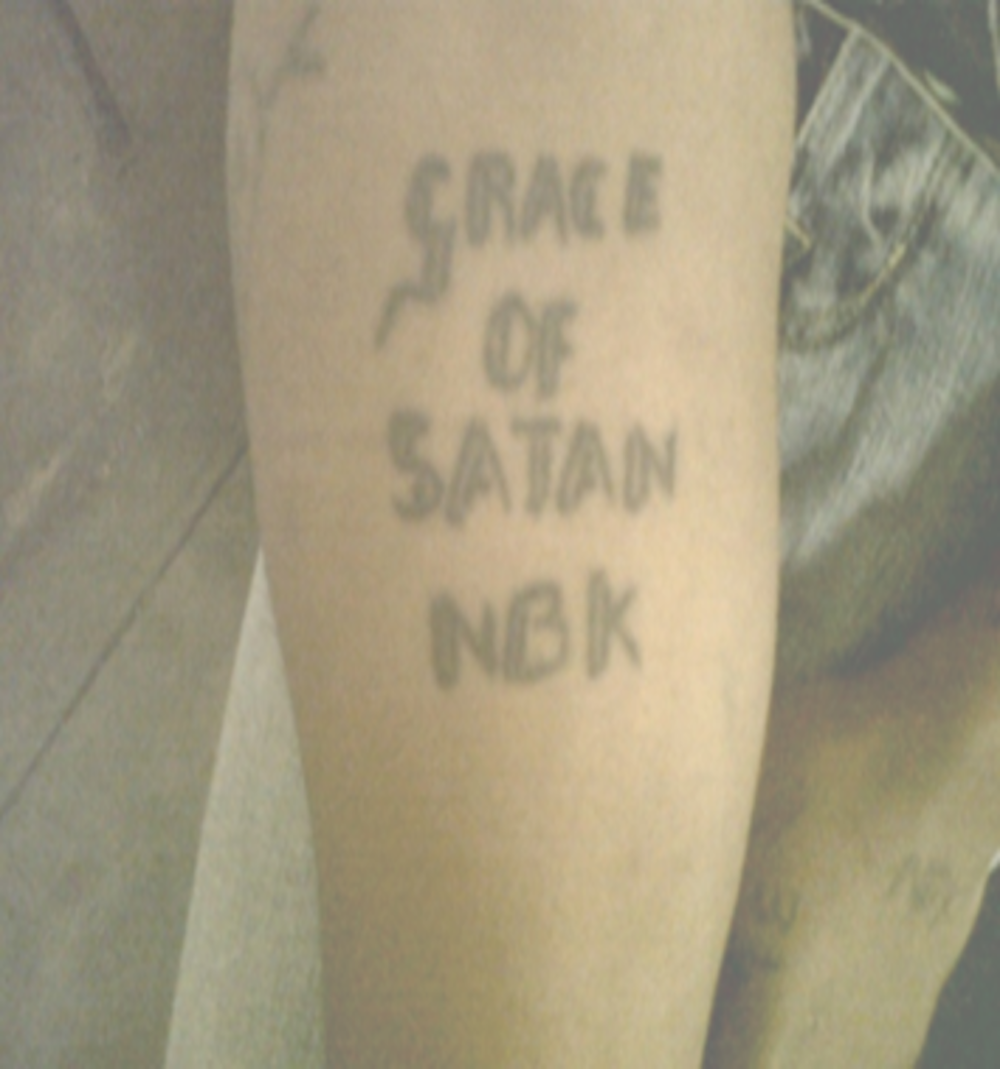
NBK gang tattoo. Ashwill Ramon Phillips

The communities in which these groups operate, and gang members themselves, refer to them as “devil worshipping gangs”. This is because of the explicit link between certain gang-related practices and satanism, or the worship of the devil as depicted in the Christian bible.

Some groups merge beliefs and rituals related to Satan and anti-Christianity with witchcraft. Or they use symbols commonly associated with satanism such as “666” and inverted crosses. But labelling all such groups as “devil worshipping gangs” is misleading. The term “occult gangs” better captures the range of practices involved.

While both devil worshipping and witchcraft-related practices can play a role in criminal gang activity, they differ in origin and form. Devil worshipping draws from western occult traditions, using symbols and rituals to strengthen gang identity. Witchcraft-based practices typically involve the malicious use of muti (traditional African medicine) and muti murders (murders for body parts to use in muti). As one participant told me:

Yes, there are gangs that believe in muti. There are also gangs that believe in the devil. IJP and Roma believe in muti, while BTK and Triple 6 believe in getting power from the devil. They say they speak to Lucifer to give them powers.

So, infamous gangs in the Free State are not only dreaded for their brutality but also for their reported links to ritual murder, blood oaths, the use of muti and the consumption of human organs and blood. According to my research these activities have progressed from being viewed as urban legends and community myths to becoming lived realities.

Inside the gangs

My gang typology study sample consisted of 39 male offenders, aged 14 to 38. Participants were either serving sentences or awaiting trial for serious offences such as murder, rape and armed robbery.

The gang members spoke openly about seeking power through supernatural means. Some believed that consuming blood and participating in occult rituals could make them invisible to police and invincible against their enemies. As one told me:

The minute you drink blood you are invoking spirits to become part of you, demons to become part of you, and give you the powers that you need to do what you have to do…
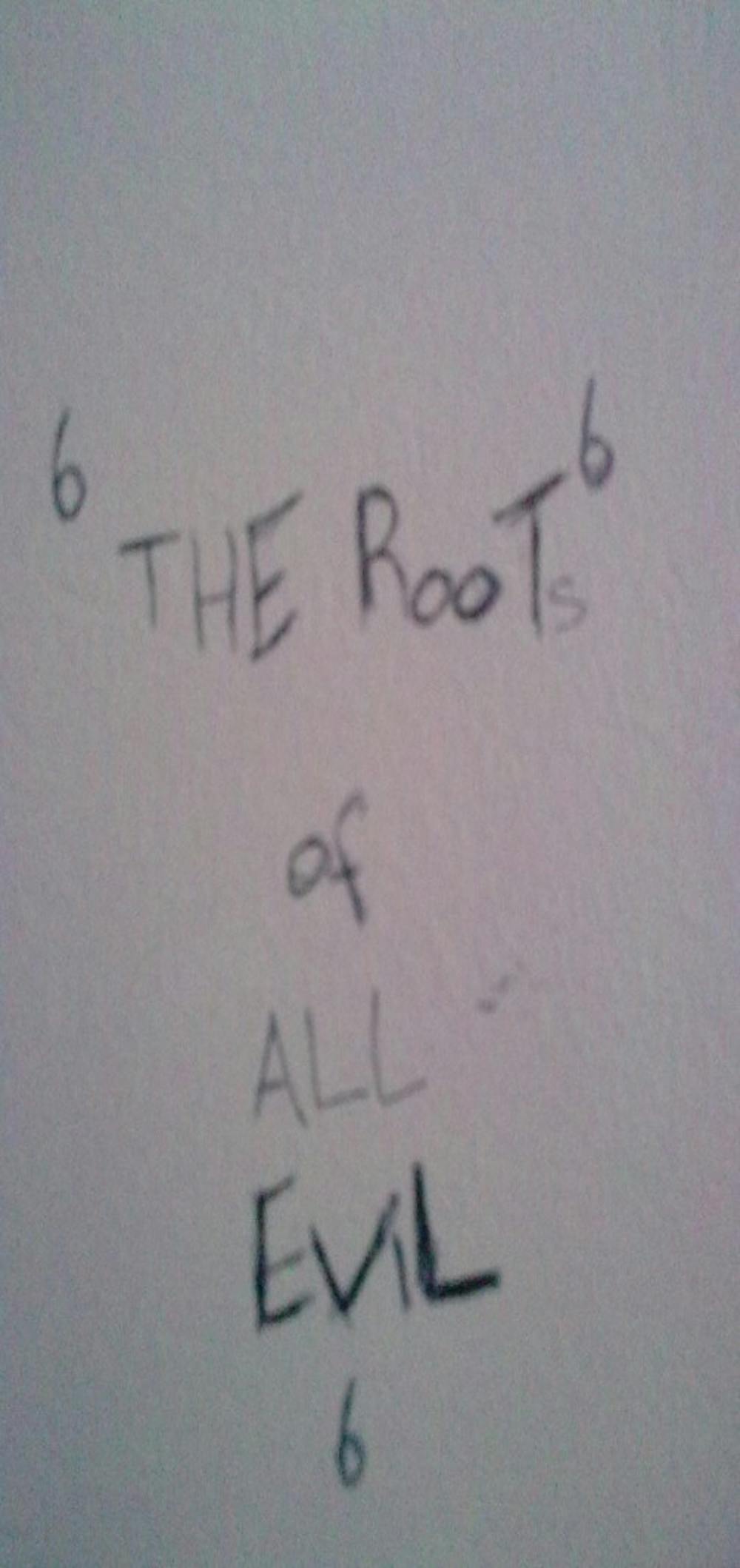
A drawing by a Triple 6 gang member. Ashwill Ramon Phillips

Ritual stabbings, inverted crosses, and the “mark of the beast” (“666”) were part of their gang symbolism – seen in gang graffiti and tattoos and furthered by involvement in spiritual gatherings and the use of muti.

These elements form part of a shared gang ideology that offers meaning, identity and purpose to marginalised young people. I found that the gang members in my studies often lacked family support, social support or significant formal education.

To prevent young people from joining gangs, it is crucial to understand what pulls them in. Several participants described joining gangs not only for wealth, protection or status, but for a sense of spiritual power. Especially in communities where traditional religion, ancestral beliefs and Christian teachings coexist and sometimes collide.

My typology of occult gangs has the potential to inform targeted prevention programmes, rehabilitation efforts and policing strategies that take the spiritual realities of gang members seriously.

A new approach to fighting crime is needed

The rise of occult gangs has now progressed beyond the Free State. Similar trends are observed in the Eastern Cape, Northern Cape, Gauteng and Western Cape provinces.

The intersection of faith, fear and violence in these gangs challenges mainstream approaches to crime prevention. Traditional anti-gang strategies assume that gangs are driven mainly by socioeconomic factors or rational incentives. They fail to account for spiritual motivations and metaphysical beliefs.

The presence of ritual elements complicates investigations and amplifies fear. It makes gangs seem more powerful than they are.

At the same time, public institutions such as the police and social workers often lack the frameworks and cultural sensitivity to address the spiritual dimensions of the offences perpetrated by these groups.

A drawing by a BTK gang member. Ashwill Ramon Phillips

The struggle with the occult gangs in South Africa mirrors similar challenges in other countries, like Nigeria, the DRC and Haiti, where spiritual symbolism and ritualised violence are central to gang identity.

Effective interventions must include culturally grounded strategies to help members disengage from gangs, involving traditional leaders, healers, faith-based actors and mental health professionals.


Read more: Rituals, rites and rumours: how women claim power in Zimbabwe’s informal gold mines


By addressing the spiritual, social, and psychological dimensions of gang involvement, more sustainable pathways out of these groups can be created.

Gang violence in South Africa is evolving, and so must the response. It shouldn’t just punish young offenders, but offer them a genuine alternative.

– Devil worship, muti and murder: what’s behind the growth of occult gangs in South Africa?
– https://theconversation.com/devil-worship-muti-and-murder-whats-behind-the-growth-of-occult-gangs-in-south-africa-260141

TikTok users in Ghana and Zimbabwe enjoy making fun of government – why it can have a downside

Source: The Conversation – Africa – By Jacob Nyarko, Lecturer of Communication Studies, University of Cape Coast

Browse the internet or turn on the global news and chances are the coverage of Africa you find is about war, coups, displaced populations and disease.

Generally, the west and its media are blamed for this negative, Afropessimistic portrayal of the continent.

Africans have taken strategic steps to repair this negative narrative. An example is the Africa Rising campaign. It was launched in 2000 by a coalition of African activists and organisations. Its objective was to highlight the role of Africa in global development and encourage Africans at home and the diaspora to contribute positively. Social media platforms played a large role in content distribution and messaging. The success of this campaign is still the subject of debate.


Read more: Western media outlets are trying to fix their racist, stereotypical coverage of Africa. Is it time African media did the same?


As communication scholars, we were intrigued by the visual appeal of the social media platform TikTok. With our area of expertise being Ghana and Zimbabwe respectively, we were interested in how citizens of these countries were using the popular TikTok app to report on themselves.

Our study explored the self-critical content that many Africans share on TikTok. We found that TikTok posts and comments by Ghanaian and Zimbabwean creators generated entertaining information. We call this “fun journalism”. TikTokers use it to comment on important issues, but the way they do it could also harm the reputation of the two countries and influence decisions in unintended ways.

Fun journalism and reputation

As a creative and innovative platform, TikTok has enabled users to produce multimedia materials and share them across the globe for fun and entertainment. According to the Digital 2025: Ghana report by Datareportal, 81% of Ghanaians aged 16 and over use the internet to access TikTok monthly. That makes it the second most popular platform after WhatsApp (93%). Zimbabwe has 2.05 million TikTok users aged 18 and above, according to tech data aggregator Datareportal.

Studies show that users tend to “play” with social media, even when they use it for serious things. Our study showed that the fun videos uploaded by TikTokers from Ghana and Zimbabwe covered serious issues like security, education, sanitation, corruption, entertainment, religion and sports.


Read more: Nigerian TikTok star Charity Ekezie uses hilarious skits to dispel ignorance about Africa


For example, one Ghanaian TikTok video compares how a Ghanaian and a European would react if they picked up money that someone had lost. The video suggests an African would keep the money, while a European would try to locate the original owner.

In many instances, users ridiculed their countries and fellow citizens. They compared African conditions to the global north in ways that degraded local endeavours. For example, in one TikTok video, a user imitated Zimbabwean president Emmerson Mnangagwa having difficulties explaining the number of zeroes in a million. This gave the impression that he was semi-literate and out of his depth.

We found that, generally, the entertaining discourses on TikTok were laden with insults and critiques of government. Though some of the content raised legitimate concerns, it seldom offered solutions to the identified challenges. This suggested that TikTok content that jokingly covered significant national development issues eroded reputational gains made by the two countries by framing them negatively. We cite several examples in the study.

Comparing this phenomenon to other countries, a study on Chinese uploads onto TikTok showed the following results: 41% positive, 53% neutral and 6% negative.

Self-ridiculing factors and misinformation

TikTokers ridiculed the reputation of Ghana and Zimbabwe in three ways:

  • Exaggerated production of video content. This includes emotional background sounds, tone of voice, slang, animation, unfavourable shooting locations and poor video quality

  • comparing African countries to foreign conditions

  • generating unfavourable comments.

“Fake news” has become an integral part of social media, raising doubts about the credibility of information generally. We argue that such content should no longer be seen as harmless humour.

link text

Implications and measures

As the press freedom rankings of both countries fall, TikTok can be a safe, open space for citizens to raise important public concerns.

The platform makes space for a diversity of opinions from the youthful populations found in the two countries. This is important for communication and building consensus in development.

We argue that TikTokers should be encouraged to offer constructive criticisms of their countries and propose solutions instead of insults.

Policy makers should tap into the vast repository of “fun” information published on TikTok for development. The opinions expressed by citizens online are a helpful reflection of societal needs. This can be taken into consideration when formulating policies.


Read more: How memes in the DRC allow people to laugh at those in power – and themselves


Mainstream professional media could adopt the fun journalism model to tell serious stories in ways that boost development and reputation. The platform’s wide usage will make information accessible to a large audience.

Media regulatory bodies, nongovernmental organisations and civil society groups are encouraged to educate netizens to publish critical and progressive stories about their countries. This can help combat misinformation and disinformation on social media, particularly TikTok.

Finally, governments should take steps to positively project their respective countries to the world. They could run educational programmes to inculcate a sense of patriotism and identity to rekindle the initiatives that Africa Rising advocated.

– TikTok users in Ghana and Zimbabwe enjoy making fun of government – why it can have a downside
– https://theconversation.com/tiktok-users-in-ghana-and-zimbabwe-enjoy-making-fun-of-government-why-it-can-have-a-downside-259734

Organization of the Petroleum Exporting Countries (OPEC) Must Lead the Charge to Reverse Global Fossil Fuel Financing Bans

Source: APO


.

The African Energy Chamber (AEC) (www.EnergyChamber.org) – the voice of the African energy sector – is urging OPEC member states and their allies to take decisive action to reverse global bans on fossil fuel financing and champion Africa’s right to develop its oil and gas resources. As the 9th OPEC International Seminar convened on Tuesday in Vienna, the Chamber reiterated that it is time to urgently put upstream financing back on the table and push back against policies that deny African nations the capital needed to industrialize, grow and lift millions out of poverty.

For too long, Africa has borne the brunt of contradictory global energy policies. While developed nations continue to fast-track public and private investments into natural gas to bolster their own energy security, multilateral institutions enforce blanket bans on upstream oil and gas financing that disproportionately restrict African countries. In 2019, the European Investment Bank announced it would end fossil fuel financing by 2021, a position echoed by several European development agencies and financial institutions. The World Bank followed suit, gradually phasing out support for oil and gas and culminating in a near-total exclusion of upstream fossil fuel investments. While these policies may align with net-zero targets in wealthy economies, in Africa, they are actively obstructing access to energy, job creation and industrial growth.

Yet even as development finance dries up abroad, Europe has made clear exceptions for itself. Under its 2022 Taxonomy for Sustainable Activities, the EU classified certain natural gas and nuclear investments as “transitional” – opening the door for continued funding within its borders. The result is a glaring double standard: natural gas is deemed essential for energy security in Berlin and Brussels, but off-limits in Lagos or Dakar. This hypocrisy must be addressed if the global energy transition is to be just and equitable.

Africa holds more than 125 billion barrels of proven oil reserves and over 620 trillion cubic feet of natural gas, yet over 600 million Africans lack access to electricity, and more than 900 million lack access to clean cooking fuels. In this context, African nations need robust investment in oil and gas infrastructure – not ideological restrictions that ignore the realities on the ground.

“What Africa needs right now is to drill, baby, drill. Most of our multilateral institutions don’t finance oil and gas – they say it’s wrong. It’s extremely hypocritical. Denying fossil fuel investment is denying economic justice, food security and a pathway out of poverty for millions,” said NJ Ayuk, Executive Chairman of the AEC. “We can’t keep apologizing for oil. No country in the world has developed through renewables alone. OPEC members must pressure institutions like the World Bank to lift their financing bans and support Africa’s right to industrialize.”

At the OPEC Seminar, the AEC urged producing countries to rally around three urgent financial priorities. First, OPEC members must press the World Bank and other multilateral institutions to lift harmful financing restrictions on fossil fuels. It is untenable that the World Bank – originally established to support post-war reconstruction and global development – continues to deny funding for upstream oil and gas projects across Africa. With recent signals from Bank leadership hinting at a possible policy shift, now is the time for oil-producing nations to push for a reversal that puts energy access and economic transformation in the Global South at the center of development finance.

Second, OPEC countries – with their sovereign wealth funds and surplus revenues – are uniquely positioned to create a dedicated investment vehicle for fossil fuel development in underfunded markets. An OPEC-led facility focused on financing strategic upstream projects could prove instrumental in unlocking capital for bankable ventures across Africa. Such a fund would not only accelerate production but also help stabilize global supply and pricing.

Finally, the Chamber emphasizes the need for a pragmatic, dual-track approach to the energy transition that recognizes the differing realities of the Global North and South. While developed nations move toward decarbonization, Africa must prioritize industrialization and energy security. Natural gas – abundant, reliable and cleaner-burning than coal – offers a critical bridge fuel to power fertilizer production, manufacturing, petrochemicals and regional electricity networks.

True climate justice must include energy justice, which means recognizing Africa’s right to harness its resources, grow its economies and meet the needs of its people on its own terms. Africa does not need charity; it needs capital. As the voice of Africa’s energy sector, the Chamber stands firm in its call for OPEC producers and the World Bank to help deliver it.

Distributed by APO Group on behalf of African Energy Chamber.

Saudi Arabia lifesaving date shipment to feed 100,000 conflict affected Mozambicans

Source: APO


.

The King Salman Humanitarian Aid and Relief Centre (KSrelief), in partnership with the United Nations World Food Programme (WFP), has delivered 23 metric tonnes of premium Saudi dates to support more than 100,000 vulnerable women, children, and families in northern Mozambique who are suffering from the impacts of conflict and displacement.

Dates, a staple of Saudi generosity and nutrition for centuries, are rich in fibre, antioxidants, and essential minerals such as potassium, magnesium, and iron. This donation will directly enhance the diets of families struggling with food insecurity, providing both immediate nourishment and a symbol of solidarity from the people of Saudi Arabia.

The shipment arrived at the Port of Nacala and was swiftly transported to Cabo Delgado Province, where distribution to conflict-affected households is already underway.

“These dates will strengthen the diets of 100,000 people—especially women and children—and represent a meaningful gesture of solidarity from the people of the Kingdom of Saudi Arabia to the people of Mozambique”, said Antonella D’Aprile, WFP Country Director in Mozambique.

Mr. Mishaal Bin Shail, Acting Charge d’affaires of the Kingdom of Saudi Arabia to Mozambique, added. “The gift of dates is a quiet yet powerful symbol of goodwill reflecting shared values, strengthening the bonds of friendship between our nations, and echoing a border spirit of care and solidarity that defines the Kingdom of Saudi Arabia’s engagement with vulnerable communities”.

Mozambique is currently facing one of its most severe food security crises in recent years. An estimated 5 million people require urgent humanitarian assistance, and nearly 40 percent of children under five are suffering from chronic malnutrition. In the north, ongoing conflict and climate shocks continue to displace families and disrupt livelihoods, making life-saving support more critical than ever.

Saudi Arabia’s humanitarian assistance, coordinated by KSrelief, is a cornerstone of its foreign aid. Since 2015, KSrelief has delivered aid to vulnerable communities worldwide. Between 2022 and 2024 alone, Saudi Arabia provided 160 metric tonnes of dates to Mozambique, reaffirming its long-term commitment to the country’s recovery and resilience.

Distributed by APO Group on behalf of World Food Programme (WFP).

Sudanese Prime Minister Meets Qatar’s Ambassador

Source: APO


.

HE Prime Minister of the sisterly Republic of the Sudan Dr. Kamil Idris met with HE Ambassador of the State of Qatar to the Sudan, Mohammed bin Ibrahim Al Sada. 

During the meeting, they discussed cooperation relations between the two countries. 

Distributed by APO Group on behalf of Ministry of Foreign Affairs of The State of Qatar.

Health leaders commit to accelerate action against severe chronic diseases in Africa

Source: APO


.

Health leaders, policymakers and development partners across Africa have renewed commitment to accelerate the implementation of the PEN-Plus strategy to significantly expand access to care for severe noncommunicable diseases (NCDs).

Held under the theme “Advancing Implementation of PEN-Plus for Severe NCDs in Africa: Technical Innovations, Operational Insights, and Scalable Solutions,” the second International Conference for PEN-Plus in Africa served as a crucial follow-up to the inaugural 2024 gathering in Dar es Salaam. This year’s meeting focused on reviewing country-level progress, sharing operational experiences, and strengthening the technical foundation for the strategy’s scale-up.

Hosted by the Government of Nigeria, in collaboration with World Health Organization (WHO) in the African region and other partners including The Leone M. and Harry B. Helmsley Charitable Trust, the three-day event provided a platform for NCD stakeholders and policy makers to develop actionable recommendations countries can use to accelerate PEN-Plus implementation and draft country-specific strategies to sustain and expand PEN-Plus, an innovative healthcare delivery model birthed in Africa.

“In the last couple of years, global attention has shifted to NCDs because of the morbidity and mortality from these diseases. This conference marks a pivotal moment in our collective efforts to combat the growing burden of NCDs in Africa,” said Dr Iziaq Adekunle Salako, Nigeria’s Honorable Minister of State for Health and Social Welfare. “PEN-Plus addresses a critical gap in healthcare for the world’s poorest billion. By scaling up the model, we can ensure that lifesaving care reaches those who need it most, regardless of their location.”

In 2022, WHO in Africa set ambitious goals to have 50% of Member States rolling out PEN-Plus services to district hospitals by the year 2025, 65% by 2028, and 70% by 2030. PEN-Plus offers a promising approach to tackle the growing burden of severe chronic diseases. The model equips district and community hospitals with a specialized team of mid-level healthcare providers, such as clinical officers and nurses, specifically trained to manage severe complex NCD conditions.  

Since its adoption by African Member States, the implementation of the model has shown promising results in Liberia, Malawi and Rwanda, with a significant increase in the number of people accessing treatment for severe noncommunicable diseases and improvements in health.

Twenty countries have since increased access to services for severe chronic disease such as type 1 diabetes, sickle-cell disease and rheumatic and congenital heart diseases. In addition to training local experts on severe NCD care, the services provided through PEN-Plus are free of charge – helping to reduce the significant financial burden on families caring for children living with severe chronic diseases.  

“PEN-Plus has not only improved patient outcomes in implementing countries, but it has also strengthened health systems by providing training, mentorship, and referral pathways,” said Dr Mohamed Yakub Janabi, WHO Regional Director for Africa. “It is now time to scale up the model and bring lifesaving care to the people who need it most”

Despite this progress, participants at the ICPPA conference noted that scaling up the model requires more investments by countries.  Previous implementing countries assessments underscored the urgency to improve the availability of critical medications like insulin and diagnostic equipment in district hospitals. Participants also stressed the “grossly inequitable access to prevention, diagnosis, treatment, and ongoing care” for severe NCDs conditions, particularly in rural areas where healthcare services are severely limited.

A key highlight of the meeting was the finalization of the African Agenda for the upcoming United Nations High-Level Meeting (UNHLM) on NCDs in September 2025. The agenda outlines Africa’s priorities, commitments and expectations for the global stage, with PEN-Plus positioned as a central pillar in the region’s response to severe NCDs.

“Scaling up and investing in PEN-Plus will save and improve millions of lives and take the continent a step towards ending diseases and achieving global health goals Scaling up PEN-Plus to address NCDs burden in Africa requires adequate and sustained resources,” said James Reid, Programme Officer at the Helmsley Charitable Trust. “By working together and pledging the necessary resources, countries can drive collective action to improve health and quality of life for millions of people around the world.

With support from Helmsley Charitable Trust, and collaboration of the NCDI Poverty Network, the WHO Regional Office for Africa has been supporting countries to provide technical expertise and guidance to countries on various aspects of the PEN-Plus programme, developing training materials, supporting assessment, conducting supervisory visits to identify challenges at implementing facilities, coordinating partners and co- organizing platforms such as the ICPPA for countries to share and learn from successful PEN-Plus models.  

Distributed by APO Group on behalf of World Health Organization (WHO) – Nigeria.

Egypt: President El-Sisi Meets Premier of the State Council of China

Source: APO


.

Today, President Abdel Fattah El-Sisi received the Premier of the State Council of China, Li Qiang, in the presence of Prime Minister Dr. Mostafa Madbouly, along with several ministers and senior officials from both sides.

The Spokesman for the Presidency, Ambassador Mohamed El-Shennawy, said that the Premier of the State Council of China conveyed the greetings of the Chinese president to President El-Sisi. He also emphasized that President El-Sisi is a dear friend of China and is always warmly welcomed in Beijing. He expressed China’s pride in having close relations with Egypt, which are built on a long history of strategic partnership, mutual respect, and common interests. The Premier noted the rapid development in bilateral relations and the close coordination between the two countries on both regional and international levels, appreciating Egypt’s pivotal role as a cornerstone of stability in the Middle East.

President El-Sisi affirmed Egypt’s commitment to enhancing cooperation with China in various areas of mutual interest and working to activate the comprehensive strategic partnership between the two countries, especially with the upcoming celebration, to be held in 2026, of the 70th anniversary of the establishment of diplomatic relations between Egypt and China.

President El-Sisi lauded the contributions of Chinese companies to implementing development projects in Egypt and expressed the country’s interest in attracting more Chinese investments, particularly in the sectors of new and renewable energy and electric vehicle manufacturing. This is in addition to enhancing the flow of Chinese tourism and strengthening cooperation in the manufacturing and development fields in general.

President El-Sisi also expressed Egypt’s interest in continuing coordination with China on the issue of debt swaps and the effective and efficient implementation of related agreements.

Views were exchanged on regional and international developments. Both sides stressed the importance of underpinning the ceasefire agreement between Israel and Iran, and resuming the diplomatic path to resolve the crisis through peaceful means. Both parties also underscored the necessity of reaching a ceasefire in the Gaza Strip, ensuring the immediate delivery of humanitarian aid, and the importance of reaching a just and comprehensive solution to the Palestinian issue.

Distributed by APO Group on behalf of Presidency of the Arab Republic of Egypt.

Building Trust through Effective Service Delivery in Africa

Source: APO


.

The World Bank’s annual Country Policy and Institutional Assessment (CPIA) report for Sub-Saharan Africa, released today, reveals that despite a stable average CPIA score for the region, there is an urgent need for governments in Africa to improve the delivery of essential services to promote inclusive, sustainable growth.

The CPIA Africa report evaluates the quality of policy and institutional reforms in IDA-eligible countries in Sub-Saharan Africa for the calendar year 2024. According to the report, the average CPIA score for the region remained similar to 2023 at 3.1 points (out of 6). While some areas saw strong reforms, poor performance in governance offset these gains, and improvements were concentrated in already well-performing countries.

The CPIA report underscores that meeting the needs of African citizens will require mobilizing the government to provide services amidst limited external financing. The report serves as a vital guide for policymakers and international investors, identifying specific reform actions to support effective public service delivery and foster a more resilient and prosperous future for Sub-Saharan Africa.

Against this backdrop, the report notes a trend in public discontent in 2024 – a year that was marked by youth protests and a notable decline in political support for incumbents across the continent. This is mirrored in survey results in the region that have shown growing dissatisfaction with the quality of public services, which continue to lag other regions, particularly in infrastructure, human capital, security, and administrative capabilities.

“Confidence in a government’s ability to efficiently transform public resources into essential services is fundamental to fostering a shared purpose with citizens and improving trust,” said Andrew Dabalen, World Bank Chief Economist for Africa. “Populations across Africa are clearly asking for more from their leaders to enable them to realize their aspirations. Our CPIA Africa report underscores the urgent need for transparent management of public resources and effective delivery of quality services to address growing dissatisfaction and enable citizens to reach their full potential.”

The report details significant shortfalls across various public service sectors. Infrastructure-related services, including transport, remain underdeveloped, hindering economic activity and quality of life. High poverty levels are exacerbated by a lack of access to public infrastructure, particularly in sanitation. Human capital development is hampered by poor educational quality and inadequate health services, limiting citizens’ well-being and earning prospects as they enter the workforce. Furthermore, the ability of governments to provide basic security has been undermined, with conflict-related casualties nearly tripling between 2014 and 2024. Administrative services, crucial for a thriving business environment, also lag, with Sub-Saharan Africa performing poorly in areas like business location and financial services.

Despite these challenges, the report notes some positive developments. Many countries have shown improved fiscal discipline, tackling high wage bills and fuel subsidies, and making progress in debt consolidation. Efforts to implement trade facilitation agreements, leverage digital technologies, and strengthen financial sector regulation are also underway. The report also highlights progress in empowering adolescent girls through legal and policy reforms and strengthening of social protection systems.

“While some countries have made commendable strides in fiscal prudence and digital transformation, issues of weak governance, limited transparency, and insufficient implementation capacity continue to undermine efforts to deliver essential services. Addressing these fundamental challenges is not just about economic growth; it’s about showing people that governments can work for them to help create a better path for the future,” added Nicholas Woolley, the CPIA report’s lead author.

Distributed by APO Group on behalf of The World Bank Group.

Benin: Launch of the third edition of the information and awareness campaign for women small-scale cross-border traders along the Abidjan – Lagos corridor

Source: APO

On Tuesday 8th of July 2025, the ECOWAS Commission, through its Department of Human Development and Social Affairs, in collaboration with the Department of Economic Affairs and Agriculture, officially launched the Cotonou stage of the third edition of the information and awareness-raising campaign for women small-scale cross-border traders along the Abidjan-Lagos corridor.

The aim of this initiative is to build on the achievements of previous events held on the Tema-Paga and Dakar-Banjul-Bissau corridors. The aim is to increase women traders’ knowledge of the legislation governing cross-border trade, existing Community initiatives and the tools developed for them, particularly in terms of border transparency and the fight against gender-based violence.

In Cotonou, the activities began with field visits, notably to the modern market and to an SME run by a woman entrepreneur specialising in the manufacture of cosmetic products distributed nationally and sub-regionally. A visit to the Sèmè-Kraké juxtaposed control post is also planned, with a view to reinforcing exchanges between the various players involved.

The official launch ceremony was held at the Golden Tulip hotel. It was co-chaired by Benin’s Ministries of Social Affairs and Microfinance, and of Industry and Trade. It was also attended by Her Excellency Professor Fatou Sow Sarr, ECOWAS Commissioner for Human Development and Social Affairs, and His Excellency Amadou DIONGUE, ECOWAS Resident Representative in Benin.

Other participants included the Deputy Secretary General of the Ministry of Social Affairs and Microfinance, the Director of the ECOWAS National Office in Benin, representatives of the Cotonou Chamber of Commerce, associations of small-scale cross-border traders, and technical and financial partners.

This third edition marks a major step forward in the ECOWAS’ commitment to the economic empowerment of women and to improving the fluidity of cross-border trade in the West African region.

Distributed by APO Group on behalf of Economic Community of West African States (ECOWAS).

Media files

.

Nigeria: Violence and widespread displacement leave Benue facing a humanitarian disaster

Source: APO


.

  • At least 510,182 internally displaced people (IDPs) across Benue state
  • Dire conditions in IDP camps
  • Children and pregnant women amongst most vulnerable

The Nigerian authorities must take urgent steps to avert a humanitarian catastrophe in the central state of Benue where attacks by gunmen have displaced at least 500,000 people, many of whom are languishing in squalid camps without access to sufficient water, poor sanitation, food and healthcare, Amnesty International said today.

In the most recent attack on 14 June, gunmen raided the town of Yelewata, killing more than 100 people and forcing over 3,941 more to flee their homes. The smell of decomposing bodies hung in the air during a visit to the affected community by Amnesty International in the aftermath of the attacks. Signs of the recent violence were unmistakable with bullet shells littering the ground, and mass graves that had been newly dug to bury the dead.

Survivors were seen carrying bags of grain, bundles of firewood and other household items as they sought safety and shelter in camps for internally displaced persons (IDP). According to interviews with IDPs in Gwer West, Agatu, Ukum, Kwande, Logo, Guma and Makurdi IDP camps, as well as a makeshift IDP camp at Makurdi Modern Market, communities who come under attack are often left to fend for themselves with security forces only arriving long after the gunmen had left.

“The Nigerian authorities have failed the people of Benue state again and again. Rampant attacks by gunmen have deprived thousands of people of their rights to life, physical integrity, liberty, freedom of movement and access to livelihoods. Survivors of these harrowing attacks face the fresh torment of being displaced in overcrowded, unhygienic camps where disease runs rampant and essentials such as  food and clean water are scarce,” said Isa Sanusi, Director of Amnesty International Nigeria.

“The situation risks creating a humanitarian disaster, which the authorities must urgently address by ensuring that people’s essential needs are met by providing desperately needed aid.”

Besides interviews with IDPs, Amnesty International also spoke to camps officials, medical workers and non-governmental organizations in the affected areas. It found that communities across Benue state, including Gwer West, Gwer-East, Agatu, Apa, Ukum, Kwande, Logo,and Guma, continue to face a brutal pattern of violence.

This is typically unleashed at night, although daytime attacks also occur, with gunmen systematically overrunning villages, using firearms to carry out indiscriminate or targeted killings from a distance. This is accompanied by brutal close-range violence with machetes and knives used to inflict grievous injuries, including hand amputations.

Misery of the IDP camps

As of 31 December 2024, an estimated 500,182 people had fled to IDPs camps in Benue state to escape years of attacks by gunmen. More than 10,000 additional people have been displaced since the start of 2025 following attacks on communities in Gwer West, Agatu, Ukum (Gbagir), Kwande (Anwase), Logo, and Guma (Yelewata, Agan, and Gbajimba), among others.

Amnesty International’s visits to IDP camps reveal wholly inadequate shelter, exposing IDPs to harsh weather, overcrowding, and heightened risks of disease, as well as gender-based violence, including rape and domestic violence.

Access to healthcare is also a major challenge in the IDP camps with a lack of treatment for the most common diseases and ailments, such as malaria, typhoid, and stomach ulcers. According to a camp official, births occur almost daily in the IDP camps, with many pregnant women requiring medical attention but also contracting infections because of inadequate hygiene facilities.

An IDP told Amnesty International: “If we don’t get drugs, we just sit and watch the sick person helplessly.”

Many children are unable to exercise their right to an education in the camps.

“Our children no longer go to school and there are no arrangements by the authorities to teach children in the IDP camp. The government should bring an end to insecurity in our local government area and Benue state. Before that, provide us with food and proper shelter at the IDP camps,” an IDP told Amnesty International.

A camp official told Amnesty International that a makeshift school built in one of the camps had been shut down for over three years because camp authorities could not continue paying ad-hoc teachers their stipends. 

There are hundreds of minors who fled their homes due to attacks and now live without parental care. The children were separated from their families while fleeing attacks on their villages and communities. The authorities have been unable to provide these vulnerable children with a safe place to live and essential services. Two female IDPs told Amnesty International:

“When we arrived, they [my children] left. I do not know where they have gone. I can’t speak with them; I don’t have a phone….I have 8 children and because we do not have enough space here in the IDP camp, many of them have left me and I do not know where they are.”

Amnesty International is calling on the Nigerian authorities to take immediate steps to provide sufficient and accessible humanitarian support to the survivors of these attacks. Authorities must take steps to domesticate and effectively implement the African Union Convention for the Protection and Assistance of Internally Displaced Persons within the country’s legal system.

“The authorities’ persistent failure to hold suspected perpetrators to account is fueling a cycle of impunity that is making everyone feel unsafe. Authorities must now end the growing culture of impunity for these attacks.”

“We call on the authorities to ensure that all people displaced because of the attacks in Benue state are provided with adequate relief, including protection, shelter, food, clean water, sanitation and healthcare. Authorities must ensure that all people who have suffered losses from the crisis are also provided with adequate compensation,” said Isa Sanusi.

Background

Amnesty International Nigeria has been monitoring the escalating bandit attacks and clashes between herders and farmers in Benue state since 2016. In 2020, the organization investigated the authorities’ failure to protect rural communities from attacks, and in 2025, it investigated the mounting death toll and looming humanitarian crisis amid unchecked attacks by armed groups.

Nigeria is state party to a number of treaties that guarantee the human rights of everybody in the country regardless of the circumstances. This includes the UN International Covenant on Economic, Social and Cultural Rights and the African Charter on Human and Peoples’ Rights which requires Nigerian authorities to ensure equal access to amongst others the rights to housing, health, food, water, sanitation and education.

Distributed by APO Group on behalf of Amnesty International.