Food and Agriculture Organization (FAO) and Partners enhance Zimbabwe’s resilience through European Union (EU)-Funded Anticipatory Action project

Source: APO

Zimbabwe is making significant progress in shifting from reactive to proactive disaster risk management, with support from the European Union Civil Protection and Humanitarian Aid (ECHO), FAO, IFRC and WFP. This week, over 50 stakeholders from government, UN agencies, NGOs, and communities gathered in Bulawayo to reflect on the achievements, challenges and lessons learned from the two-year ECHO-funded anticipatory action project. 

Implemented between 2023 and 2025, the project aimed to enhance institutional systems and community capacities to prepare for and respond to climate-induced hazards, particularly in the wake of the 2023–2024 El Niño-induced drought, the worst in over four decades. 

The project established harmonized multi-stakeholder frameworks, developed and tested impact-based forecasting triggers, and scaled up disaster risk financing analysis. These efforts contributed to more coordinated and timely early warning and anticipatory responses, helping protect lives, livelihoods, and food and nutrition security. 

Judith Ncube, Minister of State for Provincial Affairs and Devolution for Bulawayo, said the drought tested every system but also revealed the strength of partnerships. 

“The 2023–2024 El Niño drought brought untold hardship to our communities. Yet in the face of empty rivers, cracked fields and hunger, we saw something extraordinary; communities, government and aid agencies standing together. This workshop is not just about what went wrong, but how ordinary people’s resilience helped shape extraordinary responses.” 

The project’s key achievements include the establishment of the Anticipatory Action Community of Practice (CoP), a collaborative platform that has brought together government departments, humanitarian organizations and technical agencies to strengthen multi-sectoral coordination. Through this platform, Zimbabwe has institutionalized anticipatory action subcommittees at national, provincial and district levels, linking local decision-making to national systems. 

Edward Kallon, UN Resident and Humanitarian Coordinator in Zimbabwe, underscored the shift in how Zimbabwe prepares for shocks. 

“Anticipatory action is not just a technical process; it is a lifeline. It is about the mother in Chiredzi who received early warnings and planted drought-tolerant crops just in time. It is about a child in Tsholotsho who did not go hungry because food assistance came before the crisis hit. This is the future of disaster response.” 

At the peak of the drought crisis, the Government of Zimbabwe launched a US$3.3 billion appeal—US$2 billion for emergency response and US$1.3 billion for resilience-building. Supported by early warnings issued in mid-2023, the government swiftly rolled out a national Blitz Food Distribution Programme targeting the most vulnerable populations, including the elderly, people with disabilities, child-headed households and the chronically ill. 

Minister of Local Government and Public Works, Daniel Garwe emphasized the importance of UN support, stating that 33 percent of the funds raised came from UN agencies. This helped the government to institute a people-first approach in responding to the crisis. 

“Behind the numbers are real people. The elderly, children in child-headed households, persons with disabilities—these were not forgotten. Through the Blitz Food Distribution Programme, Zimbabwe ensured food reached the most vulnerable. This is what human-centred disaster response looks like: swift, inclusive and built on compassion.” 

Key outputs of the ECHO-funded project – such as the national Anticipatory Action Roadmap, flood simulation exercises (SIMEX), and impact forecasting models – are now serving as templates for broader disaster risk management in the region. Testimonies from farmers, community videos and field visits to Matobo and Beitbridge showcased the results at the local level. 

The project also reinforced the importance of pre-arranged financing to enable faster response. “Pre-arranged financing is a game changer. It means help is not delayed by paperwork when disaster looms,” said Edward Kallon. “Zimbabwe’s anticipatory action frameworks, built around pre-agreed triggers and activities are delivering faster, smarter support.” 

Patrice Talla, FAO Subregional Coordinator for Southern Africa, affirmed that Anticipatory Action is not merely a humanitarian tool, but a transformative model of governance. He highlighted how the recent ECHO-supported initiative in Zimbabwe laid critical foundations, such as hazard mapping, institutional roadmaps, and community-ready structures that enabled timely and life-saving interventions during the 2023–2024 El Niño drought.  

Patrice Talla further emphasized that Zimbabwe’s approach is no longer a pilot, but a prototype for national systems, and called for its institutionalization through policy integration, pre-positioned finance, local capacity building, and cross-border coordination. “Forecasts, should no longer be warnings; they should be the first lines of defense,” he asserted.  

As the learning event concluded, partners called for sustained investment in anticipatory action and a continued shift toward resilience-building. Participants emphasized that as climate risks intensify, early action must be integrated into national systems and financing structures to safeguard development gains. 

“Let us act not only in response but in anticipation,” said Minister Daniel Garwe. “Because the future belongs to those who prepare for it.” 

The ECHO-funded initiative has demonstrated that with the right partnerships, financing and community engagement, Zimbabwe can move from crisis response to long-term resilience.

Distributed by APO Group on behalf of Food and Agriculture Organization of the United Nations (FAO): Regional Office for Africa.

Media files

.

Major Upstream Players Join Angola Oil & Gas (AOG) 2025 Amid Accelerated Investment Drive

Source: APO

With a planned $60 billion investment pipeline for the oil and gas industry, Angola is experiencing a surge in upstream activity, from frontier exploration to seismic acquisition to drilling and incremental production. Angola’s major upstream operators have joined the Angola Oil & Gas (AOG) conference – taking place September 3-4 in Luanda – to discuss Angola’s project pipeline. This year’s conference celebrates 50 years of independence in Angola, with speakers set to share insight into how the past five decades of oil and gas development have laid the foundation for future growth.  

With over three decades of operational history in Angola, energy major ExxonMobil is driving an ambitious exploration and production agenda, focusing on maximizing output at active assets while pursuing frontier opportunities. Recently, the company signed an agreement alongside TotalEnergies for the study and evaluation of the Free Areas of Blocks 17/06 and 32/21. The company is also eyeing a $15 billion investment in the Namibe basin, pending the results of ongoing exploration activities. These efforts are expected to unlock new resources in Angola. Katrina Fisher, Managing Director of ExxonMobil Angola, will share further insights into ExxonMobil’s investment plans at AOG 2025.  

With a long history in Angola, energy majors bp and Eni have played an instrumental part in unlocking resources and generating economic opportunities for the country. The merger of the companies’ Angolan operations in 2022 saw the rise of Azule Energy – Angola’s largest independent equity producer of oil and gas – and the subsequent integration of bp and Eni’s project portfolio and expertise. On the back of this, Azule Energy has spearheaded various large-scale operations in Angola, with new targets to increase production to 250,000 bpd. Major upcoming developments include the Agogo Integrated West Hub Development (2025) and Angola’s first non-associated gas project (2026). During AOG 2025, Guido Brusco, COO: Global Natural Resources at Eni, and Gordon Birrell, Executive Vice President of Production & Operations at bp, will provide insight into Angola’s exploration and production landscape, from oil exploration to natural gas to global partnerships and future investment prospects.  

Nigerian independent exploration and production company First Exploration & Petroleum Development Company (FIRST E&P) has a strong portfolio of producing assets in Nigeria and is currently pursuing regional growth opportunities. With operations spanning both shallow waters and onshore blocks in the Niger Delta, FIRST E&P has established experience in exploration and production activities. While not directly active in Angola as of yet, FIRST E&P stands to play a notable role in unlocking greater value from Angola’s oil and gas resources. During AOG 2025, Ademola Adeyemi-Bero, CEO & Managing Director of FIRST E&P, is expected to share insight into how the company’s experience in Nigeria can support future oil and gas projects in Angola.  

Angolan oil and gas company Alfort Petroleum is pursuing onshore exploration in Angola, following its qualification as an operator under the country’s 2020 bid round. During the round, Alfort Petroleum won operatorship of Block KON 8, attaining a 50% stake in the asset. To date, the company has completed the seismic acquisition phase for the block and is currently in the final stages of interpreting the data. Alfort Petroleum aims to start drilling activities in Q4, 2025 or Q1, 2026. At AOG 2025, Gianni Gaspar-Martins, General Manager of Alfort Petroleum, is expected to provide an update on Block KON 8.  

Meanwhile, Angolan private energy company Etu Energias seeks to increase oil and gas production to 80,000 bpd by 2030 through the optimization of producing assets and the accelerated development of newly-acquired blocks. The company expanded its portfolio of operated and non-operated blocks from 6 to 15 in 2024, while its reserves grew 2.6 times to reach 106 million barrels. In 2025, the company continues to drive a 3D seismic campaign at Block FS/FTST, will spud the Chimacuanga exploration well and will complete feasibility studies at the newly-acquired Blocks CON 1 and CON 4. Etu Energias CEO Edson dos Santos is speaking at AOG 2025, where he is expected to share insight into the company’s exploration and production strategy.  

Distributed by APO Group on behalf of Energy Capital & Power.

Media files

.

President Benedict Oramah takes a bow at the Afreximbank Annual Meetings (AAM2025) after a decade of servant leadership

Source: APO

Professor Benedict Okechukwu Oramah, CON, President and Chairman of the Board of Directors of the African Export-Import Bank (Afreximbank) (www.Afreximbank.com) has taken a bow from serving at the helm of the institution for the last decade; a period that has been touted as transformational and exceptional.

While giving his closing speech during the AAM2025, Professor Oramah took the audience down memory lane, from June 2015 when shareholders gave him a leadership mandate in Lusaka, Zambia, saying that; “In my acceptance speech, I made a solemn promise to the shareholders, to deliver a solid bank that will be a leader among its peers in all measures of financial performance to quickly grow the capital of the Bank in absolute terms, to improve capitalisation through innovative capital management initiatives to ensure first-class risk management, and achieve adequate returns to shareholders.”

Professor Oramah highlighted the achievements of the Bank during his tenure, some under very extreme situations, citing the financial rise thus “we have collectively, over the past decade, built a solid financial institution that is good for Global Africa. Total assets and guarantees grew more than eight-fold between September 2015 and April 2025, to reach 43.5 billion US dollars. Total Revenues also rose seven-fold, reaching 3.24 billion US dollars, from 408 million US dollars in 2025. Net income amounted to about 1 billion US dollars last year, about 700% increase, from its level of 125 million US dollars in 2015. Internal capital generation and very strong support of shareholders through significant additional equity investments, saw shareholders’ funds rise from about 1 billion US dollars in September 2015 to 7.5 billion US dollars in April 2025, with callable capital reaching 4.5 billion US dollars from 450 million US dollars in September 2015. Liquidity remained strong, with sources of funding much more diversified in 2024 than in 2015, due to activities of the Africa Resource Mobilisation Unit, which saw the share of African sources of funding rise from 11.7 percent in 2015 to 36.6 percent in May 2025.”

Going forward, Prof Oramah said that the Bank would like to give priority to the financing and promoting of high-value exports that have the capability of stabilising export revenues and creating jobs thereby raising and stabilising trade and economy in Africa.

H.E. Bola Ahmed Tinubu, President of the Federal Republic of Nigeria who spoke at the official opening ceremony, appreciated the contribution of Afreximbank to the growth and stability of the economy of Nigeria and by extension Africa at large, saying “Nigeria’s collaboration with Afreximbank is expanding in both scope and breadth through various avenues including but not limited to the oil industry, and food production through fertilizer manufacturer through financing and Nigeria appreciates Afreximbank as a strategic partner in co creation which positively impacts  the lives of Africans and helps transform the Continent.”

In recognition of the outstanding work done my Professor Oramah over the last 10 years and in the last 3 decades at Afreximbank, President Tinubu on behalf of the Federal Republic of Nigeria, awarded Prof. Oramah one of Nigeria’s highest state commendations: The Grand Commander of the Order of the Niger (GCON).

Distributed by APO Group on behalf of Afreximbank.

Media Contact:
Vincent Musumba
Communications and Events Manager (Media Relations)
Email: press@afreximbank.com

Follow us on:
X: https://apo-opa.co/46nkoUv
Facebook: https://apo-opa.co/46s3Iv3
LinkedIn: https://apo-opa.co/3I4XEif
Instagram: https://apo-opa.co/44bFkfU

About Afreximbank:
African Export-Import Bank (Afreximbank) is a Pan-African multilateral financial institution mandated to finance and promote intra- and extra-African trade. For over 30 years, the Bank has been deploying innovative structures to deliver financing solutions that support the transformation of the structure of Africa’s trade, accelerating industrialisation and intra-regional trade, thereby boosting economic expansion in Africa. A stalwart supporter of the African Continental Free Trade Agreement (AfCFTA), Afreximbank has launched a Pan-African Payment and Settlement System (PAPSS) that was adopted by the African Union (AU) as the payment and settlement platform to underpin the implementation of the AfCFTA. Working with the AfCFTA Secretariat and the AU, the Bank has set up a US$10 billion Adjustment Fund to support countries effectively participating in the AfCFTA. At the end of December 2024, Afreximbank’s total assets and contingencies stood at over US$40.1 billion, and its shareholder funds amounted to US$7.2 billion. Afreximbank has investment grade ratings assigned by GCR (international scale) (A), Moody’s (Baa1), China Chengxin International Credit Rating Co., Ltd (CCXI) (AAA), Japan Credit Rating Agency (JCR) (A-) and Fitch (BBB-). Afreximbank has evolved into a group entity comprising the Bank, its equity impact fund subsidiary called the Fund for Export Development Africa (FEDA), and its insurance management subsidiary, AfrexInsure (together, “the Group”). The Bank is headquartered in Cairo, Egypt.

For more information, visit: www.Afreximbank.com

Media files

.

Egypt: Minister of Planning, Economic Development and International Cooperation Meets Executive Secretaries of the United Nations Economic Commission for Africa (UNECA) and the Economic and Social Commission for Western Asia (ESCWA)

Source: APO


.

  • Al-Mashat discusses outcomes of the 4th International Conference on Financing for Development (FfD4) and ways to enhance joint cooperation with UN officials.
  • Al-Mashat emphasizes the need for intensified UN efforts to promote debt sustainability and overcome economic challenges in developing and emerging countries.

H.E. Dr. Rania A. Al-Mashat, Minister of Planning, Economic Development and International Cooperation, held intensive bilateral meetings with development partners and government officials during the United Nations Financing for Development conference in Spain. The meetings focused on discussing ways to strengthen joint economic relations and reviewing the outputs and outcomes of the Fourth International Conference on Financing for Development.

United Nations Economic Commission for Africa (UNECA)

The Minister of Planning, Economic Development and International Cooperation met with Ambassador Claver Gatete, Executive Secretary of the United Nations Economic Commission for Africa (UNECA). 

During the meeting, H.E. Dr. Al-Mashat emphasized the significance of maintaining an open and cooperative dialogue on Debt Sustainability Analysis (DSA), particularly as developing countries strive to achieve the dual goals of financing development and maintaining financial sustainability. 

She highlighted Egypt’s commitment to evidence-based policymaking and expressed appreciation for UNECA’s role in promoting regional approaches to debt dialogue and capacity building.

H.E. Dr. Al-Mashat affirmed that UNECA plays a pivotal role in fostering regional debt dialogue and providing technical support to member states. By providing knowledge and resources, the commission helps countries improve their financial strategies and develop debt management systems, thereby enhancing their ability to address economic challenges.

The two sides discussed ways to develop joint relations. H.E. Dr. Al-Mashat reiterated Egypt’s keenness to benefit from the technical expertise and knowledge resources provided by UNECA to refine policies and support inclusive growth. She also highlighted Egypt’s commitment to leverage UNECA’s support in the field of macro-planning to achieve sustainable development and promote inclusive growth.

Economic and Social Commission for Western Asia (ESCWA)

In another context, H.E. Dr. Rania Al-Mashat met with Ms. Rola Dashti, Executive Secretary of the UN Economic and Social Commission for Western Asia (ESCWA), to discuss a number of cooperation files.

During the meeting, the two parties reviewed potential areas of cooperation and support between the Ministry of Planning, Economic Development and International Cooperation and the United Nations Economic and Social Commission for Western Asia (ESCWA). 

H.E. Dr. Rania Al-Mashat confirmed the depth of relations between the two sides and the diversity of cooperation files to include a number of vital issues.

H.E. Minister Rania Al-Mashat pointed to the tools developed by ESCWA in the areas of financing, costing, budgeting, and improving debt management. She stressed Egypt’s interest in and the importance of these tools, especially in light of the recent launch of Egypt’s Integrated National Financing Framework (E-INFF).

H.E. Dr. Al-Mashat pointed out the role of the Ministry of Planning, Economic Development and International Cooperation and its responsibility for managing public investments. She outlined that the AI-powered budgeting tool developed by ESCWA could contribute to guiding optimal public spending decisions to achieve sustainable development goals and accelerate their implementation, in line with Egypt’s commitments, national priorities, and Egypt Vision 2030.

H.E. Minister Al-Mashat underscored the importance of cooperation with ESCWA to bridge data gaps, as development gaps are linked to financing gaps, making it essential to monitor these gaps accurately. 

H.E. Dr. Al-Mashat also noted the Ministry’s role in chairing the Ministerial Committee for Entrepreneurship, which includes various relevant entities. 

She indicated potential avenues for cooperation in this area, especially given ESCWA’s endeavors to support small and medium-sized enterprises and boost their capabilities in e-commerce.

The two sides also discussed the possibility of ESCWA supporting the Central Agency for Public Mobilization and Statistics (CAPMAS) by providing innovative ideas and mechanisms to enhance preparations for the upcoming population census.

Distributed by APO Group on behalf of Ministry of Planning, Economic Development, and International Cooperation – Egypt.

Communiqué de Presse sur la Célébration du 63ème Anniversaire de l’Indépendance de la République du Burundi


La Commission Africaine des Droits de l’Homme et des Peuples (la Commission), ce 1er juillet 2025, se joint aux célébrations du 63ème anniversaire de l’indépendance de la République du Burundi.

À cette occasion, la Commission félicite ce pays pour ses efforts de consolidation de l’unité nationale, de sauvegarde de la paix, et de réconciliation de ses filles et fils en dépit de nombreux défis tant internes qu’externes.

La Commission encourage les Autorités et le Peuple du Burundi à poursuivre les initiatives et actions visant à consolider les acquis, traiter les défis, en toute responsabilité par des moyens pacifiques et démocratiques. Il s’agit de maintenir et améliorer continuellement les cadres et environnements les plus favorables à la promotion et à la protection des droits de l’homme et des peuples, tels que garantis dans la Charte Africaine des Droits de l’Homme et des Peuples. 

La Commission invite les acteurs internationaux pertinents à soutenir ce pays qui fait face à un afflux inédit de réfugiés du fait de la crise sécuritaire en République Démocratique du Congo.

La Commission souhaite enfin au Burundi des célébrations joyeuses de l’anniversaire d’accession à la souveraineté nationale et internationale.

La Commission demeure saisie de l’évolution de la situation des Droits de l’Homme dans cet État Partie.

Distribué par APO Group pour African Commission on Human and People’s Rights (ACHPR).

Fun with fossils: South African kids learn a whole lot more about human evolution from museum workshops

Source: The Conversation – Africa – By Shaw Badenhorst, Associate Professor in Zooarchaeology, University of the Witwatersrand

South Africa has one of the world’s richest fossil records of hominins (humans and their fossil ancestors). But many misconceptions still exist regarding human evolution, and school textbooks contain inaccuracies.

South Africans still have some of the lowest rates of acceptance of human evolution, mostly due to conflicting religious views. Religion and the non-acceptance of evolution hinders the understanding of evolution by teachers and learners.

It doesn’t help that school subjects (evolution being one of them) are often taught in unengaging ways, rather than interactive methods.

Many studies have shown that collaborations between schools and informal science learning centres, such as natural history museums, can have a positive effect on school learners. Inquiry-based activities at museums have been shown to help learners gain knowledge and meaning about the past. Museum visits foster “thinking skills” through guided conversation and questions asked by educators and learners. New information is gained through reasoning, inference and deduction, which enhance learning.


Read more: Evolution revolution: how a Cape Town museum exhibit is rewriting the story of humankind


In 2018, a team of researchers from the University of the Witwatersrand launched workshops on human evolution for grade 12 learners (in the final year of secondary school) in South Africa’s Gauteng province. The aim was to stimulate interest in the palaeosciences and improve learner performance. We worked with learners from 13 schools in the area. The workshops were conducted at the museum of the university’s Evolutionary Studies Institute.

From tests before and after the workshops, we found that they improved the learners’ understanding and acceptance of concepts related to evolution. More teacher training and school visits to museums and exhibitions could build on this success.

Workshops on human evolution

Examining cast hominin skulls at a workshop at a school. Grizelda van Wyk, Author provided (no reuse)

Our human evolution workshops were conducted with well-resourced and historically disadvantaged schools attending. The grade 12 learners, aged 17 and 18 years, visited the fossil preparatory laboratory, searched for clues in the museum while answering a worksheet, and did activities on human evolution using inquiry-based approaches.


Read more: What it’s like curating ancient fossils: a palaeontologist shares her story


These activities included measuring and describing skulls of apes and hominins, comparing hip bones to see whether the creature was able to walk upright on two legs, investigating stone tools, and drawing a phylogenetic tree (a diagram showing how species are descended from each other). Due to financial constraints, some of the workshops were held at the schools themselves.

The 687 learners wrote a test before and after the workshop to test their knowledge of hominin evolution. Their scores increased from an average of 39% to 61%.

The location of the workshops (either at the museum or at the school) did not affect the scores, suggesting that workshops can be scaled to reduce costs. Feedback from interviews indicated that learners regarded the workshops as beneficial, enabling them to learn new facts and gain a deeper understanding of human evolution. Teachers echoed the same view.

One learner said:

It was pretty enjoyable, and informative and interesting. Especially the part when we asked questions and we actually got answered. It helped us to understand the knowledge more.

Another said:

It is always better to physically see things as compared to seeing a picture of it, it is easier to understand it this way.

A teacher commented that learners

could literally see exactly what is happening and it is not just talk, they can touch it and they can take part in the experiment, which is not something they are exposed to at school.

It was apparent that learners understood human evolution better after the workshops. In the preliminary exam paper of Gauteng province, learners who attended the workshops scored nearly double (average 41%) the score of schools that did not attend (average 21%). While the scores are still low, and there is still much room for improvement, the results suggest that a short, hands-on workshop can make a major difference to learners.

The workshop also increased the acceptance of evolution from 41% to 51%. (It was not the purpose of the workshops to increase acceptance, but rather to improve understanding of the topic.)

Why the workshops worked

In our view, the workshops were successful because they used inquiry-based learning, learners working in groups using problem solving and physical handling of fossil casts. This enabled active participation in the learning process.


Read more: It’s time to celebrate Africa’s forgotten fossil hunters


With this approach, learners took ownership of the learning process and it developed their curiosity, interest and a desire to learn. The guidance of a subject expert during the workshops enhanced the quality of the workshops and the learning experience. It’s clear that visits to places like natural history museums created connections which helped with understanding concepts such as human evolution in the classroom, and developing an enjoyment of learning.

What’s next

We recommend that teachers receive training in human evolution and how to teach this topic. Common misconceptions of teachers can be identified through surveys, and intervention training must be planned around these misconceptions. The Gauteng Department of Education has a free professional development programme offering training to teachers (not publicly available), which can be used for this purpose.


Read more: Species without boundaries: a new way to map our origins


Various institutions in Gauteng offer exhibitions on human evolution and fossils, including the University of the Witwatersrand, the Ditsong National Museum of Natural History, Maropeng Cradle of Humankind, Sterkfontein Caves and the Sci-Bono Discovery Centre. The provincial education department must promote school visits to these places. Human evolution can be one of the most rewarding topics for learners, especially in a country where the fossil record is right on the doorstep.

It’s vital for grade 12 learners in South Africa to have a solid understanding of human evolution – it fosters critical thinking about science, identity and our shared African origins. This knowledge not only deepens their appreciation of the continent’s fossil heritage, but also counters misinformation with evidence-based insight.


This article was prepared with Grizelda van Wyk and in memory of Ian J. McKay.

– Fun with fossils: South African kids learn a whole lot more about human evolution from museum workshops
– https://theconversation.com/fun-with-fossils-south-african-kids-learn-a-whole-lot-more-about-human-evolution-from-museum-workshops-259319

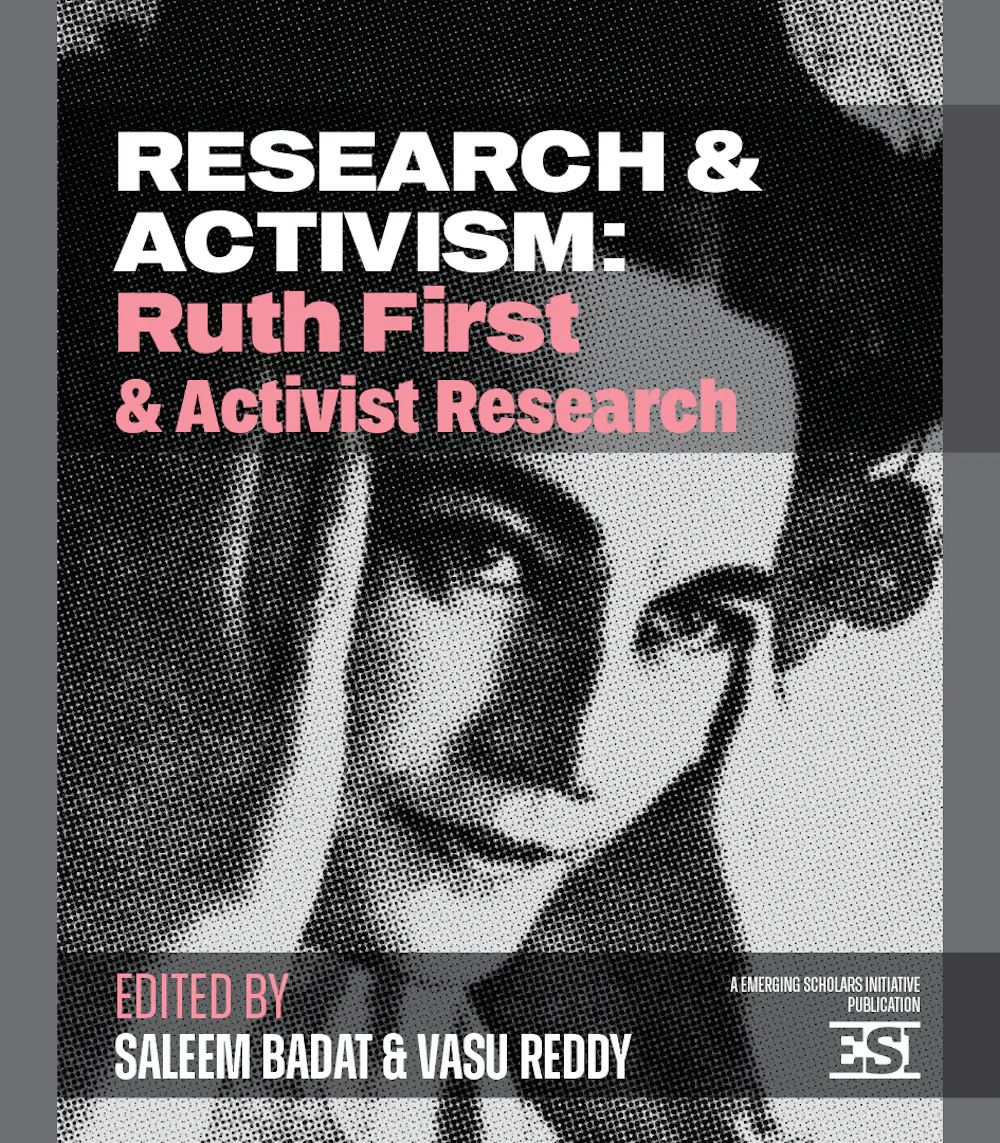
Ruth First and activist research: the legacy of a South African freedom fighter

Source: The Conversation – Africa – By Saleem Badat, Research Professor, UFS History Department, University of the Free State

Ruth First, born 100 years ago, was a South African freedom fighter, journalist and scholar who worked against the racist system of apartheid during white minority rule. She was assassinated by apartheid forces in her office at the Eduardo Mondlane University in Mozambique in 1982.

Her ideas, work and legacy live on. Sociologists Saleem Badat and Vasu Reddy have edited a new book called Research and Activism: Ruth First & Activist Research. We asked them about her and their project.


Who was Ruth First?

Heloise Ruth First was born on 4 May 1925 in Johannesburg to Jewish parents who had migrated from eastern Europe to South Africa in the early 1900s. Her parents were founder members of the South African Communist Party.

She joined the Young Communist League and the Federation of Progressive Students and graduated from the University of the Witwatersrand in 1946 with a Bachelor of Arts degree.

At 21, First joined the left-wing South African newspaper The Guardian. When it was banned, the New Age took its place until it too was banned in 1962. She served as the newspaper’s Johannesburg editor for 17 years.

In 1963, First was arrested at the University of the Witwatersrand library and held in solitary confinement for 117 days, during which time she was ruthlessly interrogated. The following year she and her three children left South Africa for England on an exit permit, where they joined her partner, the activist and politician Joe Slovo. She would not set foot again in South Africa. Continuing with her activist research in England, she taught at Durham University and then joined Eduardo Mondlane University until hear death.

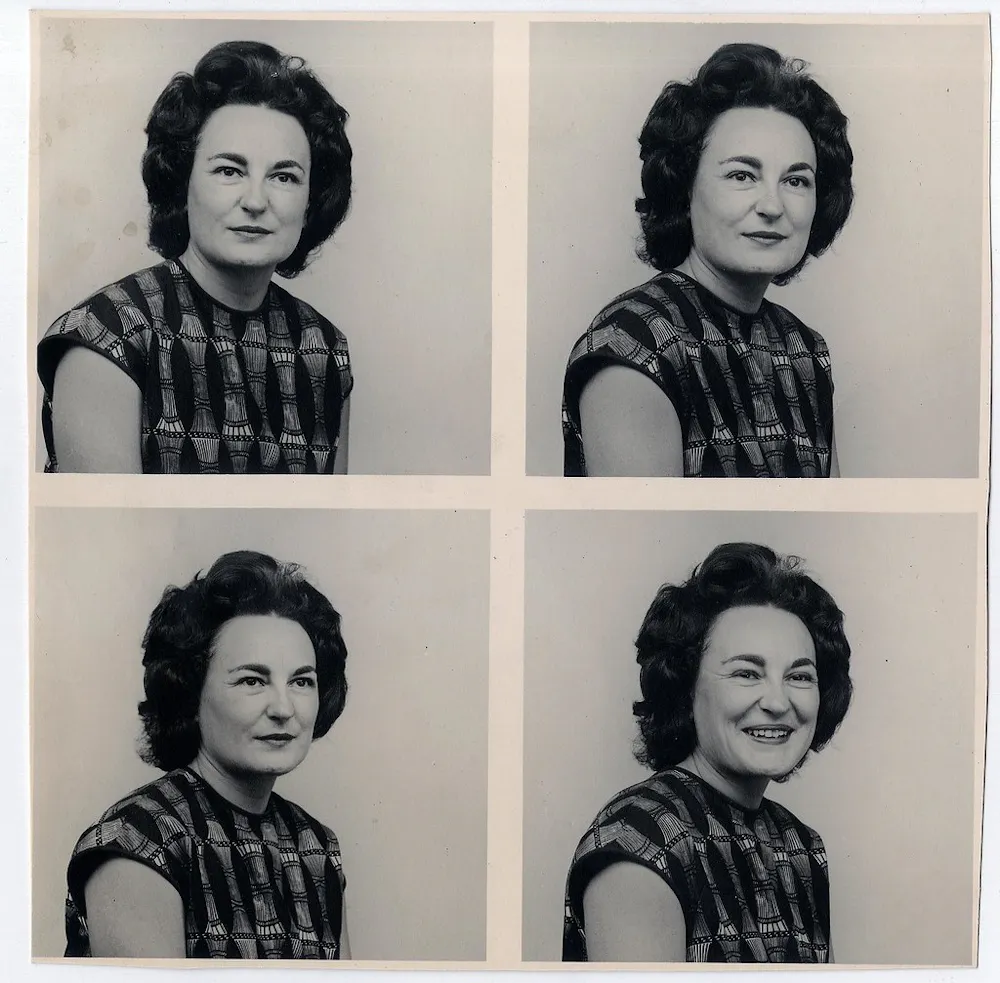
Ruth First. Courtesy the Slovo family

The mid-1940s to early 1960s were tumultuous years in South Africa. With the rise of formal apartheid in 1948, racial segregation was intensified.

First’s intrepid and penetrating journalistic research exposed her to the brutality of labour exploitation and control on the mines and the farms. It reinforced her understanding of South Africa in Marxist terms.

She wrote:

Silence in the face of injustice is complicity.

For her:

The will to fight is born out of the desire for freedom.

She was confident that:

The power of the people is greater than the power of any government.

First believed that ignorance is “the enemy of progress and justice” and that knowledge and education are “key to empowering individuals and challenging oppressive systems”. These words ring true in today’s global events driven by right-wing authoritarianism, US imperialism and acts of genocide.

On learning of her death, former South African President Nelson Mandela recalled:

I was in prison when Ruth First was assassinated, felt almost alone. Lost a sister in arms  … It is no consolation to know that she lives beyond her grave.

What is activist research and how is it applied in the book?

As authors, we revisit Ruth First’s life, work and ideas and its relevance for the current context. We focus especially on the nature of her scholarship and how she navigated the tensions between her activism and her research – whether journalistic or for her books on South West Africa (today’s Namibia), Libya or western investment in apartheid. Other of her acclaimed books included The Barrel of a Gun: Political Power in Africa and the Coup d’etat and, during her Mozambican sojourn, Black Gold: The Mozambican Miner, Proletarian and Peasant.

In the process we invite renewed critical reflection about her life and work. Inspired by First’s contributions, the book considers how universities and scholars engage with institutions and social movements beyond the university.

ESI Press

For example, in the book a research group from Durham University in the UK considers how to balance objectivity (showing no bias) with more politically participatory research methods and how objectivity can be enhanced despite the difficulties faced by activist research.

Other scholars reflect on the work of the assassinated South African anti-apartheid activist scholar and lecturer Rick Turner on climate change. And on the complexities of undertaking activist research in Marikana with a women’s organisation, Sikhala Sonke. Marikana was the site where South African police opened fire on and killed 34 striking mineworkers in 2012.

There is examination of a research partnership between University of Cape Town activist scholars and some Khoi-San communities, reflection on the challenges of legal practice and education, and critical analysis of the decolonisation challenges of the KwaZulu-Natal Society of the Arts.

How do you frame activist research in your book?

The book shows that there is a difference between engaged research, critical research and activist research.

Engaged research tries to connect knowledge produced by academics with institutions, movements and experts outside the university to collaboratively address issues and promote cooperation.

Critical research uses radical critical theory to critique oppression and injustice, to show the gap between what exists today and more just ways of living. However, it does not necessarily connect with political and social movements.

Ruth First addresses a rally in Trafalgar Square, London in 1960. Courtesy the Slovo family

First’s research was not only engaged, but also critical in orientation and activist in nature. As activist research it challenged oppression and inequality.

It both critiqued the status quo in South Africa and elsewhere and tried to change it. It was linked with movements and connected to political activism that was anti-colonial, anti-imperialist, and committed to socialism.


Read more: Lessons learnt from taking sides as a sociologist in unjust times


First’s activist research did not confine itself to the academic arena but engaged with larger, wider and more diverse publics. It used this experience to critique dominant and often limited thinking at universities and promoted other ways of producing knowledge. The expertise developed was used to improve scholarship in various ways.

What do you want readers to take away?

There is much talk about the “engaged university” and engaged research. However, only certain connections and engagements seem to be valued.

Prior to democracy in 1994, South African researchers connected with social movements for change. Now this is seldom the case. Universities and scholars largely engage with those with money – the state, business, elites and donors.


Read more: Regina Twala was a towering intellectual and activist in Eswatini – but she was erased from history


This raises questions about the roles of researchers in South Africa, whose interests are prioritised and the place of critical and activist research in the engaged university.

How should Ruth First be remembered?

We must honour her for her intellectual and practical activism. What matters is not just her knowledge archive, but also her example as both an outstanding interpreter of the world and an activist scholar committed to changing society in the interests of the downtrodden, marginalised and voiceless.

First was a critical and independent thinker who refused to accept anything as settled and beyond questioning. But that intellect was committed to loyalty to the national liberation movement of which she was an invaluable cadre.


The views expressed in this piece do not reflect or represent the position of the university to which Badat and Reddy are affiliated.

– Ruth First and activist research: the legacy of a South African freedom fighter
– https://theconversation.com/ruth-first-and-activist-research-the-legacy-of-a-south-african-freedom-fighter-257687

Cabo Verde presente nos trabalhos da 21.ª sessão do Comité de Coordenação da Comissão Sub-Regional das Pescas (CSRP)

Baixar logotipo

No quadro da agenda oficial no Senegal, o Ministro do Mar, Eng.º Jorge Santos, participou ontem, quarta-feira, juntamente com a delegação Cabo-verdiana que o acompanha, na 21.ª sessão do Comité de Coordenação da Comissão Sub-Regional das Pescas, CSRP, que vinha decorrendo desde ontem, naquele país.

Recorda-se que a CSRP, é uma organização intergovernamental que promove a cooperação em questões de pesca entre os seus Estados-membros, nomeadamente Cabo Verde, Senegal, Mauritânia, Guiné-Bissau, Guiné-Conacri, Serra Leoa, Gâmbia e Libéria, e visa a gestão e exploração sustentável dos recursos da pesca por forma a garantir o futuro de novas gerações.

Os trabalhos da 21.ª sessão decorreram na terça e quarta-feira, 1 e 2 de julho, sendo a delegação Cabo-verdiana ainda integrada pelo Diretor Nacional das Pescas e Aquacultura, pela Inspetora Geral das Pescas e por uma Técnica, membro do comité de Coordenação da CSRP.

Após as alocuções da presidência da organização e votos de boas-vindas aos participantes, deu-se então o início dos trabalhos seguindo de análise e discussão dos vários temas e assuntos, nomeadamente, análise do Relatório de Atividade do Secretário Permanente em relação aos anos de 2023 e 2024; análise da Convenção SCS: um instrumento sólido para combater à pesca IUU no espaço da CSRP; análise e discussão das Orientações para o próximo Plano Estratégico da CSRP 2025-2029; nota de orientação sobre “A Gestão da Pesca da Sardinha no Noroeste de África: medidas políticas para garantir a sua sustentabilidade; validação do Projeto de Protocolo Adicional à Convenção CMA sobre a Limitação das Capturas Acidentais de Tartarugas Marinhas (TM) e Aves Marinhas (SB); apresentação e validação do relatório da 21.ª sessão do Comité de Coordenação da CSRP.

À margem da reunião ordinária do Comité de Coordenação da CSRP, seguiu-se a realização de um ato de cerimónia do 40.º aniversário da CSRP e homenagem aos quadros que de uma forma ou de outro deixaram marcas importantes na organização.

Cabo Verde, na pessoa da Técnica Iolanda Brites, recebeu um prémio de Menção Honrosa pelo seu contribuído e trabalho dedicado à organização da CRSP.

Hoje, quinta-feira, 3, vai dar-se continuidade aos trabalhos com a realização da Conferência dos Ministros dos países membros presentes, ente os quais, o Ministro do Mar, que fará uma intervir no evento.

Distribuído pelo Grupo APO para Governo de Cabo Verde.

Cabo Verde: Projeto de Empoderamento e Autonomia Económica das Mulheres e Jovens encerra com balanço positivo e novas medidas para a inclusão

Baixar logotipo

O Ministro da Família, Inclusão e Desenvolvimento Social, Fernando Elísio Freire, presidiu esta quinta-feira, 3 de julho, à cerimónia de encerramento do projeto “Promover o Empoderamento e a Autonomia Económica das Mulheres e Jovens”.

Trata-se de uma iniciativa financiada pela Agência Espanhola de Cooperação Internacional para o Desenvolvimento, implementada pelo Instituto Cabo-verdiano para a Igualdade e Equidade de Género (ICIEG), sob a tutela do Ministério da Família, Inclusão e Desenvolvimento Social.

Ao longo de três anos, o projeto permitiu formar e capacitar mais de 500 mulheres e jovens em situação de vulnerabilidade, contribuindo para a sua inserção socioprofissional. Através da formação, do estímulo ao empreendedorismo, da formalização das relações laborais e da valorização do trabalho de cuidados, a iniciativa constituiu um instrumento relevante de promoção da autonomia económica e da inclusão social.

Durante a sua intervenção, o Ministro sublinhou que garantir a independência financeira das mulheres é uma condição fundamental para o desenvolvimento sustentável e equitativo do país.

“Metade da população cabo-verdiana é composta por mulheres. Não há país que se desenvolva excluindo metade dos seus cidadãos. A autonomia económica é essencial para garantir igualdade de oportunidades e inclusão real”, afirmou.

Fernando Elísio Freire reforçou ainda que a concretização da igualdade de género exige uma transformação cultural contínua, sustentada em ações efetivas.

“Temos a legislação, os instrumentos e a vontade política. Mas a igualdade só se alcança com o compromisso de cada um de nós, nas nossas escolhas, atitudes e na forma como educamos”, destacou.

O governante anunciou também um conjunto de medidas que visam reforçar os direitos das famílias, em particular das mulheres cuidadoras e das pessoas em situação de maior fragilidade. Entre as propostas apresentadas, salientou-se a revisão do regime do subsídio de doença, que eliminará o limite de idade para os cuidadores de pessoas com deficiência ou necessidades especiais, assegurando assim o acesso ao apoio sempre que necessário.

“Uma pessoa com deficiência precisa de cuidados a vida inteira, independentemente da idade. Por isso, quem cuida deve ter o mesmo direito ao apoio, em qualquer fase”, defendeu.

Foi igualmente anunciado o reforço do Sistema Nacional de Cuidados com a mobilização de mais de 60 cuidadores comunitários distribuídos por todos os municípios do país para prestar apoio a crianças, idosos e pessoas com deficiência. A revisão do Código Laboral está em curso e prevê a introdução de um subsídio de desemprego e medidas específicas para a valorização do trabalho doméstico.

O Ministro realçou também o empenho do Governo na eliminação das desigualdades salariais.

“Ainda existem casos de remuneração desigual entre homens e mulheres para funções idênticas. Vamos reforçar a fiscalização para garantir que trabalho igual seja sempre pago de forma igual”, assegurou.

Entre as outras medidas em desenvolvimento, destacou-se a ampliação do acesso ao crédito por meio do Banco Jovem Mulher, a implementação de políticas públicas que promovem a conciliação entre a vida profissional e familiar e o reforço das ações de combate à violência baseada no género.

Fernando Elísio Freire afirmou que o encerramento do projeto representa, na verdade, o início de uma nova etapa centrada no aprofundamento das políticas de inclusão, justiça social e igualdade de oportunidades.

“Não estamos a fechar um ciclo, estamos a iniciar outro. O sucesso destas mulheres e destes jovens depende agora da sua própria força, da sua persistência e da sua capacidade de aproveitar as oportunidades”, frisou.

Durante o evento foram também apresentados três marcos estruturantes para a dignificação e regulamentação do trabalho doméstico. A Plataforma Digital do Trabalho Doméstico, o Guia do Trabalho Doméstico – Direitos e Deveres, em versão revista e ampliada, e a proposta de Regulamentação da Profissão de Trabalhadora Doméstica, que será submetida ao Conselho de Ministros.

O Ministro concluiu com um apelo à responsabilidade coletiva.

“O Estado tem a obrigação de criar condições de igualdade, mas a mudança só se concretiza com o envolvimento de todos. Queremos uma sociedade justa, inclusiva e com oportunidades reais para todas e todos”

Distribuído pelo Grupo APO para Governo de Cabo Verde.

Ministro Gilberto Silva reafirma compromisso de Cabo Verde com segurança alimentar na Conferência da Organização das Nações Unidas para a Alimentação e a Agricultura (FAO)

Baixar logotipo

44.ª Conferência da FAO – Ministro da Agricultura e Ambiente apresenta visão de Cabo Verde para sistemas alimentares resilientes na Reunião Ministerial de Alto Nível da FAO, sob o tema: “Da Vulnerabilidade à Resiliência – Fortalecendo a Segurança Alimentar e Melhorando os Meios de Subsistência em Pequenos Estados Insulares em Desenvolvimento, Países Menos Desenvolvidos e Países em Desenvolvimento em Litoral”.

Na sua intervenção na plenária da 44.ª Conferência da FAO, o Ministro da Agricultura e Ambiente, Gilberto Silva, reafirmou o compromisso de Cabo Verde com o fortalecimento da segurança alimentar, tanto a nível nacional como global.

Num contexto internacional marcado por conflitos, mudanças climáticas e choques económicos, o Ministro destacou os desafios específicos enfrentados pelos Pequenos Estados Insulares em Desenvolvimento (PEID), como Cabo Verde — desde a elevada dependência de importações até à escassez de recursos naturais.

Apesar disso, o país tem adotado medidas estruturantes para tornar o seu sistema alimentar mais resiliente, incluindo: investimentos em irrigação e dessalinização com energias renováveis; apoio financeiro à produção agrícola local; educação alimentar nas escolas e reforço da alimentação escolar; aprovação da Lei do Direito à Alimentação Adequada; e criação de um sistema nacional de informação sobre segurança alimentar.

O Ministro anunciou ainda a elaboração de uma nova Estratégia Nacional para o Sistema Alimentar, com foco na governança, sustentabilidade e envolvimento das comunidades.

À margem da conferência, o Ministro reuniu-se também com o Diretor-Geral da FAO, com vista a reforçar a cooperação entre Cabo Verde e a organização.

Com solidariedade internacional e ação coordenada, Cabo Verde acredita que é possível garantir dietas saudáveis, sustentáveis e acessíveis para todos.

Distribuído pelo Grupo APO para Governo de Cabo Verde.