Zambia: Transparency now key as democratic expectations tested in competitive but uneven playing field

Source: APO


.

The European Union Election Observation Mission (EU EOM) to Zambia today presented its Preliminary Statement on the 13 August 2026 general elections. Critical stages of the electoral process, including the tabulation of results, are still ongoing. The statement, therefore, only reflects the mission’s findings to date and the EU EOM will continue to observe and assess the remaining stages of the process before its final assessment. The Delegation of Members of the European Parliament, led by Reinhold Lopatka (MEP), fully endorsed the mission’s statement.

“The elections offered Zambian voters a competitive choice, and election day was calm overall with polling staff efficiently facilitating voting in polling stations observed by the EU EOM. At the same time, the broader electoral process took place in an environment that limited fundamental freedoms. Late legal changes, legal uncertainty, and unequal campaign conditions distorted the playing field” said Michael McNamara, Chief Observer of the EU EOM.

Zambia’s legal framework constitutes an adequate basis for democratic elections. However, significant changes, including to the electoral system, were adopted only three months ago.  This   made it difficult to implement all changes adequately and for stakeholders to be aware of them. It also led to uncertainty regarding the procedures.

Referring to the pause of the process yesterday, the Chief Observer pointed out: “We understand that this has caused concern, which is why what happens next matters so much – and why transparency, clear communication and strict adherence to procedure are crucial for guaranteeing public confidence in the process. In that light, disaggregated data at polling station level should be made publicly available “.

Reinhold Lopatka, the Head of the European Parliament Delegation, said: “Despite the lack of equity in the campaign, which led to distrust, I call on all political leaders to ensure that their supporters should refrain from violent acts. Any dispute regarding the electoral process should be addressed peacefully, according to the established legal procedures”. 

Positive legal steps included the Access to Information law and the repeal of criminal defamation of the president. The impact of these reforms, however, was limited by gaps in implementation and by other restrictive measures. The registration of candidates was inclusive, transparent and timely. However, women’s participation as candidates was minimal. Advantages of incumbency blurred the line between state and party, while campaign-related violence and uneven law-enforcement responses contributed to an unlevel playing field.

The media operated with relative freedom but recently introduced cyber laws and their application contributed to concerns among journalists and online users. As well, state-owned media coverage was heavily biased.

The EU EOM is independent and impartial and does not interfere in the electoral process. Its findings are based on direct observation and verified information, and its work is conducted in accordance with the Declaration of Principles for International Election Observation and the Code of Conduct for International Election Observers.

Distributed by APO Group on behalf of European Union External Action: The Diplomatic Service of the European Union.

SADC calls for vigilance as region confronts complex political and security challenges

Source: Government of South Africa

SADC calls for vigilance as region confronts complex political and security challenges

The Southern African Development Community (SADC) has called for renewed vigilance, unity and solidarity to safeguard regional peace and stability amid an increasingly complex and unpredictable global political and security environment. 

SADC Executive Secretary Elias Magosi made the call on Saturday during his welcome remarks at the SADC Ministerial Committee of the Organ Troika meeting in Durban, which is preparing for the Organ Troika Summit scheduled for Sunday, 16 August 2026.

The meeting brings together Ministers and senior officials from the Organ Troika Member States to consider political and security developments in the region, with particular attention on Madagascar and Mozambique.

Magosi said that despite growing uncertainty globally, Southern Africa remained “mostly peaceful and stable”, but cautioned that the region’s peace should not be taken for granted.

“We meet at a time when the global political and security context is becoming more complex and unpredictable. This highlights the necessity for vigilance, unity, and ongoing solidarity,” he said. 

While acknowledging the relative peace enjoyed by the region, Magosi said SADC continued to closely monitor political and security developments in the Democratic Republic of Congo and Madagascar, while working to support Member States to achieve lasting peace, stability and security.

“The peace and stability we have should not be taken for granted. They result from the continuous efforts of this distinguished body, the SADC Organ, which recognises that peace, security, and strong political relations are necessary for creating an environment conducive to regional cooperation and integration,” he said.

Magosi urged the Ministerial Committee to use its deliberations to reaffirm the region’s commitment to strengthening peace and security, upholding democratic principles and positioning SADC as a symbol of stability, cooperation and shared prosperity.

Madagascar remains a key focus

Magosi devoted significant attention to Madagascar, where political changes, including leadership shifts and the establishment of a transitional authority in September 2025, created challenges for the country and regional stability.

He said SADC had responded through an Extraordinary Organ Troika Summit, a Fact-Finding Mission and dialogue and confidence-building initiatives involving the Panel of Elders and the Mediation Reference Group.

The Mediation Reference Group was led by former President of Malawi, Dr Joyce Banda, with the diplomatic efforts aimed at supporting the Malagasy people’s desire for lasting peace, national unity and reforms to strengthen democracy, uphold the rule of law and promote inclusive development.

Magosi said the experience in Madagascar had reinforced the importance of dialogue, mutual trust and inclusive participation in achieving sustainable peace.

“Experience has shown that sustainable peace relies on ongoing dialogue, mutual trust, and inclusive participation,” he said.

He stressed that all stakeholders in Madagascar needed to remain actively involved to sustain the progress achieved towards stability and democratic consolidation.

At a recent meeting in Salima, Malawi, the Ministerial Committee of the Organ recommended extending the mandate of the Panel of Elders and approved the establishment of a SADC Liaison Office in Antananarivo.

The establishment of the office is expected to support SADC’s engagement in Madagascar as the regional bloc works to improve dialogue, support reforms and build consensus among stakeholders.

“These shuttle diplomacy missions, reinforced the Malagasy people’s shared desire for lasting peace, national unity, and reforms to strengthen democracy, uphold the rule of law, and promote inclusive development,” Magosi said.

He said Madagascar’s progress had demonstrated the important role played by the Panel of Elders and the Mediation Reference Group in advancing SADC’s preventive diplomacy efforts.

To strengthen this capacity, the Ministerial Committee approved the nominations of former Botswana President Dr Mokgweetsi Eric Keabetswe Masisi and former Mozambican President Dr Joaquim Alberto Chissano to join the Panel.

Magosi said their leadership, diplomatic and regional experience would strengthen the regional bloc’s ability to respond to emerging challenges.

“Their extensive leadership, diplomatic, and regional experience will be invaluable in finding peaceful, inclusive solutions to new challenges across the SADC region,” he said.

SADC welcomes progress in Mozambique

Turning to Mozambique, Magosi commended the progress made in preserving peace and political stability following the country’s 2024 General Elections.

He welcomed Mozambique’s efforts to promote national unity through the Inclusive National Dialogue process and the establishment of mechanisms aimed at strengthening democratic participation, building public trust and promoting social cohesion.

“The progress achieved today demonstrate a shared determination to resolve differences through engagement and consensus, reflects all Mozambicans’ aspirations,” he said.

Although sporadic attacks continue in Cabo Delgado and surrounding areas, Magosi said the overall security situation showed promising signs of improvement.

He said these gains had contributed to greater stability, the return of displaced communities and renewed hope for recovery, reconstruction and socio-economic development.

The Ministerial Committee, he said, would consider how best to support Mozambique as it continues its efforts towards lasting peace, security, democratic consolidation and prosperity.

Leadership transition

Saturday’s meeting also marked a leadership transition within the Organ Troika.

Magosi thanked Malawi’s Minister of Foreign Affairs and International Cooperation, Dr George T. Chaponda, for his leadership and dedication as Chairperson of the Ministerial Committee of the Organ over the past year.

He said Chaponda’s guidance had been instrumental in advancing the Organ’s objectives and strengthening collective efforts to promote peace, security and stability.

Magosi also expressed appreciation to Tanzania’s outgoing leadership, represented at the meeting by Deputy Minister of Foreign Affairs and East African Cooperation James Kinyasi Millya.

The meeting is the final MCO meeting in which Tanzania participates as a member of the Organ Troika.

“We deeply appreciate the vital role that the United Republic of Tanzania has played in strengthening regional cooperation and promoting peace and security in our region,” Magosi said.

He congratulated Eswatini’s incoming Chairperson of the Ministerial Committee of the Organ, Senator Pholile Shakantu, Minister of Foreign Affairs and International Cooperation, and pledged SADC’s support as she assumes the role.

Magosi said he was confident that the incoming leadership would build on the Committee’s achievements and advance the shared objective of creating a peaceful, secure, stable and prosperous region.

Peace and security underpin development

Magosi said the Ministerial Committee meeting reaffirmed SADC’s solidarity and cooperation in confronting political and security challenges.

He stressed that peace and security were not only regional priorities in their own right, but also essential foundations for sustainable development, regional cooperation and shared prosperity.

“Today’s meeting reaffirms our solidarity and cooperation in confronting the political and security challenges facing our region,” he said.

“I am confident that our discussions will strengthen our determination to advance peace and security as the cornerstone of sustainable development and shared prosperity.”

The meeting programme included the observing of the national anthems of Malawi, SADC and the African Union, followed by Magosi’s welcome remarks and the opening remarks by Chaponda, who is Chairperson of the Ministerial Committee.

The ministers then proceeded into session, with the programme providing for the preparation and adoption of the record of the MCO meeting. 

The meeting will also facilitate preparations for the annotated agenda of the Organ Troika Summit.

The Organ Troika Summit on Sunday will provide an opportunity for regional leaders to consider the political and security situation in the SADC region and chart a collective response to challenges affecting peace, stability and democratic governance.

Magosi concluded by thanking the Senior Officials of the Organ Troika, led by Malawi’s Principal Secretary in the Ministry of Foreign Affairs and International Cooperation, Chauncy M. K. Simwaka, for their work in preparing the agenda.

He also commended the SADC Secretariat staff for their logistical support.

The Durban meeting comes as SADC prepares to further strengthen its regional peace and security architecture while supporting Member States facing political and security challenges, with the bloc’s preventive diplomacy and mediation mechanisms remaining central to its response. – SAnews.gov.za

DikelediM

0

Somali Minister of Foreign Affairs Meets Qatar’s Ambassador

Source: Government of Qatar

Mogadishu | August 16, 2026

HE Minister of Foreign Affairs and International Cooperation of the Federal Republic of Somalia Abdisalam Abdi Ali, met with HE Ambassador of the State of Qatar to Somalia, Dr. Abdullah bin Salem Al Nuaimi.

During the meeting, they reviewed cooperation relations between the two countries.

From floodwaters to New Hope: Economic Community of West African States (ECOWAS) brings relief, safe water and livelihood support to Liberian communities

Source: APO


.

The ECOWAS Commission has reaffirmed its commitment to supporting vulnerable communities in Liberia through a humanitarian intervention providing cash assistance, safe water and sanitation facilities, and agricultural livelihood support to communities affected by disasters and economic hardship.

The Acting Director of the Directorate of Humanitarian and Social Affairs of the ECOWAS Commission, Dr. Mohammed Ibrahim, led a delegation to communities in Bong and Grand Cape Mount Counties to monitor and assess the impact of the intervention on Persons of Concern and other vulnerable populations.

Valued at US$725,491, the intervention was implemented by the Liberian Red Cross Society, in collaboration with the Liberian National Disaster Management Agency, and focused on strengthening livelihoods, improving access to basic services and supporting communities affected by disasters and economic hardship.

In Bong County, beneficiaries whose homes were destroyed by flooding received the sum of US$250 in cash assistance to support their immediate recovery needs. The agricultural component of the intervention is also helping vulnerable households rebuild their livelihoods and regain the means to provide for themselves and their families. The initiative is therefore designed to help communities move beyond immediate relief towards longer-term resilience and sustainable livelihoods.

In Grand Cape Mount County, the intervention focused on Water, Sanitation and Hygiene (WASH), including the provision of hand pumps to improve access to safe and reliable drinking water. For communities where access to clean water is essential to preventing waterborne diseases and protecting public health, the facilities represent an important investment in health, dignity and community wellbeing.

During their engagement with the ECOWAS delegation, beneficiaries underscored the importance of ensuring that humanitarian assistance reaches those most in need, including the elderly and other vulnerable groups who are often disproportionately affected by poverty, disasters and limited access to essential services.

During the monitoring mission, Dr. Ibrahim emphasized that the intervention reflects ECOWAS’ strategic commitment to advancing regional integration by prioritizing people-centered approaches

“This project reflects ECOWAS’ commitment to moving from an ECOWAS of States to an ECOWAS of the people,” he said.

He noted that the initiative demonstrates ECOWAS’ determination to ensure that the work of the regional organisation delivers tangible benefits to ordinary citizens, particularly communities facing hardship and vulnerability.

For beneficiaries, regional integration is not only articulated through policies and institutional frameworks, but is tangibly realized through practical interventions that enhance daily living, such as access to safe drinking water, post disaster assistance and opportunities to restore livelihoods.

Through this intervention, ECOWAS is helping affected Liberian communities move beyond the immediate aftermath of disaster towards recovery, resilience and renewed hope, demonstrating that regional cooperation can have a direct and meaningful impact on the lives of citizens.

Distributed by APO Group on behalf of Economic Community of West African States (ECOWAS).

Eritrea: Number of schools in Keren sub-zone increases

Source: APO


.

At an assessment meeting on educational activities during the 2025–2026 academic year, it was reported that, through the integrated efforts of the public and the Government, the number of schools in Keren sub-zone has increased from 68 to 79.

Noting that the main objective of schools is to nurture well-rounded and competent youth, Mr. Yosief Okbaselasie, head of the education office in the sub-zone, urged teachers and school communities to fulfill their mission of realizing this objective in accordance with the policies and guidelines of the Ministry of Education.

Mr. Yosief went on to say that the main objective of the assessment meeting was to sustain the achievements registered and address the challenges being encountered in the teaching and learning process.

Commending the achievements registered in educational activities in the sub-zone, Mr. Kiflai Andemicael, head of the education office in Anseba Region, called for the proper utilization of human, financial and material resources, as well as time, to achieve better outcomes.

Underlining that enhancing the teaching and learning process should not be left solely to teachers and school communities, Ms. Letenigus Abraha, representing the administrator of Keren city, called for the reinforced participation of the community and other partners. She also expressed the readiness of the Keren Municipality to provide the necessary support toward the effort.

Distributed by APO Group on behalf of Ministry of Information, Eritrea.

SADC leaders arrive in Durban as summit aims to showcase regional progress

Source: Government of South Africa

SADC leaders arrive in Durban as summit aims to showcase regional progress

The red carpet has been laid out and regional leaders are arriving in Durban ahead of the 46th Ordinary Summit of Heads of State and Government of the Southern African Development Community (SADC).

The summit officially starts on Monday, with leaders expected to deliberate on matters which will impact the prosperity and development of the 16-member regional bloc.

Speaking at the media launch of the SADC Documentary on the summit’s eve, Acting Director-General (ADG) of the Government Communication and Information System (GCIS), Nomonde Mnukwa, emphasised that as leaders consider SADC’s future, the world is watching keenly.

“I had the pleasure of attending an event hosted by one continent sometime last year. I silently observed every speaker and every commission resolution that called to action members of that continent to invest in research, so that they can position themselves to prevent the potential rise of Africa.

“[It] was about understanding the competencies of the African Union, SADC [and the like] so that they can establish their equivalent, which will enable their continent to outshine Africa,” she said.

On that score, Mnukwa challenged media – from both the region and abroad – to not only tell the story of Africa’s challenges but also of its achievements, its talents and its potential.

“Your reporting will help position the region as attractive and competitive, and people in the region will understand the decisions taken by our leaders.

“We can only showcase, with a strong partnership with the media, the progress being made across the region and highlight the opportunities that lie ahead, as your platforms will create a better reach.

“Together, let us ensure that the summit’s outcomes, achievements and aspirations reach every corner of our region and beyond,” she urged.

“The SADC Public Lecture [addressed by President Cyril Ramaphosa on Friday] echoed this call, highlighting the need for a shared regional vision that advances industrialisation, strengthens infrastructure development and creates opportunities for the people of Southern Africa.

“As communicators and media practitioners, we have a responsibility to ensure that this vision reaches citizens across our region and inspires greater collective action towards a common future.

“To all our media partners, we encourage you to engage fully throughout the summit, share the stories that matter, and help amplify the voice of SADC’s people, progress and potential,” Mnukwa concluded. – SAnews.gov.za

NeoB

1

Gabon-République Démocratique du Congo (RDC) : les deux Chefs d’État réaffirment leur volonté de renforcer la coopération bilatérale

Source: Africa Press Organisation – French

À la suite de la visite au Mémorial Léon Mba, le Président de la République, Chef de l’État, Chef du Gouvernement, Son Excellence Brice Clotaire OLIGUI NGUEMA, s’est entretenu en tête-à-tête avec son homologue de la République Démocratique du Congo, Son Excellence Félix-Antoine TSHISEKEDI TSHILOMBO, en visite de travail et d’amitié au Gabon.

Les échanges, cordiaux et fraternels, se sont poursuivis avec les deux délégations, avant un point de presse conjoint.

Cette visite, qui intervient dans le cadre des célébrations du 66ᵉ anniversaire de l’indépendance du Gabon, témoigne de la volonté des deux pays de renforcer leur lien d’amitié, de fraternité et de coopération.

Les échanges ont porté sur les questions d’intérêt commun et les perspectives de coopération dans les secteurs de l’agriculture, des infrastructures, des transports, de l’énergie, des mines, de la santé, de l’éducation et de la formation professionnelle, du numérique et de la culture.

Les deux Chefs d’État ont réaffirmé la nécessité pour l’Afrique d’accélérer la transformation locale de ses ressources naturelles, afin de créer davantage de valeur, favoriser l’industrialisation et développer les échanges entre pays africains.

Le Président de la République a présenté les principales réformes engagées par le Gabon, notamment en matière de digitalisation, d’autonomisation des femmes, d’amélioration des conditions de vie, d’emploi des jeunes et de valorisation des ressources naturelles. Le Président Tshisekedi a salué ces efforts et réaffirmé sa volonté d’approfondir la coopération entre les deux pays.

Sur le plan régional, les deux Présidents ont évoqué les défis liés à la criminalité transnationale organisée et à l’intégration régionale, réaffirmant leur attachement à la paix et à la stabilité, indispensables au développement du continent.

Ils ont également convenu de renforcer leur coopération environnementale, notamment pour la protection du Bassin du Congo, patrimoine naturel commun et enjeu majeur de préservation de la biodiversité et de lutte contre le changement climatique. La possibilité d’initiatives communes en matière de financement climatique, notamment autour de la taxe carbone, a également été évoquée.

Sur le plan continental, les deux Chefs d’État ont réaffirmé leur convergence de vues sur la nécessité de renforcer la voix de l’Afrique dans les instances internationales.

Le Président de la République a également sollicité l’appui de la RDC à la candidature du Gabon au Conseil de l’UIT, lors de l’élection prévue à Doha en novembre 2026, ainsi qu’à sa candidature à l’organisation du Sommet de l’Union africaine de 2027 à Libreville, une première depuis 1977, soutenue par d’importants investissements dans les infrastructures.

Saluant la présence de son homologue au Gabon, le Président de la République a exprimé sa profonde gratitude au Président Tshisekedi et au peuple congolais pour cette marque de fraternité.

Prenant la parole, le Président Félix-Antoine Tshisekedi Tshilombo a remercié son homologue et le peuple gabonais pour l’accueil qui lui a été réservé. Il s’est réjoui de prendre part aux célébrations du 66ᵉ anniversaire de l’indépendance du Gabon et a salué la qualité des échanges.

Il a insisté sur l’importance de la paix et de la stabilité, conditions essentielles au développement, et appelé au renforcement des liens entre les deux pays. Il a également souligné l’importance de la formation et de la valorisation de la jeunesse africaine, moteur du développement et garantie de l’avenir du continent.

Les deux Chefs d’État ont convenu de traduire leurs échanges en actions concrètes, notamment dans les domaines présentant un intérêt commun, dont la valorisation du patrimoine naturel du Bassin du Congo.

Cette volonté de renforcer la coopération s’est concrétisée par la signature de trois accords entre les deux pays.

Le premier porte sur la coopération dans plusieurs secteurs, notamment judiciaire, environnemental, sanitaire et minier, avec un accent particulier sur la transformation locale des ressources.

Le deuxième prévoit l’exemption de visa pour les détenteurs de passeports diplomatiques et de service, afin de faciliter les déplacements officiels entre les deux pays.

Le troisième est un mémorandum d’entente sur la tenue de consultations diplomatiques et politiques régulières, permettant aux deux États d’échanger leurs vues et de mieux coordonner leurs positions sur les sujets d’intérêt commun.

Une Commission mixte sera également mise en place afin d’assurer le suivi et la mise en œuvre de ces accords, renforçant ainsi une coopération bilatérale déjà dynamique entre le Gabon et la République démocratique du Congo.

La visite s’est achevée par une visite conjointe à la Cathédrale Sainte-Marie de Libreville, récemment rénovée, où les deux Chefs d’État ont observé un moment de recueillement.

Distribué par APO Group pour Présidence de la République Gabonaise.

Media files

President, SADC leaders to lay wreaths at OR Tambo statue (for Sun)

Source: Government of South Africa

President, SADC leaders to lay wreaths at OR Tambo statue (for Sun)

President Cyril Ramaphosa and the Southern African Development Community (SADC) Heads of State and Government will today lay wreaths at the statue of Oliver Reginald Tambo at South Beach, Durban.

“The wreath-laying ceremony honours O.R. Tambo and his contribution to the struggle for national liberation, social justice and the emancipation of the people of South Africa,” the Presidency said.

Sunday’s ceremony will serve as a tribute to O.R. Tambo’s life, sacrifices and leadership, and reaffirm the importance of preserving the ideals for which he lived and worked.

Tambo is one of the key founding fathers of South Africa’s liberation and constitutional democracy.

The wreath-laying ceremony is set to get underway at 3pm at OR Tambo Square, South Beach, eThekwini.

In the evening, President Ramaphosa will host a welcome dinner in honour of Heads of State and Government, Heads of Delegation and Special Guests attending the 46th Ordinary Summit of the Southern African Development Community (SADC).

The dinner will take place a day ahead of the 46th SADC Summit in Durban.

“The occasion will provide an opportunity to welcome participating leaders and delegations to South Africa ahead of the Summit, which will be held under the theme: “Resilient, sustainable and inclusive industrialisation through Infrastructure Development, Agricultural and Critical Minerals Transformation in Pursuit of a Just World.” said the Presidency. – SAnews.gov.za

Neo

0

Lithium in the Sahel: how armed groups are exploiting the global scramble for the critical mineral

Source: The Conversation – Africa – By Bradley A. Mortin, PhD Candidate, King’s College London

Every electric vehicle, smartphone and laptop battery begins with one essential ingredient: lithium.

The critical mineral sits at the centre of the global transition to cleaner energy. Lithium powers rechargeable batteries. Securing its supply is, therefore, an economic and geopolitical priority.

The International Energy Agency expects global lithium demand to increase as electric vehicle production and renewable energy storage expands. Africa, particularly the Sahel, is becoming increasingly important in the search for supply. The current top producers are Chile, Australia and China.

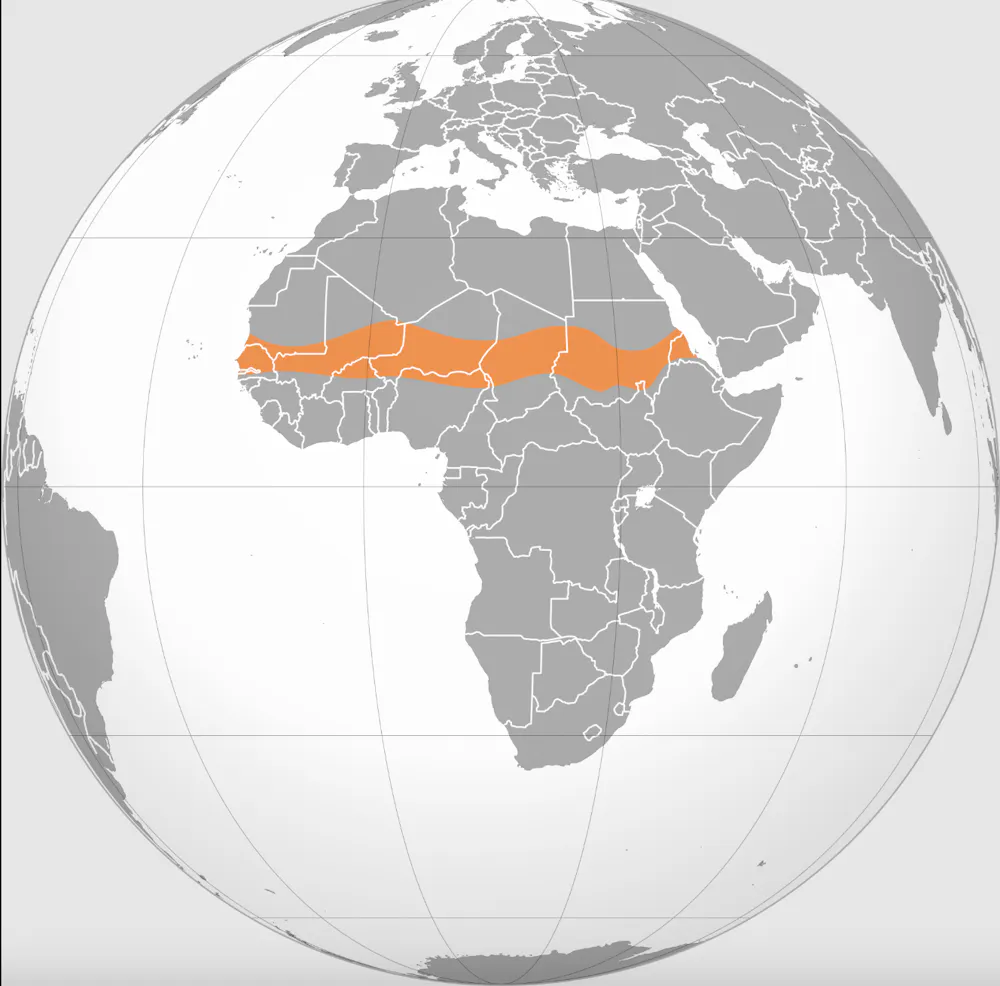
The Sahel is a semi-arid zone running from west to east Africa, between the Sahara Desert to the north and the tropical savannas to the south.

The Sahel. Wikimedia Commons

Across this vast region, armed groups are finding new ways to profit from the expanding lithium trade. Over 40,000 tonnes of lithium are already mined from African rock each year for international consumers. This figure is set to rise to an estimated 500,000 tonnes by as early as 2030.

I am a researcher specialising in geopolitics and war studies. In a recent study, I examined how expanding lithium extraction intersects with conflict across the Sahel. I studied Mali, Niger, Burkina Faso, Chad and Nigeria.

I found that growing lithium industries are becoming entangled in existing conflicts, insurgent activity and cross-border smuggling. These are all enabled by weak governance.

For instance, jihadist and criminal groups – particularly Boko Haram and the Islamic State West Africa Province (ISWAP) – are exploiting the weak oversight of lithium mining to generate revenue and expand their operations.

I argue that if Sahelian governments don’t strengthen oversight, lithium risks becoming another resource that funds conflict instead of development. Where governance is weak, valuable minerals such as gold and diamonds have previously fuelled conflict.

Lithium in the Sahel

Beneath parts of the Sahel lie some of Africa’s most promising lithium deposits, particularly in Nigeria and Mali. Exploration and geological surveys are expanding elsewhere in the region, including in Niger, Burkina Faso and Chad.

For governments facing persistent economic challenges, lithium reserves are attracting investment and creating jobs. Whether these early gains translate into broader economic development will depend on decisions related to governance, regulation and security.

Mali, Burkina Faso, Niger and Nigeria are already grappling with violent insurgencies. They also face organised crime, weak institutions and limited government control over remote border regions.

The same natural resource conditions that attract investors also attract armed groups. There are dozens of examples across the continent.

Diamonds helped finance civil wars in Sierra Leone and Angola. Gold mining has funded armed groups across west Africa. Oil wealth has fuelled corruption and political instability in Nigeria, Angola and Libya.

My research suggests lithium could become the latest example.

Following the money

Like any organisation, armed groups need money to sustain their operations.

They tax miners and control access to mining sites. They also charge traders and transporters moving minerals through their territory, and provide “security” where governments cannot.

In doing so, they perform some of the functions normally associated with the state. My research suggests that as lithium extraction expands, these same systems are adapting to the commodity.

I examined evidence from Nigeria, Mali, Burkina Faso, Niger and Chad to identify why some emerging lithium industries are more vulnerable to criminal and terrorist exploitation than others.

I compared differences in governance, the presence of artisanal mining, insurgent influence and the accessibility of cross-border smuggling routes. I drew on conflict databases, geological surveys, media reporting and publications from African and international organisations.

I found that the overall vulnerability of each country depends on the strength of local institutions, border controls and governance.

Nigeria: Lithium mining is expanding rapidly but remains largely informal and outside government oversight. Criminal groups exploit the lack of regulation. They demand protection payments and infiltrate both legal and illegal supply chains.

Mali: Armed groups embedded in the country’s gold economy have begun applying similar taxation and extortion models in lithium-producing regions. Weak state institutions and ongoing conflict have increased the risk of exploitation.

Burkina Faso: Jihadist groups have used informal mining networks to generate revenue from lithium and strengthen local influence. Limited government control in remote areas has created opportunities for armed groups to tax and regulate extraction.

Niger: Political instability and weakened border controls following the 2023 coup have increased the risk of mineral smuggling. Trafficking routes used for gold and weapons are being adapted for lithium.

Chad: Weak governance and corruption facilitate illicit cross-border trade. This is creating vulnerabilities that could be exploited.

Where governments regulate mining effectively and retain control over mineral supply chains – as Botswana has done with diamonds – the revenues generated are more likely to support infrastructure, public services and economic growth.

In the countries examined in my study where governance is weaker and state control is more limited, armed groups are able to insert themselves into supply chains.

What next

The global transition to cleaner energy depends on expanding lithium production. But rising demand also creates incentives for faster extraction. This can outpace governments’ ability to put effective regulation and oversight in place.

The batteries helping the world reduce carbon emissions could therefore, indirectly, help finance some of Africa’s deadliest armed groups.

The solution is to govern lithium better.

  1. Governments should bring artisanal and small-scale miners into the formal economy. This can be done through licensing, legal protections and transparent markets. State authority should be restored in mining regions.

  2. Regional organisations should strengthen systems for tracking minerals across borders and share intelligence on illicit trade.

  3. African governments should invest more in processing lithium instead of exporting raw ore.

But there’s no single solution for every context.

Formalising artisanal mining is likely to be most effective where governments control their territory. Sharing intelligence is important where trafficking routes span countries – like Mali, Burkina Faso and Niger. Domestic lithium processing can deliver long-term benefits in countries with stronger institutions and the capacity to support industrial development.

These recommendations are grounded in approaches already adopted elsewhere in Africa. There are regional mineral traceability initiatives in the Great Lakes region and efforts by countries like Zimbabwe to promote domestic lithium processing.

Africa’s lithium reserves could help power one of the defining technological transformations of this century. They could also become the next chapter in a long history of resource-driven conflict.

Which future emerges will depend on the governments responsible for managing it.

– Lithium in the Sahel: how armed groups are exploiting the global scramble for the critical mineral
– https://theconversation.com/lithium-in-the-sahel-how-armed-groups-are-exploiting-the-global-scramble-for-the-critical-mineral-287526

South Africa’s small sugar farms are producing less than they could: study finds ways to boost them

Source: The Conversation – Africa – By Lawrence Nkosikhona Malinga, Programme Manager (Crop Protection) & Senior Entomologist, South African Sugarcane Research Institute; University of KwaZulu-Natal

South Africa has around 25,653 small-scale sugarcane growers, making the industry a lifeline for rural communities in Mpumalanga and KwaZulu-Natal provinces. By generating 65,000 direct and 270,000 indirect jobs, its agricultural and milling operations support more than a million livelihoods in these areas. But the productivity of many small-scale growers remains well below potential. Production constraints are limiting both farm profitability and the sector’s overall contribution to rural economic development.

The growers face complex challenges that go beyond access to technical farming advice. A six-year research project by senior entomologist Lawrence Nkosikhona Malinga and his colleagues at the South African Sugarcane Research Institute in collaboration with the Department of Agriculture and Rural Development, South African Farmers Development Association and South African Canegrowers looked to identify and address some of the challenges. They found variations in growers’ education levels, language barriers, lack of funding, lack of technical expertise and poor planning of crop production.

Some of the key findings are that issues such as weed pressure, weak planning systems, contractor dependence, limited access to seedcane and poor technical support undermine productivity and profitability. The project identified lessons for agricultural systems and smallholder farmer support programmes.

What are the 4 biggest challenges for small-scale sugarcane growers?

1. Weed pressure

Many growers struggle with choosing and measuring herbicide, applying it at the right time, and the cost. Due to financial constraints, they sometimes use less herbicide than is needed, or they delay application. They manage weeds after they appear instead of preventing them.

Poor weed control has major consequences. Weeds compete directly with sugarcane for water, nutrients and sunlight. The cane doesn’t grow well but the labour and production costs are high. The incorrect dosage and inefficient application of products can also lead to herbicide resistance. Many of these growers are not familiar with these issues and good practices.

It’s usually cheaper to manage weeds before they can affect cane yields.

2. Weak planning

Many farming decisions, including seedcane ordering, planting dates, weed control, harvesting schedules and fertiliser applications, happen later than is optimal. These delays are often linked to financial constraints, knowledge gaps, or dependence on others like service providers, input suppliers, technical advisors, and labour availability. One delayed decision triggers several others.

With sugarcane, which isn’t planted every year, these delays can reduce productivity for multiple seasons and reduce overall profitability. Improved planning would allow growers to use inputs more efficiently and reduce avoidable losses.

3. Contractor dependence

Many small-scale growers rely heavily on contractors for planting, agrochemical applications, harvesting and land preparation. They don’t have the expensive machinery and labour to do these jobs themselves. But too much dependence can reduce grower control over critical operations. Delays, poor communication, or inconsistent service quality affect production outcomes.

Some growers also reported limited confidence in supervising contractor activities or challenging decisions when work quality was poor. This is partly due to gaps in knowledge about what has to be done on the farm.

4. Limited access to quality seedcane and technical support

Growers sometimes get seedcane from neighbours, informal networks, or their own fields because certified or approved seedcane is expensive, unavailable locally, or ordered too late. As a result, they may end up with the variety that’s available rather than the one best suited to the soil type or regional pest and disease pressures.

Growers said technical support was inconsistent from extension officers but they needed help with pest and disease diagnosis, variety selection and chemical use.

How should these challenges be tackled?

The findings suggest that farmers need stronger support systems, not just technical recommendations. A combination of practical learning, institutional coordination and improved access to resources would help.

Weed pressure

Weed management support needs to become more practical and continuous. Growers need extension officers to help them choose the correct products and time the application.

Demonstration plots, a small piece of land used to test and showcase new agricultural techniques, crop varieties, or technologies, would be useful. And growers should be able to learn by doing.

Low-cost practices like hand weeding and covering the soil with dried cane leaves to suppress weed growth would reduce the need for chemicals.

Weak planning systems

Seasonal calendars, simple budgeting tools and practical farm-planning templates could help growers improve the timing of planting, fertiliser applications, seedcane ordering and harvesting. Regular engagement is better than occasional workshops. Cost-benefit tools (methods to compare the costs of an action or decision with the benefits it produces) would help growers choose how to use limited resources more efficiently.

Contractor dependence

Small-scale sugarcane contractors are growers that provide mechanical (land preparation, crop maintenance and cane transportation) and labour (cane cutting) services to fellow growers. The productivity of these contractors is generally low and their services aren’t always reliable. Delays can be costly. Improving contractor efficiency and productivity would benefit both contractors and growers. Growers would get quality services at competitive prices, and millers would receive a steady flow of quality cane.

Because contractors are deeply embedded within small-scale production systems, solutions should focus on improving relationships rather than replacing them. Growers need support to supervise contractor activities more confidently. Stronger communication between growers, contractors and advisory services would improve accountability and timing.

Limited seedcane access and technical support

Seed production and distribution should be done by a wider network, not a central scheme. This would promote varietal diversity and create rural employment.

Extension services need to move from just delivering information to more practical visits where farmers can learn by doing.

These challenges are interconnected. Isolated interventions are unlikely to succeed. Integrated support systems would combine practical learning, stronger extension services, improved coordination among industry stakeholders, better access to inputs and continuous collaborative engagement. The evidence suggests that growers are more likely to adopt recommended practices when support is practical and they can see that it works for them.

Why does solving these challenges matter?

Improving weed control, planning systems, contractor coordination and access to seedcane could do far more than increase yields. These changes could improve profitability, strengthen household incomes, reduce production risks, and increase the resilience of rural farming communities.

Experiences from countries such as Brazil, Kenya, Mauritius, and India show that small-scale sugarcane productivity improves when growers receive integrated support rather than isolated interventions. Practical extension services, timely access to certified seedcane, coordinated contractor and mechanisation services, and better farm planning have increased yields, profitability and resilience, demonstrating that strengthening the entire production support system can deliver lasting benefits for rural farming communities.

Perhaps the biggest lesson from this work is that productivity challenges are rarely caused solely by not accepting recommendations. Small-scale growers often know what should be done, but operate within systems that make it difficult to follow the advice.

The South African Sugarcane Research Institute team leaders including Lindani Mchunu (project manager), Khanyisile Buthelezi, Tholoana Mofurutsi, Surashna Jithoo, Siphumelelo Mbhele and other research and extension colleagues played a crucial role in the research and the article.

– South Africa’s small sugar farms are producing less than they could: study finds ways to boost them
– https://theconversation.com/south-africas-small-sugar-farms-are-producing-less-than-they-could-study-finds-ways-to-boost-them-285098